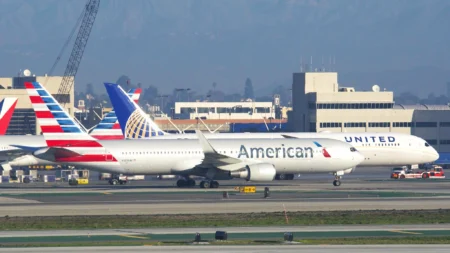
Alaska Airlines (AS), long known for its deep roots in the Pacific Northwest, operates one of the most regionally concentrated yet strategically efficient domestic networks in the United States.
While its name may evoke imagery of snow-capped peaks and northern wilderness, the airline’s operations are heavily centered around Seattle and Portland, serving as lifelines not only to Alaska but also to the entire West Coast corridor.
Moreover, its route network represents an airline expanding its horizons without abandoning its home base.
Analyzing Alaska’s 30 busiest domestic routes by flights, seats, and ASMs reveals a carrier that is staying true to its core while gradually building strength in transcontinental and Sun Belt markets.
Built on the Seattle Stronghold
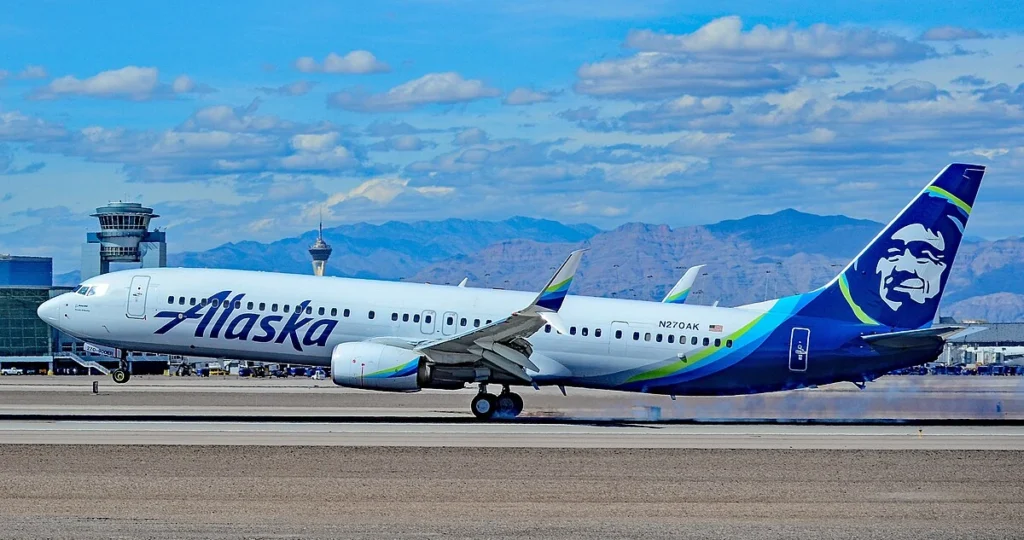
Seattle (SEA) isn’t just Alaska Airlines’ primary base, it’s the company’s strategic and historical nexus. In route rankings, 22 of the airline’s 30 busiest domestic routes begin or terminate in Seattle.
The busiest of all, Anchorage–Seattle, leads the list with over 1,000 monthly flights, 175,000 seats, and a whopping 253 million available seat miles (ASMs). This highlights Alaska’s persistent strength in linking the state of Alaska with the U.S. mainland.
Seattle connectivity dominates California routes as well, with thick frequencies to Los Angeles (612 monthly flights), San Diego (530), San Francisco (576), and Santa Ana (434). With around 500 monthly flights, connectivity to major Southwest markets like Phoenix and Las Vegas still depicts how Alaska carries both vacation and tech-savvy business traffic out of Seattle.
Even other West Coast secondary hubs like Spokane, Burbank, Ontario, and Sacramento have decent frequencies to Seattle, solidifying the way Alaska Airlines effectively operates as the de facto intraregional connection of the Pacific Northwest and beyond.
Portland’s Quiet Power and California’s Grip
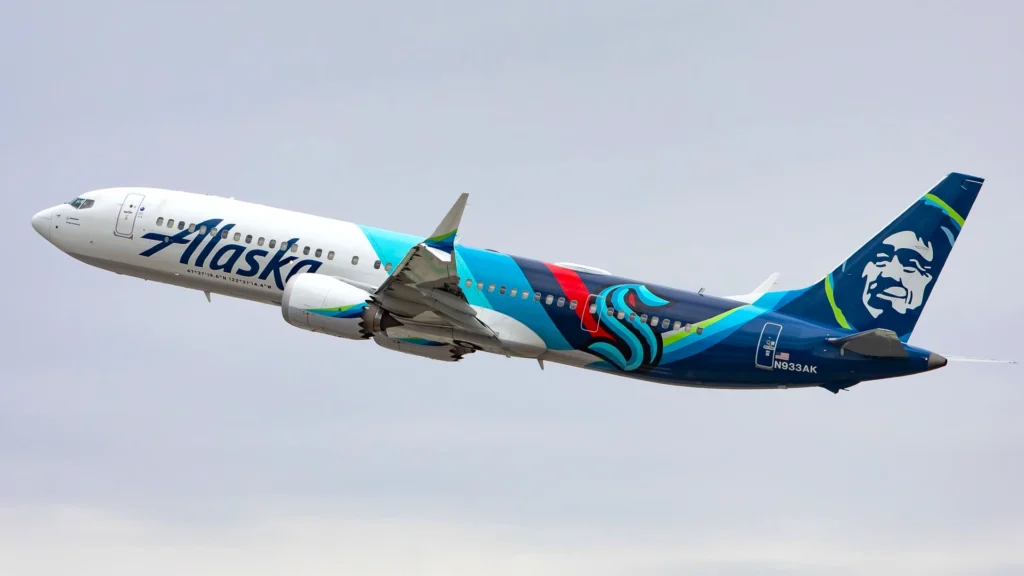
While Alaska’s Seattle focus dominates the headlines, Portland (PDX) is a strong second in terms of significance, particularly for accessing Southern California.
Routes like Portland–San Diego (285 departures), Portland–Santa Ana (248), and Portland–San Francisco (230) illustrate that. Portland–Phoenix ranks high too, with over 40,000 seats and 41 million ASMs, showing how Alaska has kept Portland a stronghold even as others pull back.
California’s dominance in Alaska’s network is also evident beyond the Northwest corridors. Los Angeles to Seattle is the second busiest route in its network, and Alaska plays a major role in high-leverage intrastate travel between California and neighboring markets.
Alaska links LAX to Portland, San Francisco to Seattle, and San Jose to Seattle — all of the leading routes by seat.
This strong West Coast foundation provides high-frequency service to corporate travelers and, as well, functions as a gateway to the leisure markets, most notably from California into the Pacific Northwest and Alaska.
Expanding the Network: Transcons and Alaska Links
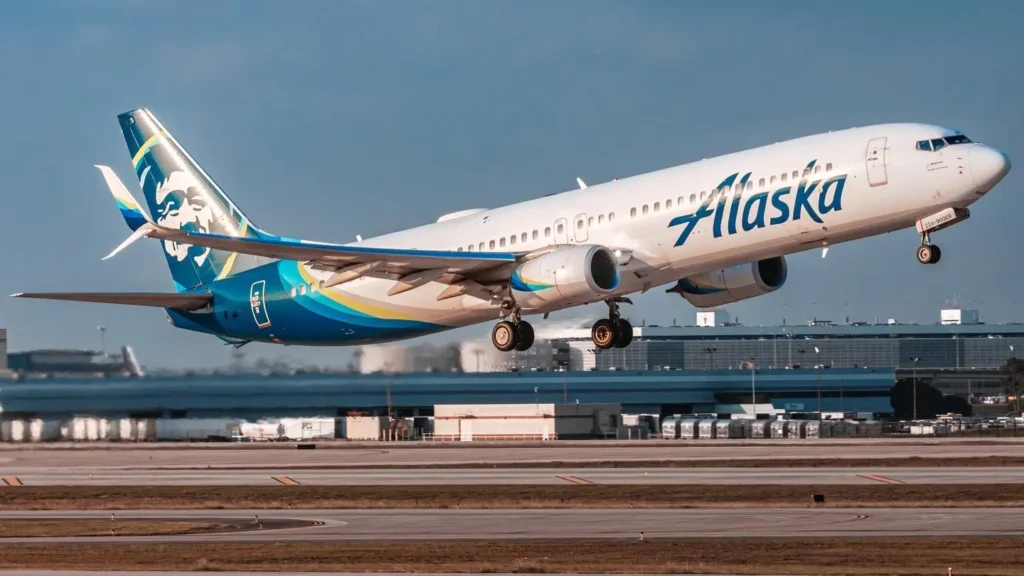
Alaska Airlines has developed a long-haul transcontinental presence gradually, often at the cost of slots at highly congested airports like JFK and DCA.
The JFK–Seattle and JFK–San Francisco routes are both in the top 30, showing Alaska’s ambitions in high-fare business markets in the face of severe competition from legacy carriers.
Not to be overlooked is Alaska’s role in connecting Alaska’s interior with the Lower 48. Besides Anchorage–Seattle, connections like Fairbanks–Seattle and Juneau–Seattle remain among the busiest, with nearly 300 combined sectors and more than 100,000 ASMs.
These routes are a lifeblood for the state’s residents and provide Alaska’s unique brand identity, balancing city, recreation, and vital air service functions.
Alaska–Alaska routes, such as Anchorage–Juneau and Ketchikan–Seattle, continue to rank in the top 30, reflecting the carrier’s continued commitment to its home state despite its bid to dominate larger battlefields such as Austin (AUS–SEA) and Boston (BOS–SEA).
| Rank | Route | Flights | Seats | ASMs |
| 1 | Anchorage (ANC) – Seattle (SEA) | 1,044 | 174,812 | 253,127,776 |
| 2 | Los Angeles (LAX) – Seattle (SEA) | 612 | 104,034 | 99,248,436 |
| 3 | Seattle (SEA) – San Francisco (SFO) | 576 | 100,220 | 68,049,380 |
| 4 | San Diego (SAN) – Seattle (SEA) | 530 | 91,087 | 95,641,350 |
| 5 | Phoenix (PHX) – Seattle (SEA) | 513 | 89,604 | 99,191,628 |
| 6 | Las Vegas (LAS) – Seattle (SEA) | 493 | 84,462 | 73,144,092 |
| 7 | Seattle (SEA) – Santa Ana (SNA) | 434 | 69,063 | 67,543,614 |
| 8 | Chicago-O’Hare (ORD) – Seattle (SEA) | 368 | 64,554 | 111,097,434 |
| 9 | Los Angeles (LAX) – Portland (PDX) | 366 | 62,032 | 51,734,688 |
| 10 | Dallas/Fort Worth (DFW) – Seattle (SEA) | 344 | 60,548 | 100,509,680 |
| 11 | Seattle (SEA) – San Jose (SJC) | 342 | 58,027 | 40,444,819 |
| 12 | Burbank (BUR) – Seattle (SEA) | 292 | 49,837 | 46,697,269 |
| 13 | Portland (PDX) – San Diego (SAN) | 285 | 49,555 | 46,234,815 |
| 14 | Fairbanks (FAI) – Seattle (SEA) | 282 | 45,695 | 70,050,435 |
| 15 | Denver (DEN) – Seattle (SEA) | 277 | 48,419 | 49,581,056 |
| 16 | Spokane (GEG) – Seattle (SEA) | 266 | 46,854 | 10,448,442 |
| 17 | Juneau (JNU) – Seattle (SEA) | 253 | 37,805 | 34,364,745 |
| 18 | New York-JFK (JFK) – San Francisco (SFO) | 248 | 43,555 | 112,633,230 |
| 19 | New York-JFK (JFK) – Seattle (SEA) | 248 | 43,536 | 105,400,656 |
| 20 | Portland (PDX) – Santa Ana (SNA) | 248 | 39,438 | 33,877,242 |
| 21 | Las Vegas (LAS) – Portland (PDX) | 235 | 41,165 | 31,367,730 |
| 22 | Ontario (ONT) – Seattle (SEA) | 230 | 39,583 | 37,841,348 |
| 23 | Portland (PDX) – Phoenix (PHX) | 230 | 40,598 | 40,963,382 |
| 24 | Portland (PDX) – San Francisco (SFO) | 230 | 39,841 | 21,912,550 |
| 25 | Seattle (SEA) – Sacramento (SMF) | 224 | 39,036 | 23,616,780 |
| 26 | Seattle (SEA) – Salt Lake City (SLC) | 222 | 37,535 | 25,861,615 |
| 27 | Austin (AUS) – Seattle (SEA) | 220 | 38,400 | 67,968,000 |
| 28 | Anchorage (ANC) – Juneau (JNU) | 220 | 27,770 | 15,856,670 |
| 29 | Boston (BOS) – Seattle (SEA) | 220 | 38,780 | 96,794,880 |
| 30 | Ketchikan (KTN) – Seattle (SEA) | 220 | 28,546 | 19,382,734 |
Bottom Line
Alaska Airlines may be anchored firmly in Seattle and the greater Pacific Northwest, yet the composition of its busiest domestic routes reveals a network by no means stagnant.
The carrier is picking up West Coast density, expanding gradually into transcontinental ground, and maintaining critical lifelines to Alaska’s interior.
In a consolidating and competitive U.S. market, Alaska Airlines still wagers on expansion through frequency, dependability, and a recognizable regional niche operation.
Stay tuned with us. Further, follow us on social media for the latest updates.
Join us on Telegram Group for the Latest Aviation Updates. Subsequently, follow us on Google News