DUBAI- The global aviation industry has experienced a remarkable resurgence in recent years, rebounding from the challenges posed by the COVID-19 pandemic.
According to the International Air Transport Association (IATA), global air passenger demand reached a record high in 2024, with total traffic increasing by 10.4% compared to 2023, surpassing pre-pandemic levels by 3.8%.
In parallel, the Airports Council International (ACI) reported that global passenger traffic in 2023 reached 8.7 billion, marking a 30.6% increase from 2022 and recovering to 95% of pre-pandemic levels.
These numbers indicate that people are increasingly resorting to aviation as a means of travel. In this article, we will look at the ten busiest international airports in September 2025, as reported by OAG.
Overview: Busiest Airports in September 2025
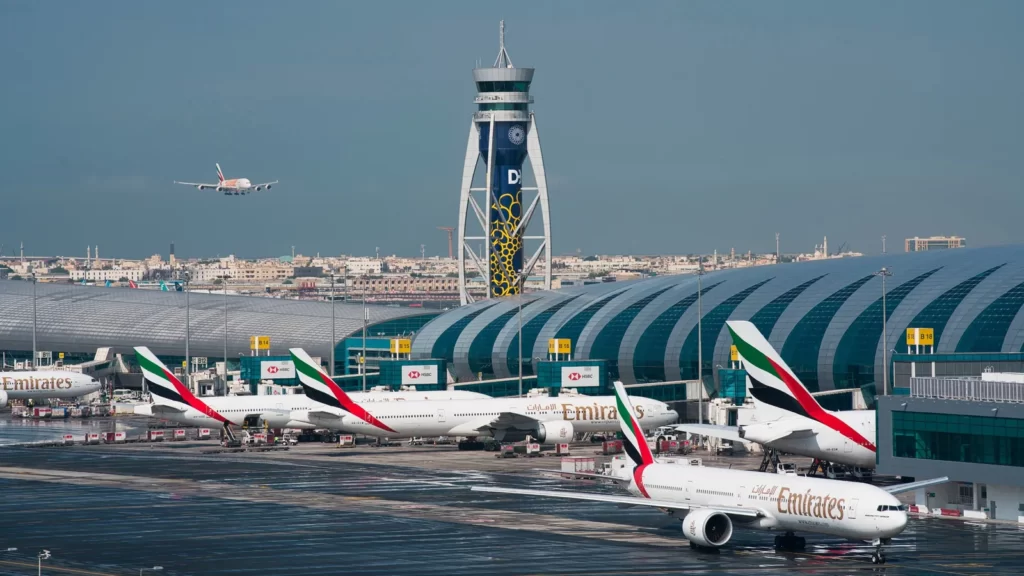
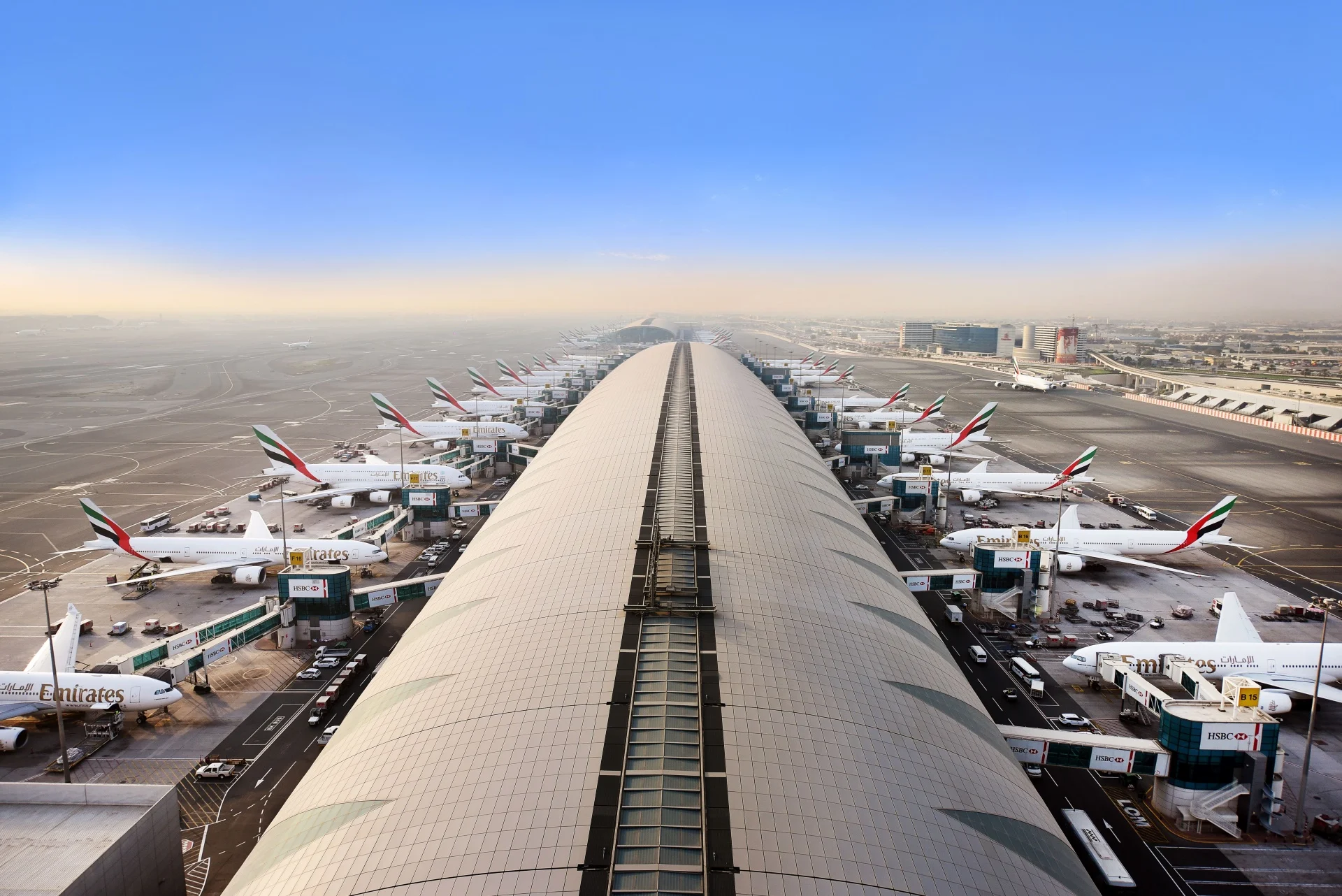
Dubai International Airport (DXB) continues to dominate as the world’s busiest hub, offering over 5.1 million seats this month. Known for its state-of-the-art terminals and luxury amenities, DXB serves as a major connection point between Europe, Asia, and the Americas.
London Heathrow (LHR) and Amsterdam Airport (AMS) remain key European gateways. Heathrow (LHR) handles more than 4.1 million seats, while AMS supports 3.66 million seats, both providing efficient connections and extensive lounges for international travelers.
Istanbul Airport (IST), Seoul Incheon (ICN), and other top airports like Paris Charles de Gaulle (CDG) and Singapore Changi (SIN) continue to grow. IST has increased capacity by 5%, highlighting its rising importance, while Hong Kong International (HKG) shows the largest growth among the top 10, reflecting Asia-Pacific’s recovery in international travel.
Dubai International Airport Maintains Global Leadership
Dubai is the world’s busiest international hub, reflecting Emirates (EK) and other carriers’ growing capacity.
The airport has expanded by 4% compared to September 2024, adding thousands of seats to key destinations. Its strategic location in Dubai (DXB) ensures connectivity between Europe, Asia, and the Americas.
This capacity growth indicates strong passenger demand, particularly from Middle East hubs. DXB’s rise demonstrates how airports in the region are leveraging strategic locations to capture international traffic.

Istanbul Airport’s Rapid Growth
IST has climbed from seventh to fourth place, offering 3.53 million seats, a 5% increase compared to last year. Turkish Airlines (TK) has expanded international routes, supporting this growth.
The airport’s rise highlights Istanbul (IST) as an emerging international hub connecting Europe, Asia, and the Middle East efficiently.
Its strategic expansion attracts transit passengers and strengthens Turkey’s aviation footprint. Istanbul’s surge reflects broader regional growth trends in Middle Eastern air travel.
European Airports Remain Strong
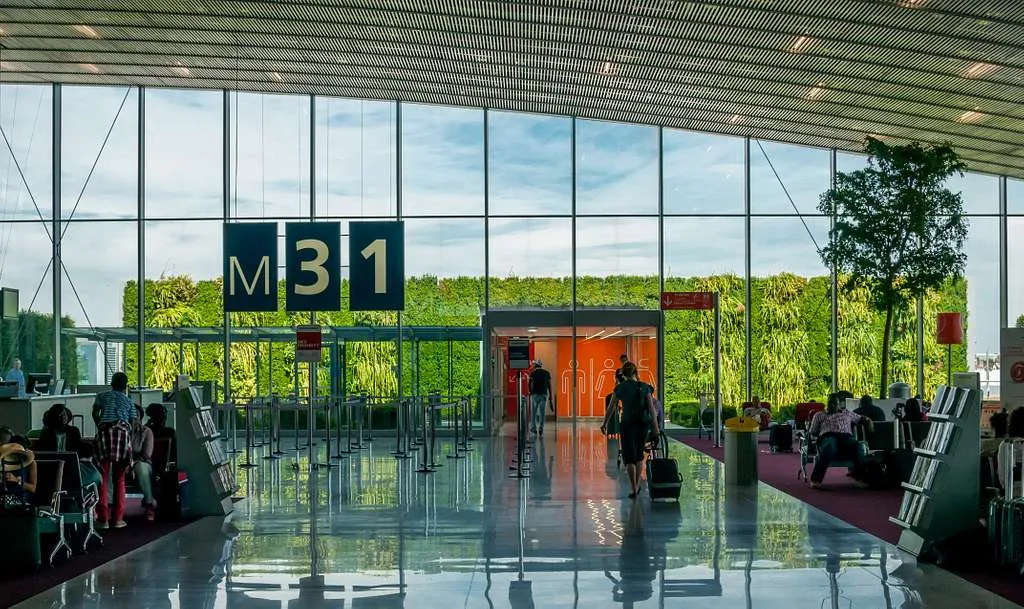
LHR and AMS continue to serve as major European gateways. Heathrow maintains 4.16 million seats, consistent with last year, supporting carriers like British Airways (BA). Amsterdam increased capacity by 3%, reflecting sustained international demand.
Paris Charles de Gaulle (CDG) and Frankfurt (FRA) remain stable in the top 10, emphasizing Europe’s consistent connectivity. Airlines such as Air France (AF) and Lufthansa (LH) contribute to maintaining these airports’ competitive positions.
Let’s compare these four busiest airports in Europe side by side:
| Feature | Paris Charles de Gaulle (CDG) | Frankfurt Airport (FRA) | London Heathrow (LHR) | Amsterdam Schiphol (AMS) |
|---|---|---|---|---|
| Location | Roissy-en-France, near Paris, France | Frankfurt, Hesse, Germany | London, United Kingdom | Haarlemmermeer, near Amsterdam, Netherlands |
| Opened | 1974 | 1936 | 1946 (civil operations) | 1916 (military), 1920 (civil) |
| Major Hub Airline | Air France (AF) | Lufthansa (LH) | British Airways (BA) | KLM Royal Dutch Airlines (KL) |
| Runways | 4 runways | 4 runways | 2 runways | 6 runways |
| Terminals | 3 main terminals (T1, T2 with sub-terminals, T3) | 2 main terminals (T1, T2; T3 under construction) | 4 passenger terminals | 1 terminal divided into 3 departure halls |
| Key Facilities | – Duty-free shopping – CDGVAL people mover – High-speed TGV rail | – Major cargo hub – ICE long-distance rail – VIP terminal & lounges | – Heathrow Express train – Extensive shopping & lounges – VIP services | – Schiphol Plaza shopping – High-speed rail to Europe – Large cargo operations |
| Notable Strengths | Major European-African connections; strong transfer hub | Leading European cargo hub; intercontinental reach | One of the world’s busiest for international passengers; strong transatlantic links | Efficient single-terminal design; strong European and intercontinental connectivity |
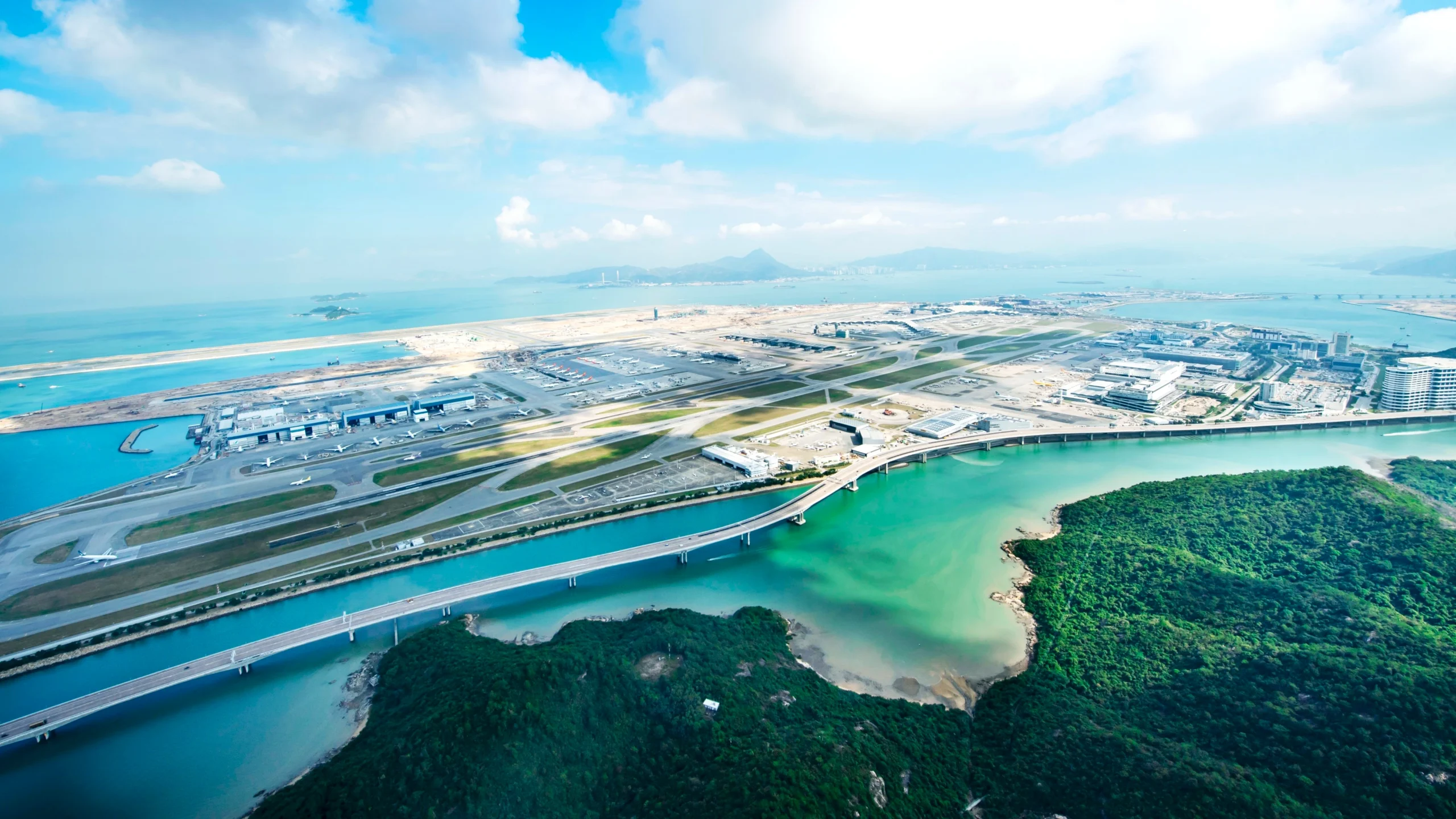
Asia-Pacific Airports
Hong Kong International Airport (HKG) achieved the largest capacity growth among the top 10, increasing by 8%, adding 221,389 seats. This growth indicates a strong recovery in international travel in the Asia-Pacific region.
Conversely, Seoul Incheon International Airport (ICN) experienced a 2% decline, signaling operational constraints or reduced route capacity. Singapore Changi (SIN) continues steady performance with 3.4 million seats, demonstrating resilience in international travel demand
Middle East Hubs’ Connectivity
Doha and Dubai exemplify how Middle Eastern hubs dominate global air travel. These airports serve as key transfer points for international travelers, connecting multiple continents. Airlines such as Qatar Airways and Emirates facilitate rapid growth and expanded seat capacity.
The rise of Istanbul (IST) also contributes to the Middle East and adjacent regions’ growing influence. Together, these hubs create a competitive network that reshapes global aviation patterns.
| Feature | Dubai International (DXB) | Istanbul Airport (IST) |
|---|---|---|
| Location | Dubai, United Arab Emirates | Arnavutköy, Istanbul, Turkey |
| Opened | 1960 | 2018 |
| Major Hub Airline | Emirates (EK), flydubai (FZ) | Turkish Airlines (TK) |
| Runways | 2 runways (expansion planned) | 5 runways (planned capacity for 6) |
| Terminals | 3 passenger terminals (T1, T2, T3) | 1 massive terminal (world’s largest single building) |
| Key Facilities | – Extensive duty-free zone – DXB Metro connection – Premium lounges & airside hotels | – State-of-the-art design – Advanced baggage systems – High-capacity expansion |
| Notable Strengths | Largest international passenger flows; luxury transit hub connecting Europe, Asia, and the Americas | Rapidly growing mega-hub; strategic bridge between Europe and Asia with high expansion potential |
These two airports have expanded effectively and have been able to capture more transit passengers. Those with slower growth, like ICN, indicate regional or operational challenges that may affect traffic in 2025.
Busiest International Airports for September 2025:
| Rank | Airport Code | Airport Name | Seats (Total) | Same Month 2024 Ranking |
|---|---|---|---|---|
| 1 | DXB | Dubai International | 5,103,110 | 1 |
| 2 | LHR | London Heathrow | 4,157,631 | 2 |
| 3 | AMS | Amsterdam | 3,660,399 | 3 |
| 4 | IST | Istanbul Airport | 3,534,358 | 7 |
| 5 | ICN | Seoul Incheon International Apt | 3,457,303 | 4 |
| 6 | CDG | Paris Charles de Gaulle | 3,419,739 | 5 |
| 7 | SIN | Singapore Changi | 3,401,120 | 6 |
| 8 | FRA | Frankfurt International | 3,341,152 | 8 |
| 9 | HKG | Hong Kong International | 3,107,473 | 9 |
| 10 | DOH | Doha (QA) | 2,726,623 | 10 |

Bottom Line
The data indicates several global trends. Middle East airports demonstrate significant growth, Europe maintains stability, and Asia-Pacific shows recovery with pockets of decline. Increasing seat capacity reflects airlines’ responses to rising demand.
DXB continues to hold its global leadership in international travel, supported by its strategic location and airline expansion. Istanbul Airport’s rise highlights new opportunities for transit hubs.
European airports such as Heathrow and Amsterdam maintain strong performance, while Asia-Pacific airports show mixed results. Middle East hubs remain critical in shaping the global aviation network for 2025.
Stay tuned with us. Further, follow us on social media for the latest updates.
Join us on Telegram Group for the Latest Aviation Updates. Subsequently, follow us on Google News