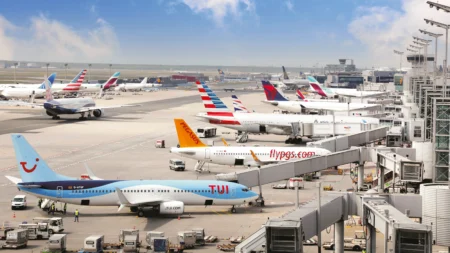
Aeromexico’s (AM) domestic network is centered at Mexico City. Of the top 30 busiest domestic routes by frequency, 28 had Benito Juárez International (MEX) as one of the endpoints, highlighting the hub’s operational dominance.
Although secondary growth at Felipe Ángeles (NLU) continues to keep MEX at the core of the carrier’s connectivity strategy, the most classic of the capital’s trunk routes, most notably to Cancun, Monterrey, and Guadalajara, remain the busiest destinations, both in terms of frequency and available seat miles (ASMs).

Busiest Routes by Flights
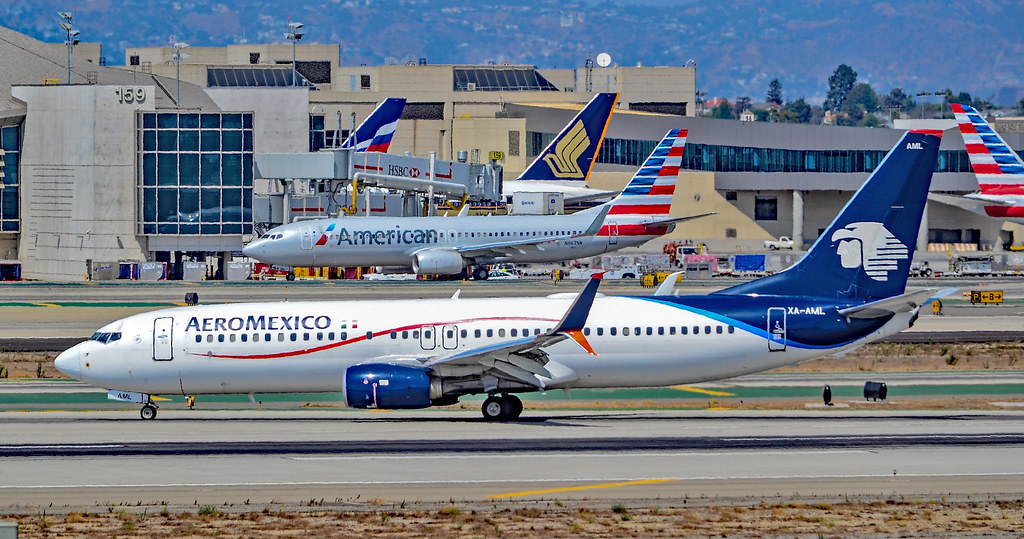
The Cancun–Mexico City route is the busiest Aeromexico’s domestic route with 889 monthly flights in both directions. This route has a unique twin demand: Cancun’s status as a premier leisure market and MEX’s role as a primary domestic and international hub.
Ranking second and third are Mexico City–Monterrey (809 flights) and Mexico City–Guadalajara (797) routes, two business-oriented city pairs between major cities with strong O&D demand.
Other notable busiest routes include:
- Mexico City–Merida: 499 flights
- Mexico City–Tijuana: 465 flights
- Hermosillo–Mexico City: 343 flights
Of particular interest, even some of the secondary cities like Aguascalientes, Torreon, and Ciudad Juarez see over 100 monthly flights, again demonstrating the depth of Aeromexico’s MEX-centered network.
Busiest Routes by Seats
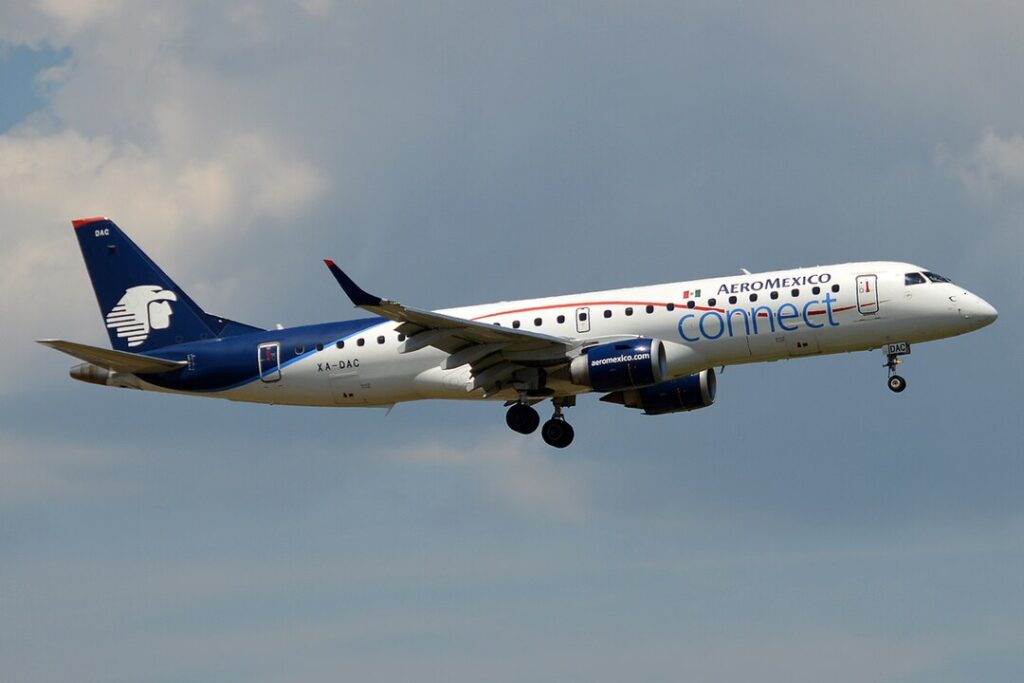
In terms of the total seats offered, the Cancun–Mexico City route is again the busiest route with 152,668 seats on offer in June. It was followed by the following routes:
- Mexico City–Monterrey: 147,700 seats
- Guadalajara–Mexico City: 134,549 seats
- Mexico City–Merida: 85,534 seats
- Mexico City–Tijuana: 76,428 seats
In total, all of these top five were flown using larger narrowbody aircraft. Interestingly, some of the regional markets, while having fewer frequencies, still had high seat loads.
Busiest Routes by ASMs
Distance is the main determining factor for ASM rankings, and not surprisingly, lengthy trans-Mexico flights feature highly towards the top.
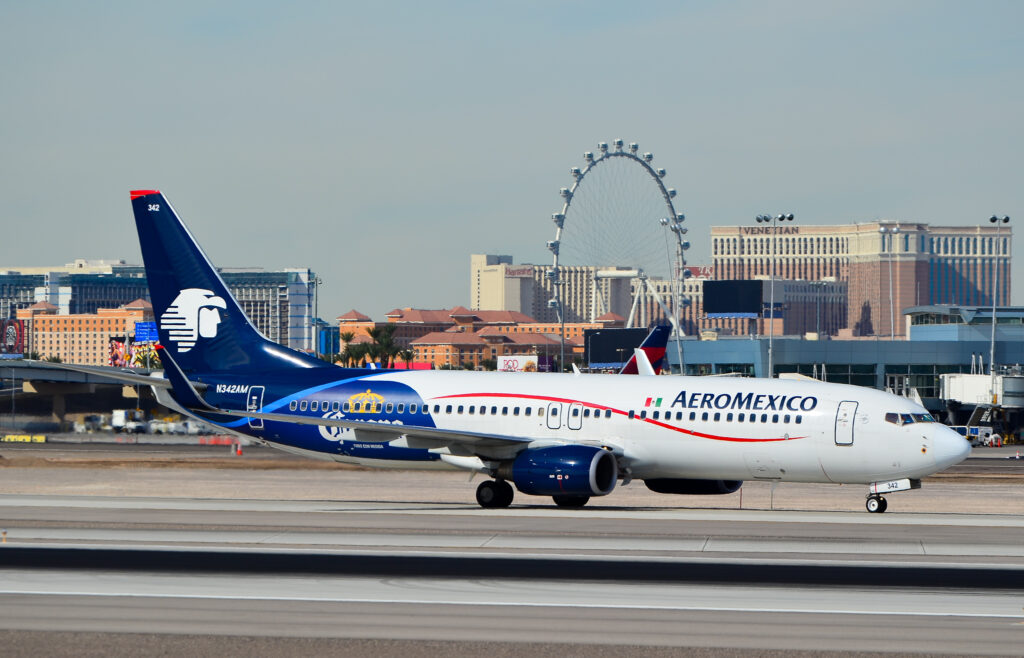
Mexico City–Cancun topped the ASMs with more than 122.1 million ASMs in June 2025. Mexico City–Tijuana ranked second at 109.2 million, even though it had fewer flights than other busiest routes. The reason is the 1,700-mile flight distance, one of Aeromexico’s longest domestic flights.
Notable routes with high ASMs are;
- Mexico City–Monterrey: 65.2 million
- Hermosillo–Mexico City: 58.6 million
- Mexico City–Merida: 53.1 million
There are a number of medium-length sectors, such as Ciudad Juarez, Mexicali, and La Paz, each with more than 28 million ASMs. Notably, even low-frequency sectors such as La Paz–Mexico City (120 flights) had high ASMs (17.0 million) due to longer flight distances.
Key Observations
What is notable in Aeromexico’s domestic planning is the mix of business and leisure traffic. The carrier sustains high-frequency operations on short-distance routes such as Oaxaca, Torreon, and Aguascalientes, although these generate significantly fewer ASMs.
At the opposite extreme, it links peripheral markets such as Tijuana and Hermosillo to match low-fare airlines in capacity and frequency to compete. Aeromexico’s minimal use of Felipe Ángeles Airport (NLU) also appears.
Moreover, the data also validates that Aeromexico continues to operate the full-service legacy carrier segment, holding a highly concentrated network with stable scheduling, in contrast to low-cost competitors that have a propensity to fly point-to-point or seasonal frequency swings.
| Rank | Route | Flights | Seats | ASMs |
| 1 | Cancun (CUN) – Mexico City (MEX) | 889 | 152668 | 122134400 |
| 2 | Mexico City (MEX) – Monterrey (MTY) | 809 | 147700 | 65283400 |
| 3 | Guadalajara (GDL) – Mexico City (MEX) | 797 | 134549 | 38481014 |
| 4 | Mexico City (MEX) – Merida (MID) | 499 | 85534 | 53116614 |
| 5 | Mexico City (MEX) – Tijuana (TIJ) | 465 | 76428 | 109215612 |
| 6 | Hermosillo (HMO) – Mexico City (MEX) | 343 | 58375 | 58666875 |
| 7 | Mexico City (MEX) – Villahermosa (VSA) | 310 | 51088 | 21201520 |
| 8 | Mexico City (MEX) – Puerto Vallarta (PVR) | 294 | 48795 | 20005950 |
| 9 | Chihuahua (CUU) – Mexico City (MEX) | 277 | 47314 | 36621036 |
| 10 | Mexico City (MEX) – San Jose del Cabo (SJD) | 252 | 44385 | 32534205 |
| 11 | Ciudad Juarez (CJS) – Mexico City (MEX) | 227 | 36998 | 35407086 |
| 12 | Mexico City (MEX) – Oaxaca (OAX) | 165 | 28026 | 6389928 |
| 13 | Mexico City (MEX) – Torreon (TRC) | 154 | 26248 | 13255240 |
| 14 | Mexico City (MEX) – Mexicali (MXL) | 130 | 21310 | 28811120 |
| 15 | Aguascalientes (AGU) – Mexico City (MEX) | 121 | 19522 | 5114764 |
| 16 | La Paz (LAP) – Mexico City (MEX) | 120 | 21594 | 17059260 |
| 17 | Leon/Guanajuato (BJX) – Mexico City (MEX) | 119 | 19772 | 3756680 |
| 18 | Mexico City (MEX) – Tuxtla Gutierrez (TGZ) | 114 | 19017 | 8443548 |
| 19 | Mexico City (MEX) – San Luis Potosi (SLP) | 102 | 16746 | 3784596 |
| 20 | Mexico City (MEX) – Veracruz (VER) | 100 | 16156 | 3069640 |
| 21 | Ciudad del Carmen (CME) – Mexico City (MEX) | 98 | 16898 | 8094142 |
| 22 | Mexico City (MEX) – Tapachula (TAP) | 88 | 14464 | 7926272 |
| 23 | Mexico City (MEX) – Ixtapa/Zihuatanejo (ZIH) | 72 | 11766 | 2376732 |
| 24 | Huatulco (HUX) – Mexico City (MEX) | 69 | 11130 | 3483690 |
| 25 | Acapulco (ACA) – Mexico City (MEX) | 68 | 11192 | 2126480 |
| 26 | Cancun (CUN) – Mexico City (NLU) | 61 | 9796 | 7885780 |
| 27 | Chetumal (CTM) – Mexico City (MEX) | 60 | 9804 | 6921624 |
| 28 | Mexico City (MEX) – Puerto Escondido (PXM) | 60 | 10776 | 2995728 |
| 29 | Cozumel (CZM) – Mexico City (MEX) | 58 | 9580 | 7596940 |
| 30 | Mexico City (MEX) – Manzanillo (ZLO) | 58 | 9280 | 3201600 |
Bottom Line
Aeromexico’s top 30 domestic routes in June 2025 are a good indicator of its existing network strategy. Mexico City remains the center of almost all major domestic operations, and Cancun, Monterrey, Guadalajara, and Merida remain the most connected.
Even as long-haul domestic connections are disproportionately driving ASMs, and high-frequency short routes are holding steady on seat counts, the airline seems determined to make its full-service product work in the nation’s busiest corridors.
Trends to watch in the future include how much more traffic can be diverted via Felipe Ángeles (NLU) and if new secondary cities gain prominence as point-to-point markets in future schedules.
Stay tuned with us. Further, follow us on social media for the latest updates.
Join us on Telegram Group for the Latest Aviation Updates. Subsequently, follow us on Google News.