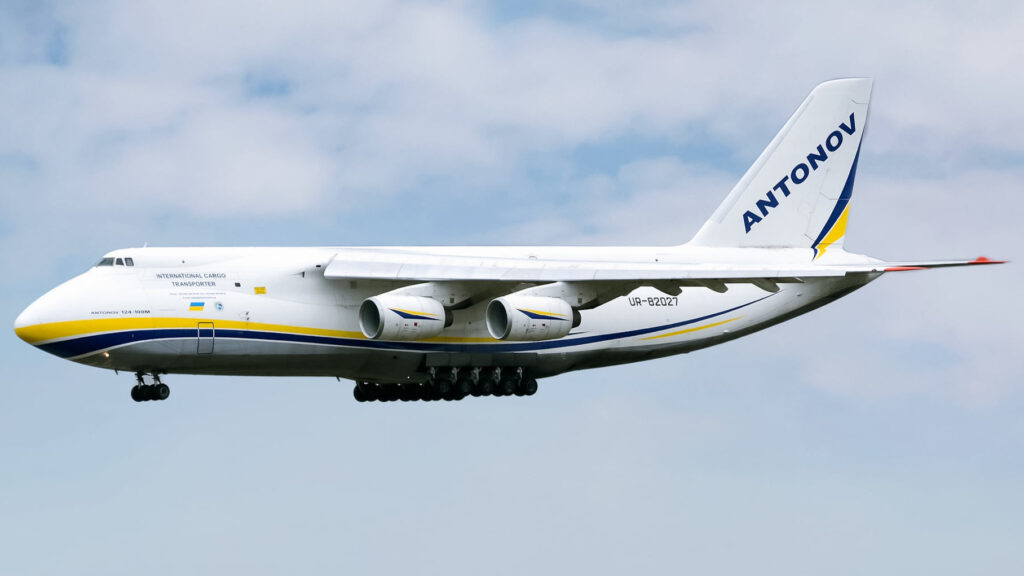
Airports are not just terminals for arrivals and departures — they are the invisible infrastructure binding the global economy together.
In 2025, connectivity between global hubs continues to shift as carriers consolidate operations, new long-haul narrowbodies open fresh city pairs, and emerging markets strengthen their regional networks.
The latest global ranking of the 50 most connected airports in 2025 highlights an intriguing realignment: while Europe retains dominance in the upper echelons, Asia and North America are steadily closing the gap.

Europe Retains Its Supremacy
Europe remains the heart of global air connectivity. London Heathrow (LHR) holds onto the top spot, reaffirming its status as the world’s leading international hub.
Despite slot constraints and expansion delays, Heathrow continues to channel more connecting passengers than any other airport. British Airways alone accounts for over half of all flights, underlining the strength of the UK’s flag carrier in maintaining intercontinental reach.
Close behind, Istanbul Airport (IST) rises dramatically from eighth to second place, powered by Turkish Airlines’ far-reaching global network.
With nearly 80% of flights operated by the national carrier, Istanbul has solidified its strategic position between Europe and Asia — a modern Silk Road of air travel.
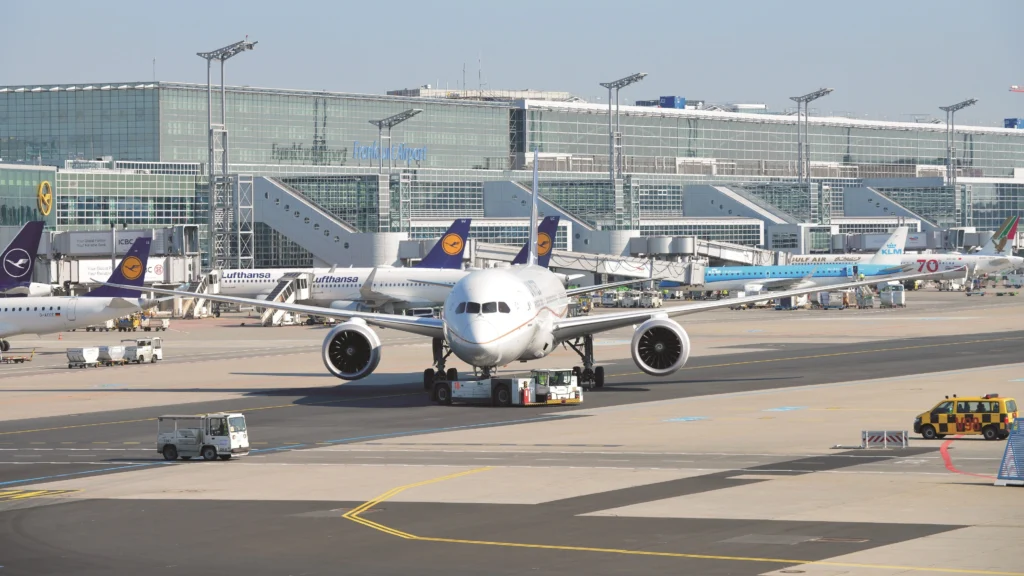
Elsewhere, Amsterdam Schiphol (AMS) and Frankfurt (FRA) remain critical transfer nodes for KLM and Lufthansa, respectively. Despite operational pressures and capacity limits, both airports connect Europe’s secondary cities with long-haul routes across the Americas, Africa, and Asia.
Paris Charles de Gaulle (CDG) and Madrid-Barajas (MAD) also maintain strong performances, leveraging their national carriers’ reach — Air France and Iberia — particularly toward Latin America and Africa.
Interestingly, Vienna (VIE) and Zurich (ZRH) reappear in the top 50, showing that mid-sized European airports can still punch above their weight when anchored by efficient flag carriers like Austrian Airlines and SWISS.
Asia’s Expanding Connectivity
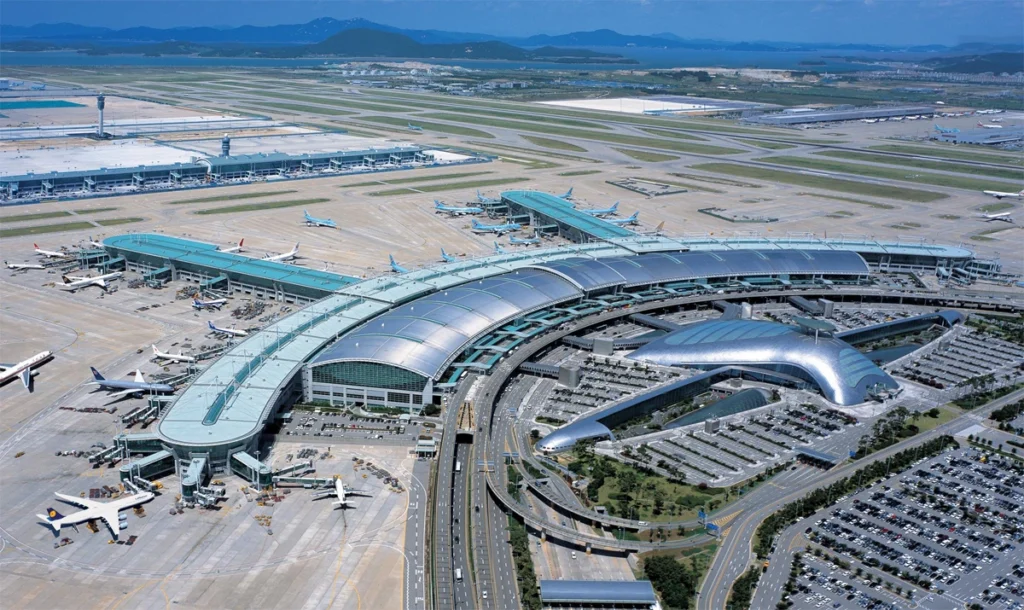
Asia continues to demonstrate remarkable growth in air connectivity, reflecting the region’s expanding middle class and airline competition. Kuala Lumpur (KUL), operated primarily by AirAsia, remains among the most connected airports in Asia, tied for fourth globally.
The rise of low-cost connectivity across Southeast Asia has been instrumental in this achievement, turning Kuala Lumpur into a cross-border transfer point for budget travelers.
Seoul Incheon (ICN), Tokyo Haneda (HND), and Singapore Changi (SIN) maintain their reputation as high-efficiency transit hubs.
These airports have balanced strong domestic operations with extensive long-haul connectivity, supported by their respective flag carriers — Korean Air, All Nippon Airways, and Singapore Airlines.
In South and Southeast Asia, Bangkok Suvarnabhumi (BKK), Manila (MNL), and Jakarta (CGK) all show solid connectivity growth.
However, their limited slot capacity and infrastructure constraints continue to cap further expansion. Delhi (DEL), representing India’s growing aviation market, enters the top 40, powered by IndiGo’s expanding domestic and regional operations.
China’s major hubs — Shanghai Pudong (PVG), Guangzhou (CAN), and Hong Kong (HKG) — remain critical players in East Asian connectivity, though their relative rankings have fluctuated due to slower international recovery and shifting travel patterns post-pandemic.

North America’s Multi-Hub Powerhouses
North America dominates the mid-section of the list, led by airports that function as sprawling domestic and transcontinental networks.
Chicago O’Hare (ORD), Atlanta Hartsfield-Jackson (ATL), and Dallas-Fort Worth (DFW) all feature prominently, representing United, Delta, and American’s fortress hubs.
These airports rely heavily on connecting domestic traffic, but they also serve as springboards for international services to Europe, Asia, and Latin America.
John F. Kennedy International (JFK) and Los Angeles International (LAX) remain the U.S.’s leading international gateways, though both have slipped slightly due to congestion and the expansion of secondary hubs.
Meanwhile, Miami (MIA) has strengthened its position as the key link to Latin America, largely through American Airlines’ dominance.
Further north, Toronto Pearson (YYZ) and Vancouver (YVR) are Canada’s leading gateways, benefiting from Air Canada’s strategic transpacific and transatlantic services.
On the U.S. West Coast, San Francisco (SFO) and Seattle (SEA) maintain importance for trans-Pacific connectivity, driven by United and Alaska Airlines, respectively.
The rise of Houston (IAH) and Newark (EWR) underscores United Airlines’ expansive domestic and international network — both hubs feature heavy concentrations of connecting traffic, particularly toward Latin America and Europe.
Middle East and Africa
While the Middle East’s “Big Three” — Emirates, Qatar Airways, and Etihad — once dominated global connectivity rankings, diversification is now evident.
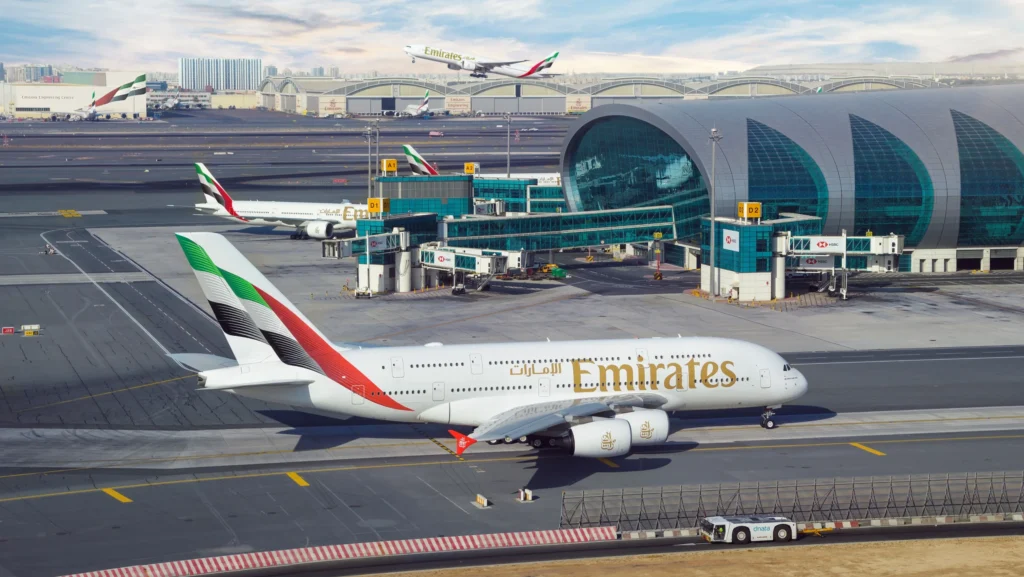
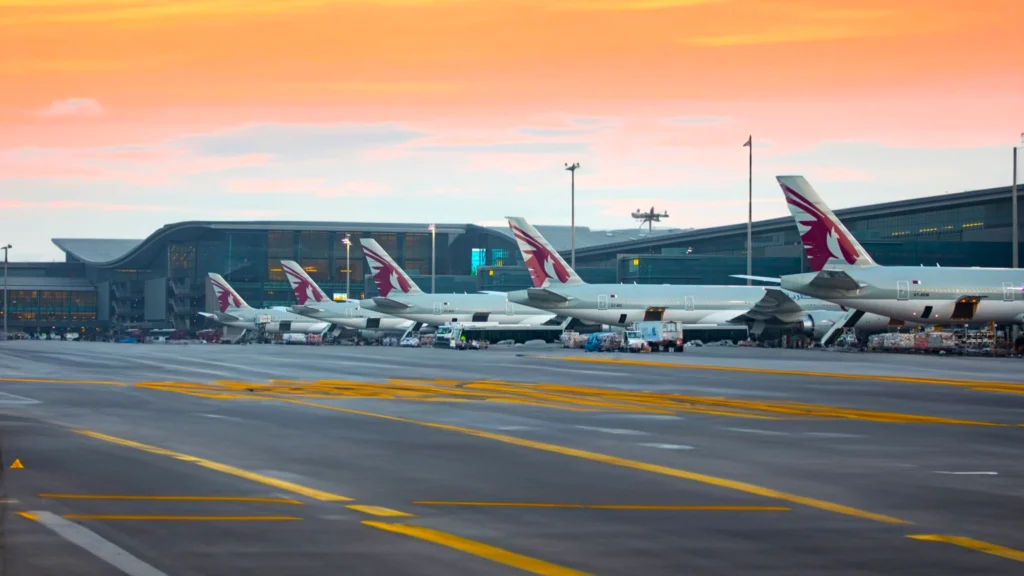
Dubai International (DXB) remains the Middle East’s top performer at rank 15, though its dominance has stabilized as other regional carriers rise. Doha Hamad International (DOH) also holds firm within the top 40.
In Saudi Arabia, Riyadh (RUH) makes significant progress, propelled by national investments into the Kingdom’s Vision 2030 aviation agenda.
Meanwhile, Istanbul’s secondary airport (SAW), dominated by Pegasus Airlines, enters the top 30, representing the growing influence of low-cost carriers in regional connectivity.
Across Africa, Johannesburg (JNB) remains the continent’s most connected airport, driven by Airlink’s growing regional operations and improving intra-African links.

https://commons.wikimedia.org/wiki/File:MEX_-_Mexico_City_International_Airport_Dic_2019.jpg
Latin America’s Expanding Footprint
Latin America’s connectivity continues to evolve around key national carriers and strategically positioned hubs.
Bogotá (BOG) ranks 16th globally, reflecting Avianca’s central role in uniting the Americas. Mexico City (MEX) and Panama City (PTY) follow, with Copa Airlines’ 90% share of Panama’s flights making it one of the world’s most carrier-dominated hubs.
Elsewhere, São Paulo (GRU) retains its spot among the top 50, showcasing LATAM’s extensive South American coverage and growing links to North America and Europe.
The Top 50 Most Connected Airports in 2025
| Rank | Airport | Country | Rank in 2024 | Dominant Carrier | Share of Flights |
|---|---|---|---|---|---|
| 1 | LHR | United Kingdom | 1 | British Airways | 51% |
| 2 | IST | Türkiye | 8 | Turkish Airlines | 79% |
| 3 | AMS | Netherlands | 4 | KLM-Royal Dutch Airlines | 55% |
| 4 | KUL | Malaysia | 2 | AirAsia | 36% |
| 4 | FRA | Germany | 10 | Deutsche Lufthansa AG | 56% |
| 6 | ICN | Korea Republic of | 5 | Korean Air | 22% |
| 7 | ORD | USA | 9 | United Airlines | 49% |
| 8 | ATL | USA | 11 | Delta Air Lines | 79% |
| 9 | HND | Japan | 3 | All Nippon Airways | 36% |
| 10 | CDG | France | 7 | Air France | 56% |
| 11 | SIN | Singapore | 13 | Singapore Airlines | 33% |
| 12 | BKK | Thailand | 12 | Thai Airways International | 24% |
| 13 | DFW | USA | 18 | American Airlines | 85% |
| 14 | JFK | USA | 6 | Delta Air Lines | 35% |
| 15 | DXB | United Arab Emirates | 16 | Emirates | 38% |
| 16 | BOG | Colombia | 20 | Avianca | 53% |
| 17 | MUC | Germany | 25 | Deutsche Lufthansa AG | 54% |
| 18 | IAH | USA | 29 | United Airlines | 80% |
| 19 | PVG | China | 17 | China Eastern Airlines | 30% |
| 20 | MIA | USA | 30 | American Airlines | 66% |
| 21 | MNL | Philippines | 14 | Cebu Pacific Air | 33% |
| 22 | HKG | Hong Kong (SAR), China | 23 | Cathay Pacific Airways | 36% |
| 23 | CGK | Indonesia | 22 | Garuda Indonesia | 18% |
| 24 | LAX | USA | 21 | Delta Air Lines | 20% |
| 24 | MAD | Spain | 28 | Iberia | 48% |
| 26 | YYZ | Canada | 19 | Air Canada | 51% |
| 27 | ATH | Greece | 37 | Aegean Airlines | 39% |
| 28 | FUK | Japan | 31 | Japan Airlines | 18% |
| 28 | SAW | Türkiye | 45 | Pegasus Airlines | 63% |
| 30 | SYD | Australia | 26 | Qantas Airways | 39% |
| 31 | EWR | USA | 27 | United Airlines | 70% |
| 31 | RUH | Saudi Arabia | 42 | Saudi Arabian Airlines | 41% |
| 33 | SFO | USA | 41 | United Airlines | 51% |
| 34 | DOH | Qatar | 36 | Qatar Airways | 77% |
| 35 | MEX | Mexico | 32 | Aeromexico | 57% |
| 35 | CAN | China | 33 | China Southern Airlines | 48% |
| 37 | TPE | Chinese Taipei | 38 | EVA Airways | 22% |
| 38 | JNB | South Africa | 40 | Airlink | 35% |
| 39 | DEL | India | 24 | IndiGo | 39% |
| 39 | FCO | Italy | 35 | ITA Airways | 29% |
| 39 | PTY | Panama | 48 | Copa Airlines | 90% |
| 39 | SEA | USA | 34 | Alaska Airlines | 54% |
| 43 | BOS | USA | 39 | Delta Air Lines | 27% |
| 44 | BCN | Spain | 43 | Vueling Airlines | 41% |
| 45 | SGN | Vietnam | 54 | Vietnam Airlines | 37% |
| 46 | YVR | Canada | 47 | Air Canada | 43% |
| 46 | VIE | Austria | 52 | Austrian Airlines AG dba Austrian | 52% |
| 48 | GRU | Brazil | 46 | LATAM Airlines Group | 53% |
| 49 | ZRH | Switzerland | 56 | SWISS | 54% |
| 50 | MEL | Australia | 53 | Qantas Airways | 32% |
Source: OAG
Bottom Line
The 2025 ranking of the world’s most connected airports reveals an increasingly multipolar aviation network.
Europe’s hubs remain powerful, Asia’s are expanding rapidly, and North America’s vast domestic systems continue to dominate by volume.
Stay tuned with us. Further, follow us on social media for the latest updates.
Join us on Telegram Group for the Latest Aviation Updates. Subsequently, follow us on Google News