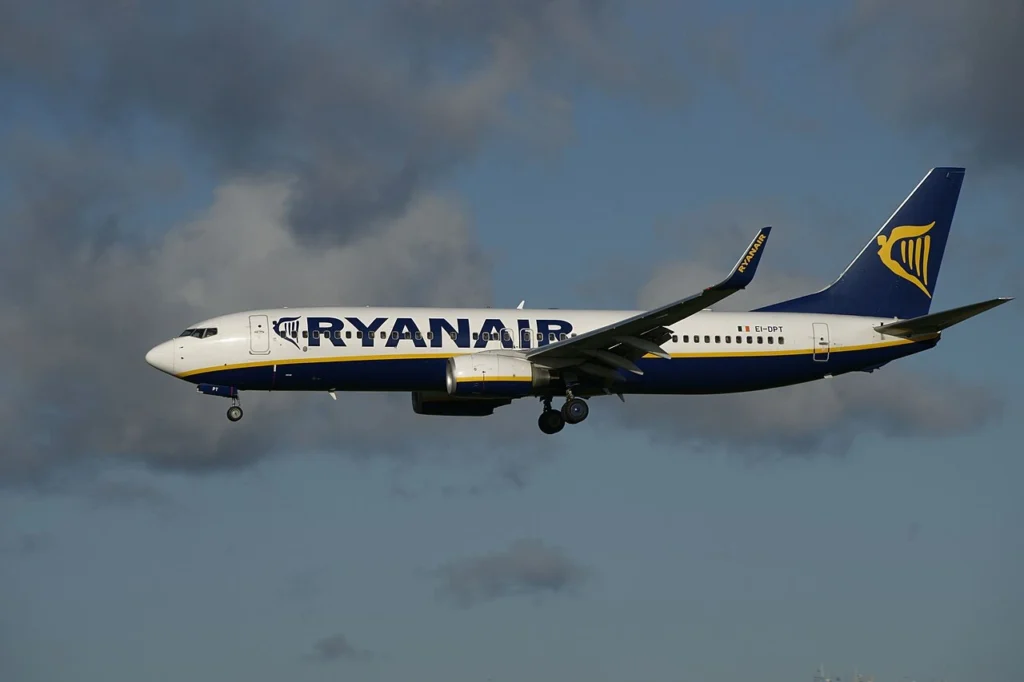
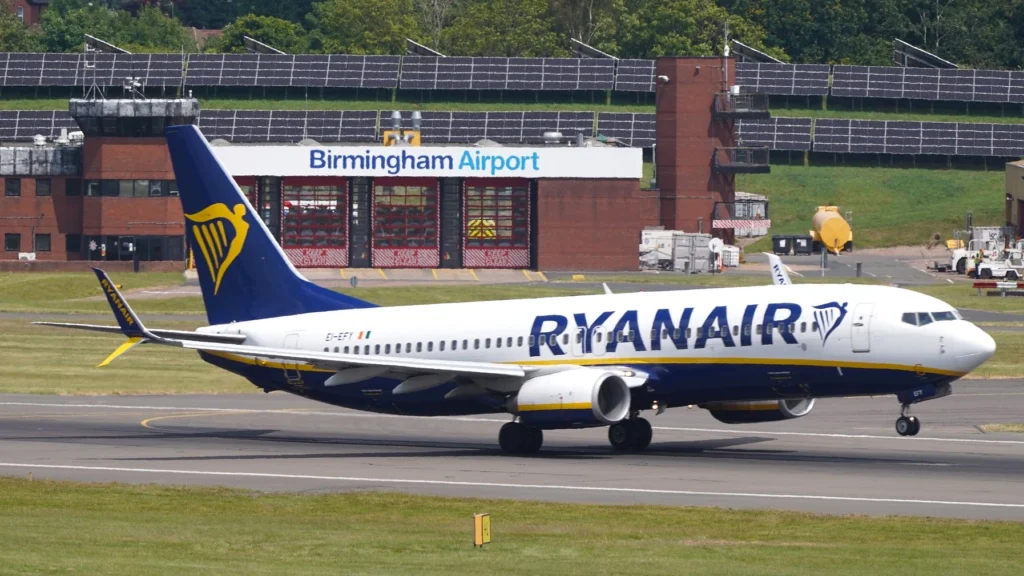
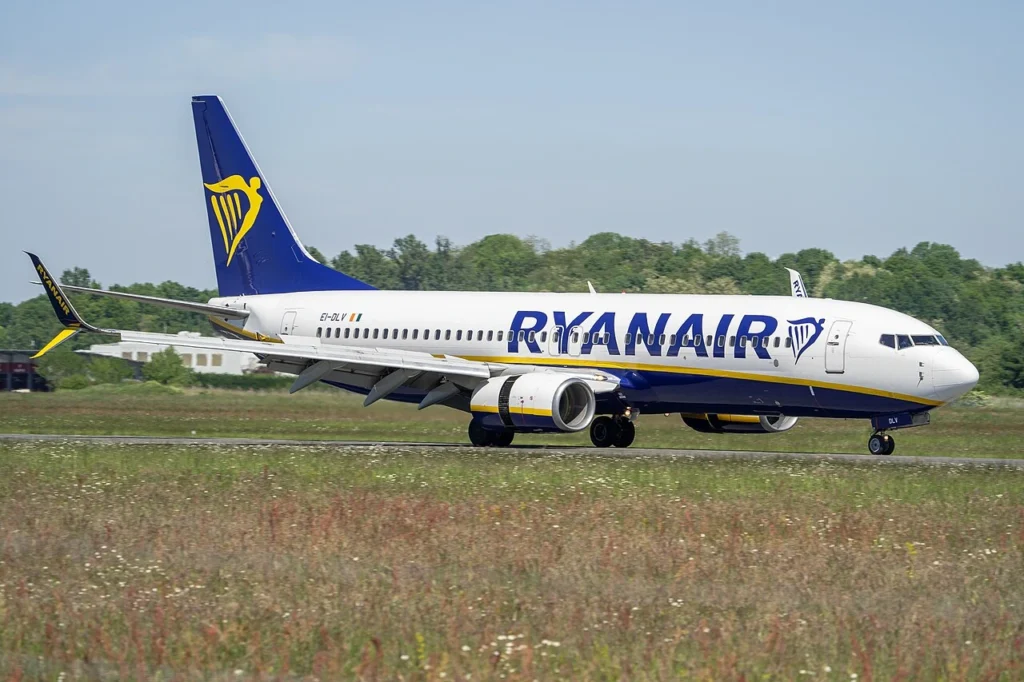
THESSALONIKI, GREECE— A Ryanair (FR) Boeing 737-800 suffered a serious in flight incident on July 10 after a fan blade broke away from its right engine and sent debris into the aircraft fuselage.
The impact shattered a cabin window and caused partial depressurization, leaving a passenger partly pulled through the opening during the flight.
Ryanair flight FR1879 was operating from Thessaloniki International Airport (SKG) to Memmingen Airport (FMM) when the incident occurred during the climb.
The aircraft, a Boeing 737 800 operated by Ryanair subsidiary Malta Air, was carrying 149 passengers and four flight attendants.
Engine Failure Details During Climb
A preliminary investigation by the US National Transportation Safety Board found that the aircraft experienced a No 2 engine fan blade failure shortly after departure.
The broken engine components struck the fuselage and shattered the window beside seat 11F, creating a sudden opening in the cabin.
Passenger Ljubisa Karović, a 61 year old Serbian entrepreneur seated beside the window, was partially pulled outside the aircraft. His head and right arm went through the opening before other passengers grabbed him and pulled him back into the cabin.
The flight crew responded after receiving a high vibration warning from the right engine.
They reduced engine power and continued monitoring the situation, but vibration later increased sharply and a loud bang was heard, prompting the pilots to declare an emergency and begin an immediate descent.
Emergency Return to Thessaloniki
The cabin crew reported strong continuous vibration along with a small amount of fog or smoke before the oxygen masks deployed. The cabin subsequently depressurized, while the pilots put on their oxygen masks and returned the aircraft to Thessaloniki.
The Boeing 737 800 landed safely after the emergency descent, with the most seriously affected passenger receiving medical assistance. Reports indicate that fellow passengers helped secure Karović before an onboard doctor attended to him.
The NTSB later took full responsibility for the investigation after Greek authorities delegated the case to the US agency. Boeing and CFM International are assisting investigators as they examine the engine failure and the resulting damage.
Bird Strike History Before Engine Failure
Investigators identified four reported bird strikes involving the aircraft’s right engine during the 12 months before the incident. Bird remains were reportedly discovered in two of those cases, although fan blades had also undergone ultrasonic inspections without reported findings.
The investigation will examine whether earlier bird encounters contributed to damage that later affected the fan blade. Investigators are also expected to review how previous inspections were performed and whether additional factors played a role in the failure.
The incident has also renewed attention on FAA requirements introduced after earlier Boeing 737 fan blade accidents. The required engine related modifications had not yet been completed on the Ryanair aircraft, with the current compliance deadline extending to July 2028.
The NTSB investigation remains ongoing, and the preliminary findings do not represent a final determination of the cause. Ryanair has said it will wait for the final report before commenting further on compensation or other aspects of the incident.
Stay tuned with us. Further, follow us on social media for the latest updates.
Join us on Telegram Group for the Latest Aviation Updates. Subsequently, follow us on Google News