WASHINGTON, D.C.- Boeing is facing renewed attention over aircraft cybersecurity after researchers demonstrated how a small hardware device could manipulate critical Boeing 737 systems through an externally accessible maintenance port. The proof-of-concept was presented at the USENIX cybersecurity conference and was shared with Boeing over several years.
The research does not involve a commercial airline operation or a specific airport. Instead, it focuses on the Boeing 737 platform and highlights how temporary physical access to an aircraft on the ground could allow a sophisticated attacker to interfere with flight management systems. Boeing stated that existing protections significantly reduce the feasibility of any real-world attack.
Researchers Demonstrate Boeing 737 Physical Access Attack
A team from the University of California San Diego and Oberlin College spent more than a decade studying whether a commercially available aircraft could be compromised through physical access rather than remote hacking.
The researchers developed a prototype device roughly the size of a coin that costs less than $100. According to their findings, the device can be installed in under a minute through an externally accessible maintenance port on a Boeing 737.
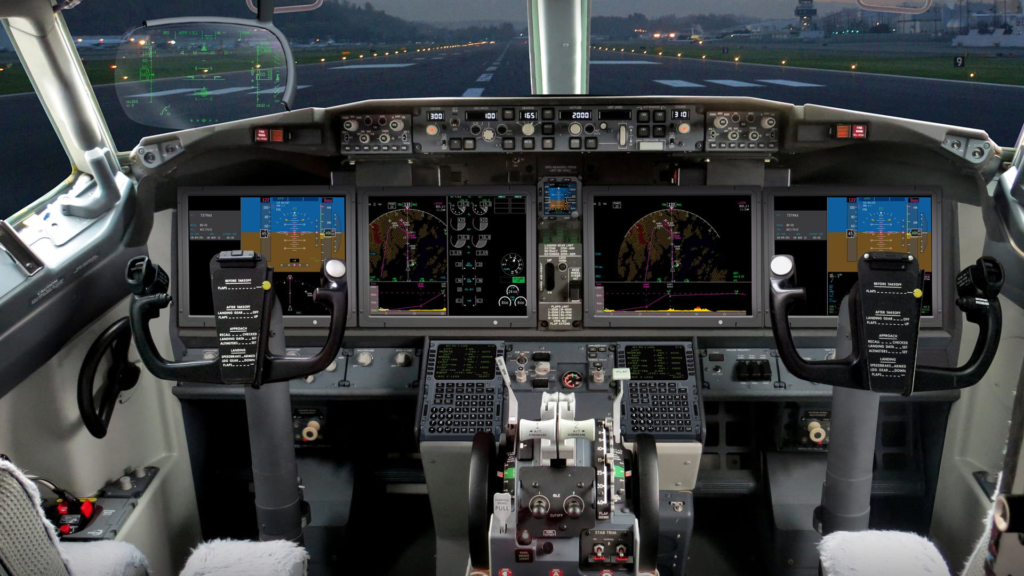
Once connected, the hardware is capable of transmitting electrical signals across one of the aircraft’s internal communication networks. In laboratory testing, those signals allowed the researchers to spoof commands sent to systems responsible for flight management and cockpit displays.
The researchers emphasized that the project was designed to expose potential security weaknesses rather than demonstrate an immediate operational threat. They intentionally withheld technical details that could enable misuse.

Potential Impact on Flight Operations
The research suggests that if an attacker successfully installed the device, several flight management functions could theoretically be manipulated.
Among the demonstrated capabilities were:
- Modifying autopilot flight waypoints.
- Altering aircraft weight calculations.
- Changing outside air temperature values used during performance calculations.
- Displaying misleading information on cockpit screens while masking the underlying changes.
According to the researchers, these actions could influence takeoff calculations, navigation planning, or autopilot routing under certain circumstances. They stressed that these demonstrations were conducted on a dedicated avionics test platform assembled from Boeing 737 components rather than an operational passenger aircraft.
The team noted that manual pilot intervention would override autopilot commands in many situations and that cross-checking other cockpit instruments could reveal inconsistencies. However, they argued that misleading information could create confusion during critical phases of flight, Wired flagged.

How the Research Was Conducted
The project originated after the researchers completed earlier cybersecurity work involving connected automobiles.
Unable to purchase an entire aircraft, the team acquired Boeing 737 avionics components over several years and assembled a laboratory test environment known as Triton. This setup enabled them to study communication between flight computers and cockpit interfaces without using an operational aircraft.
The researchers eventually identified an externally accessible connector linked to critical avionics systems. Through additional testing, they developed what they called the “Bus Driver” technique, allowing higher-current electrical signals to override legitimate communications on that network.
Later versions of the prototype included a Wi-Fi radio that could theoretically allow remote communication after installation through an aircraft’s onboard connectivity systems. The researchers stated this capability remained part of their proof-of-concept demonstration.

Boeing’s Response to the Findings
The researchers first informed Boeing about elements of their work more than six years before the public presentation and continued sharing updates throughout the project.
Boeing reviewed the findings and stated that multiple layers of protection already exist within the aircraft’s design and operating environment.
According to Boeing, its technical experts believe these protections significantly limit both the feasibility and risk of real-world attacks involving physical access to the aircraft.
The researchers also stated that Boeing has not disclosed any immediate software or hardware changes in response to the reported vulnerabilities.

Recommended Security Improvements
Rather than calling for aircraft groundings, the researchers recommended a series of practical and long-term security enhancements.
Their proposals include:
- Removing or permanently sealing the exposed connector.
- Adding software capable of detecting spoofed electrical signals.
- Improving electrical isolation between aircraft systems.
- Introducing cryptographic authentication for communications between avionics components.
Cybersecurity experts who reviewed the work said the research highlights the need for aviation security planning to evolve alongside increasingly capable hardware-based attack techniques.
The researchers also emphasized that they continue to travel on Boeing 737 aircraft and do not believe the findings justify public alarm. Instead, they view the work as an opportunity for manufacturers and operators to strengthen future aircraft cybersecurity.
Stay tuned with us. Further, follow us on social media for the latest updates.
Join us on Telegram Group for the Latest Aviation Updates. Subsequently, follow us on Google News