BERN- Switzerland’s first F-35A Lightning II is taking shape at Leonardo’s Cameri facility in Italy, where the first forward fuselage section and wing have entered assembly. The programme will replace Switzerland’s F/A-18 Hornet fleet, with initial training planned in the United States from 2027.
The first 8 Swiss F-35As are expected to begin training operations at Ebbing Air National Guard Base in Arkansas from mid-2027, while the first Cameri-built aircraft is scheduled for delivery to Switzerland in mid-2028.
Swiss F-35A Production Enters Major New Phase
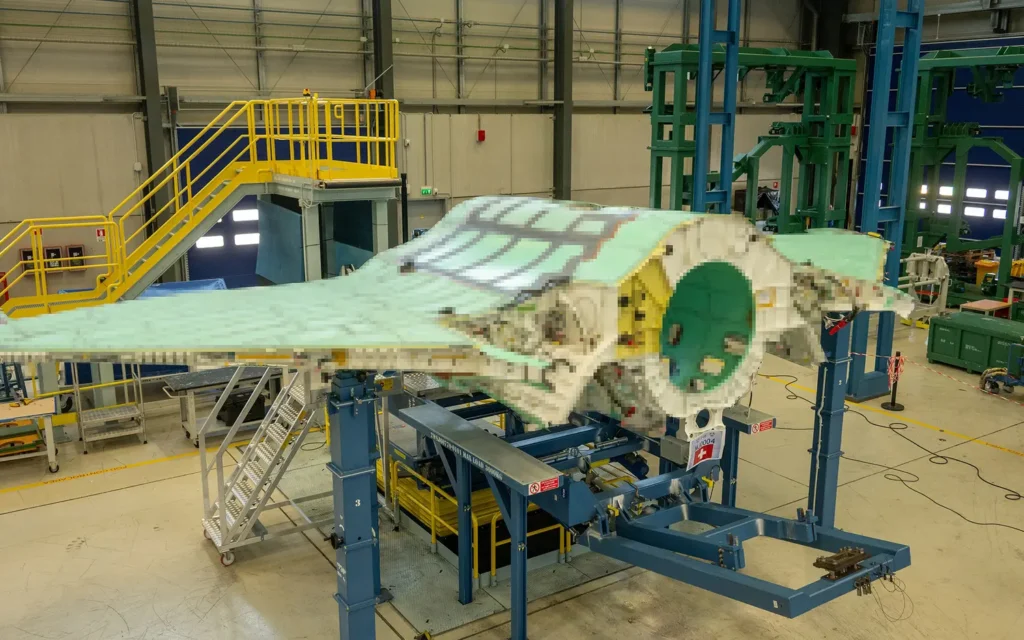
Switzerland’s long-awaited F-35A programme has moved from procurement planning into aircraft production, with the first major structural components now being assembled at Leonardo’s Cameri facility in northern Italy.
The first forward fuselage section and the first wing for a Swiss F-35A have entered assembly. The fuselage section carries the production serial number MJ-4 and will later form part of the aircraft assigned the Swiss military registration J-6004.
The Swiss State Secretariat for Economic Affairs confirmed that important components for the first Swiss F-35A are being manufactured at Cameri.
After the structural work is completed in Italy, the fuselage section with its attached wings will be transported to Lockheed Martin’s facility in Fort Worth, Texas, for integration with the remaining aircraft components and final assembly.
The milestone provides the first clear physical indication of Switzerland’s future F-35A fleet taking shape within the programme’s international production network.
J-6004 Airframe
The aircraft associated with J-6004 will not be one of the first 8 F-35As used for Swiss training in the United States. Its structural components are being produced at Cameri before being shipped to Fort Worth.
The first 8 Swiss F-35As are planned to be assembled in the United States and deployed to Ebbing Air National Guard Base in Arkansas from mid-2027. Their primary purpose will be to support training for Swiss pilots and ground crews.
The first F-35A produced at Cameri for direct delivery to Switzerland is scheduled to be transferred in mid-2028. The airframe now associated with the MJ-4 fuselage section and J-6004 registration is expected to arrive in Switzerland by the end of 2029.
This creates two parallel stages in the Swiss transition. The United States will host the initial training fleet, while Cameri will become the main source of later aircraft delivered directly to Switzerland.
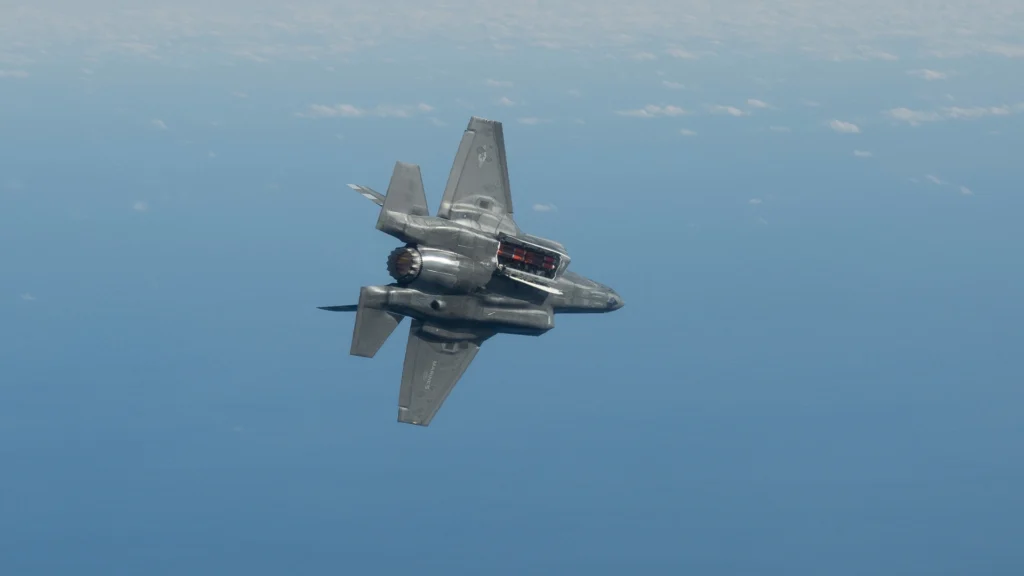
How Switzerland Plans to Receive 36 F-35As
The current Swiss plan calls for a fleet of 36 F-35As. However, the final number remains subject to procurement and pricing developments.
The first 8 aircraft are scheduled to be manufactured and assembled in the United States before being delivered to Ebbing for Swiss training. The following 24 aircraft are planned to be produced at Cameri and then delivered directly to Switzerland.
The original industrial plan proposed that the final 4 aircraft would be assembled in Switzerland by RUAG as an offset project. More recent Swiss government statements indicate that these remaining aircraft could instead be delivered through the Cameri production line.
CHF 6 Billion Spending Cap
Switzerland’s fighter procurement is subject to a referendum-imposed fixed-price cap of CHF 6 billion, equivalent to about US$7.7 billion in the supplied source material.
The government originally assessed that the budget would cover 36 F-35As. The programme later became affected by a pricing dispute, creating uncertainty over whether the full fleet could be acquired within the spending limit.
Against that background, Swissinfo reported in May that Switzerland was considering reducing the planned fleet from 36 to 30 F-35As.
The potential reduction does not change the production milestone at Cameri, but it remains an important factor in determining the eventual size of Switzerland’s F-35A fleet.
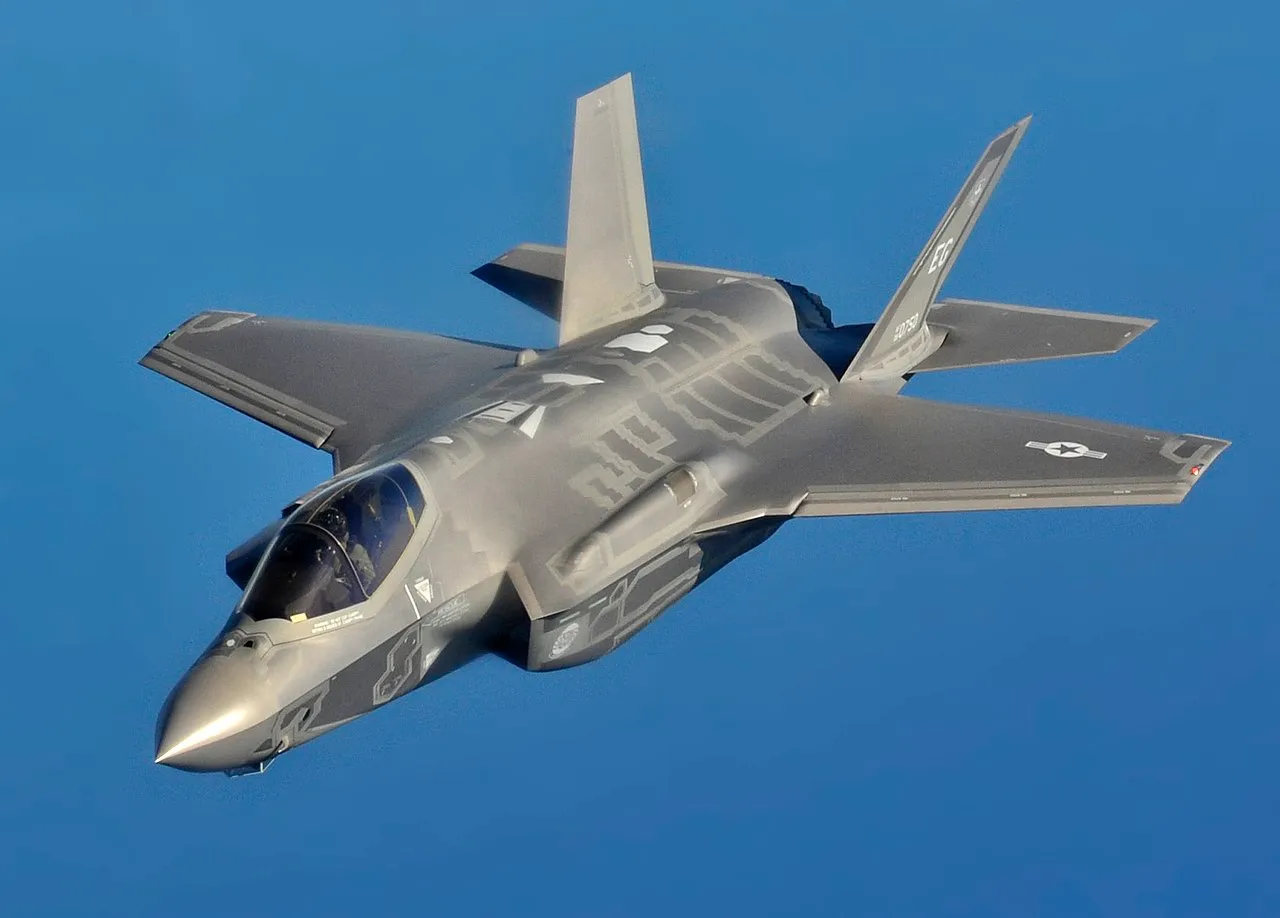
Cameri Is Central to Europe’s F-35 Production Network
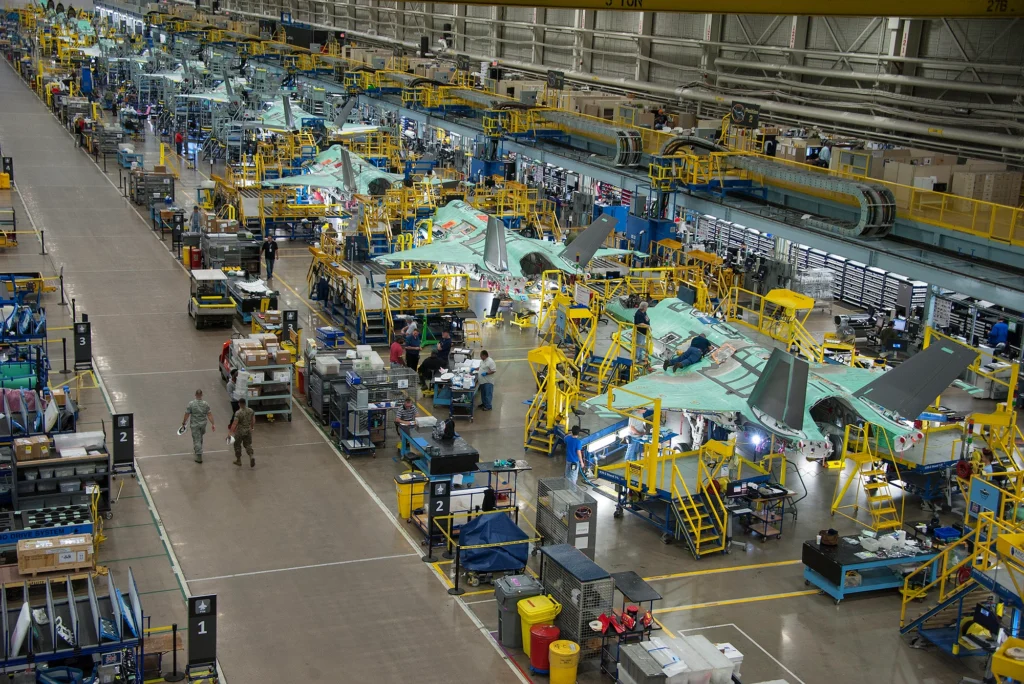
Leonardo’s Cameri facility is one of only 3 locations worldwide where F-35 aircraft are manufactured. The other production locations identified in the supplied material are Fort Worth in the United States and Nagoya in Japan.
Cameri is also home to the only F-35 final assembly line in Europe. The facility has an annual production capacity of up to 20 F-35 aircraft, including both the F-35A and the F-35B for the Italian armed forces.
The site also produces approximately one-third of all F-35 wings.
Cameri is located about 40 kilometres from the Swiss border, making it geographically close to Switzerland as well as strategically important to the country’s aircraft procurement.
The F-35 is manufactured through an international production network involving more than 2,100 supplier companies worldwide. Components are produced at different facilities and then moved to final assembly locations.
The Swiss aircraft will therefore incorporate components manufactured across several countries. The middle fuselage section is produced in Germany, while the rear fuselage section and other components are produced in the United Kingdom.
Italy is one of the programme’s European partner countries, alongside the United Kingdom, the Netherlands, Denmark and Norway.
The broader F-35 development and production partnership also includes the United States, Canada and Australia, while the supplied background material identifies Turkey as one of the original development participants.
The United States accounts for the largest share of aircraft work by value, although the distribution of work can differ for aircraft assembled at Cameri.
This industrial structure allows Switzerland to receive an aircraft built through a multinational supply chain rather than a single-country manufacturing process.
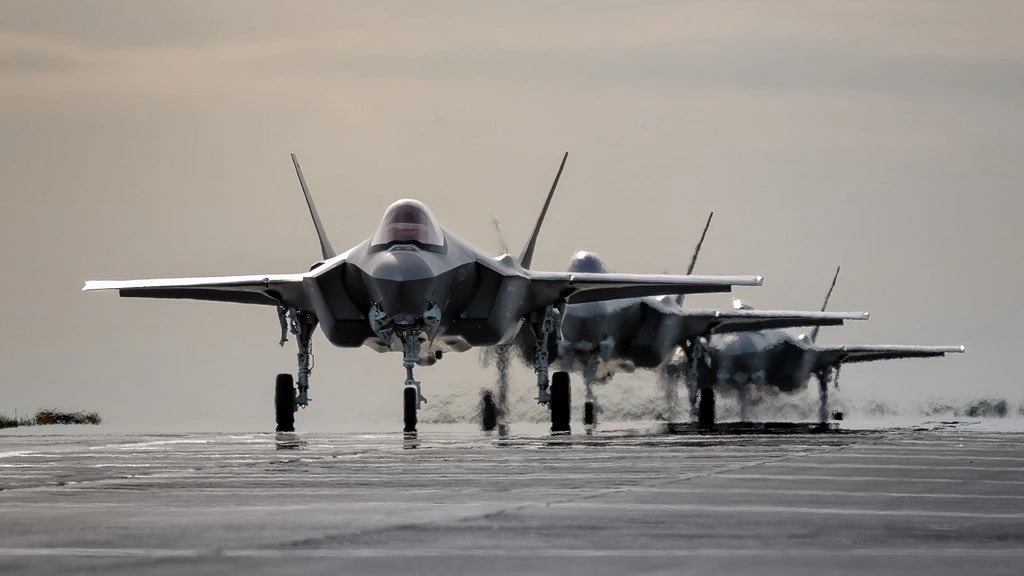
Swiss F-35A Training Starts
The first 8 Swiss F-35As are expected to arrive at Ebbing Air National Guard Base in Arkansas from mid-2027.
The aircraft will support training for Swiss pilots and ground crews before the F-35A becomes operational in Switzerland. The training phase is designed to establish the personnel, maintenance, and operational expertise required to transition from the F/A-18 Hornet to the new fifth-generation fighter.
The first training aircraft will be assembled at Fort Worth, although structural components for some of those aircraft are manufactured at Cameri before being transported to the United States.
After the training phase begins, aircraft will progressively move into Swiss service as the country prepares its military airfields for the new fleet.
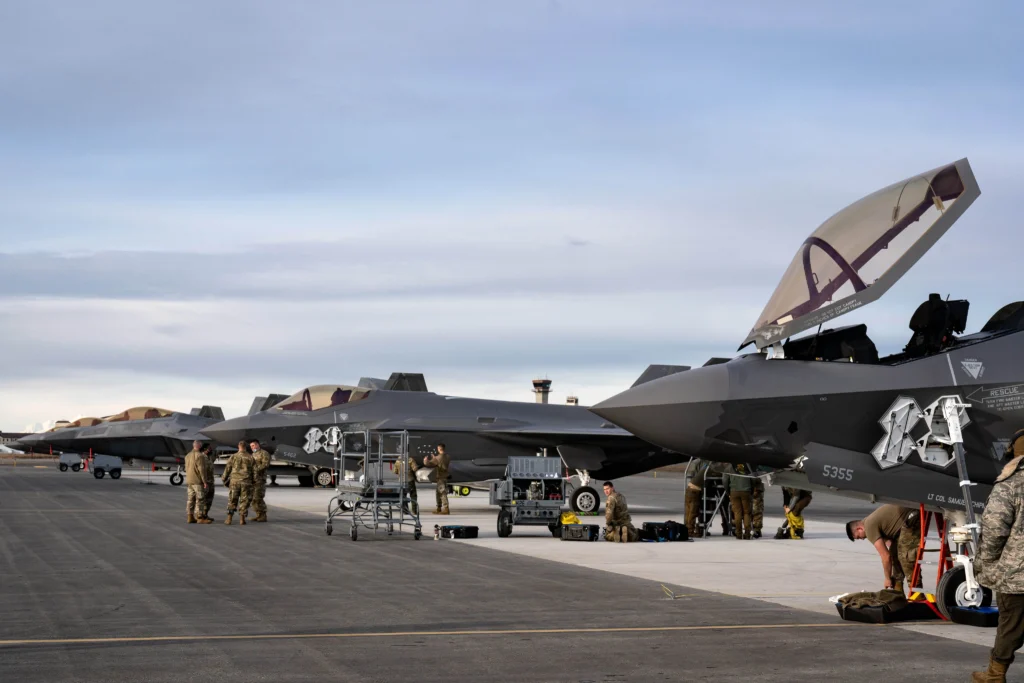
F-35A Introduction Across 3 Swiss Airfields
Switzerland plans a phased introduction of the F-35A across Payerne, Meiringen and Emmen.
Operations at Payerne are scheduled to begin from mid-2028. Introduction at Meiringen is planned from 2030, followed by Emmen in 2032.
The phased approach allows Switzerland to develop the infrastructure and operational capacity needed for the new aircraft while the training and aircraft delivery programme continues.
The new F-35As will replace Switzerland’s ageing F/A-18 Hornet fleet, marking a major change in the country’s fighter aircraft capability.
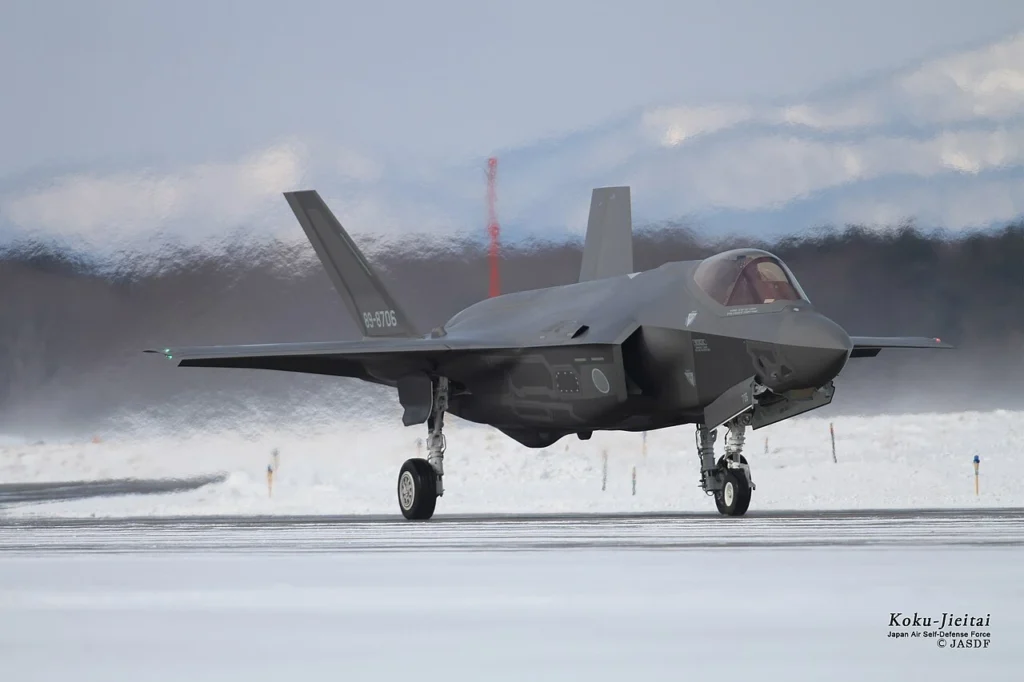
Why Switzerland Selected the F-35A
Switzerland selected the F-35A after evaluating it against several competing European fighter aircraft.
The aircraft competed against the Saab Gripen E, Dassault Rafale and Eurofighter Typhoon. Switzerland stated at the time that the F-35A offered the most cost-effective option, with the lowest bid and the highest assessed capability.
The selection moves Switzerland from the fourth-generation F/A-18 to a fifth-generation aircraft built around low observability, integrated sensors, secure communications and high levels of situational awareness.
Finland also selected the F-35A to replace its legacy Hornet fleet. The supplied material notes that Finland considered the aircraft suitable for its approach to dispersed airfield operations, an area in which the Saab Gripen is also commonly marketed.
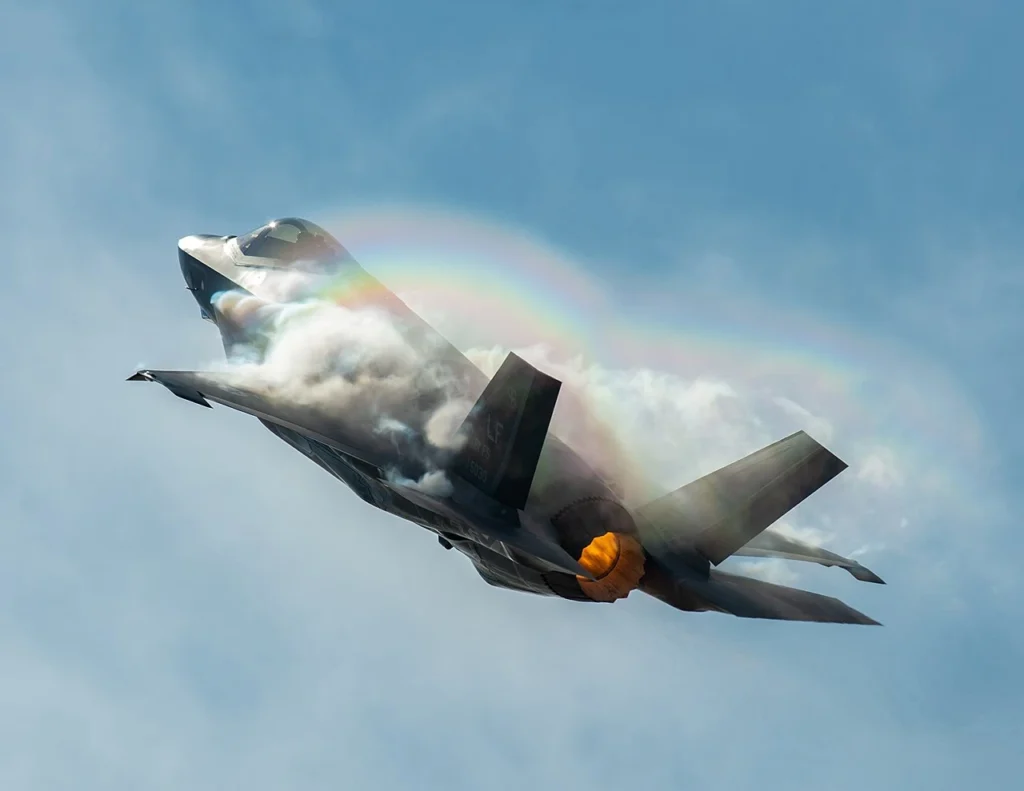
F-35A Combines Stealth, Sensor and Networked Operations
The F-35A Lightning II is the conventional takeoff and landing version of the F-35 family. It is designed as a multirole fighter with a focus on stealth, sensor fusion, situational awareness and secure information sharing.
Its integrated sensor suite is designed to collect, process and distribute information from multiple sources.
The aircraft’s processing architecture, sensors and communication links support a networked operational model in which information can be shared with other aircraft, ground systems and surface platforms.
The F-35A’s Electro-Optical Distributed Aperture System, or DAS, provides a surrounding view of the aircraft for missile warning, aircraft detection and day-or-night pilot vision.
The aircraft also carries an internally mounted Electro-Optical Targeting System, or EOTS. The system supports detection and precision targeting of ground targets and provides long-range detection of air-to-air threats.
These systems are integrated into the aircraft rather than treated as separate mission tools, helping the pilot build a broader picture of the surrounding operational environment.
The F-35A uses an advanced helmet-mounted display system that places flight, targeting and sensor information directly in front of the pilot.
The system is designed to reduce the need for the pilot to rely on conventional cockpit displays when processing information relevant to a mission.
The F-35 also uses tactical data links designed to support secure information exchange with other aircraft and external platforms.
The programme’s international communications and logistics framework is intended to improve interoperability among the aircraft operated by the United States and partner nations.
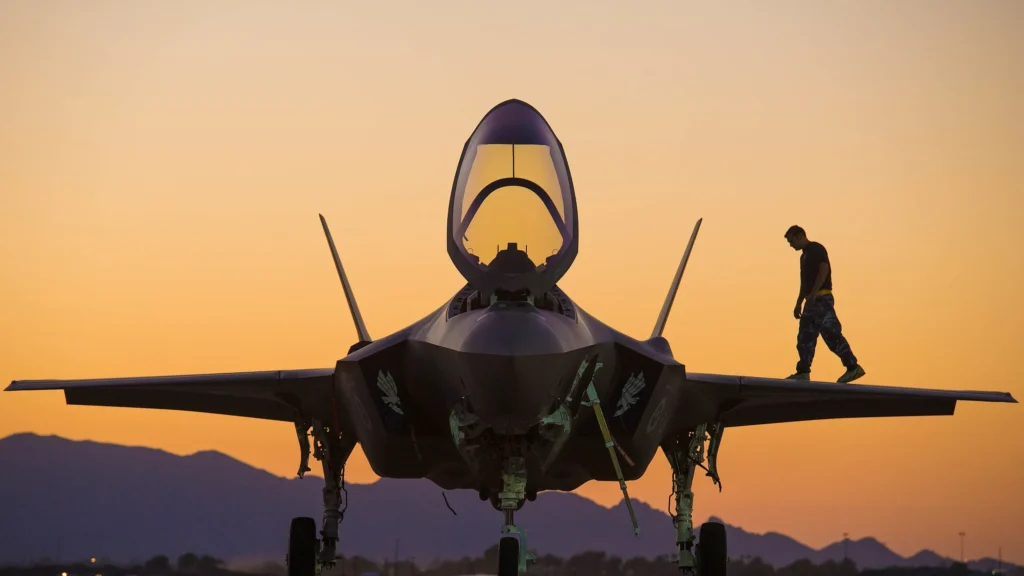
F-35 Logistics and Sustainment
The supplied F-35 background material identifies logistics support as a major component of an aircraft’s life-cycle cost and describes the programme as being designed around reliability, maintainability and information-driven support.
The Autonomic Logistics Information System (ALIS) is described as supporting aircraft performance monitoring, configuration management, maintenance scheduling, component history, predictive diagnostics, health management, operations scheduling, mission planning, training and service support.
These systems are intended to help maintain aircraft readiness while providing operational planners and maintainers with information needed to manage the fleet.
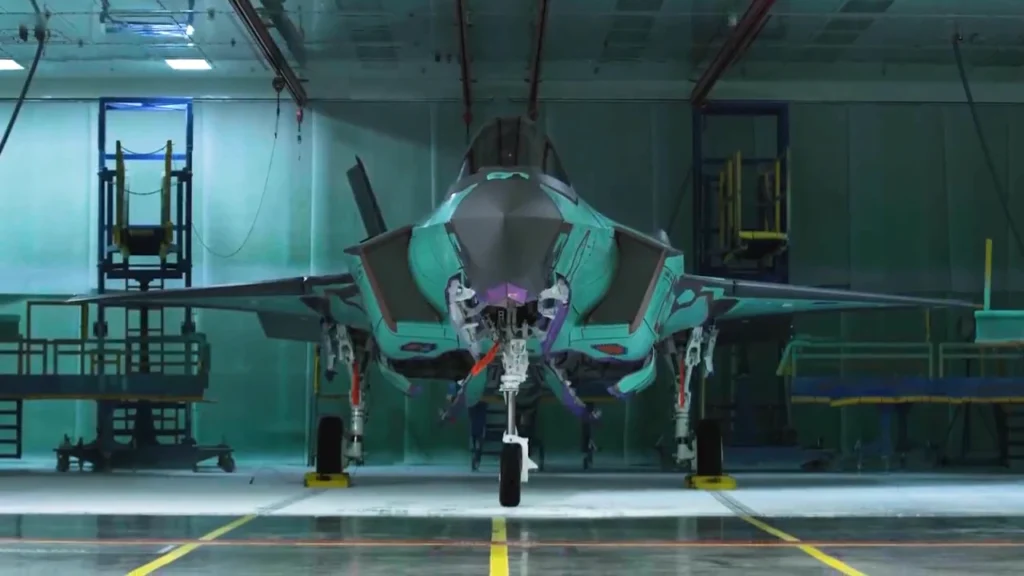
International F-35 Development and Production
The F-35 programme began as the Joint Strike Fighter programme and advanced to the System Development and Demonstration phase after a U.S. Department of Defense decision announced on October 26, 2001.
Lockheed Martin was selected to develop the aircraft with Northrop Grumman and BAE Systems. The programme was structured around a family of strike aircraft and sought to balance affordability, lethality, survivability and supportability.
The F-35 programme involved international development participation from the United States, United Kingdom, Italy, Netherlands, Turkey, Canada, Denmark, Norway and Australia.
The international approach was intended to reduce duplicated research and development costs while creating a common aircraft platform for participating countries.
F-35A Production Capacity Worldwide
Lockheed Martin is described in the supplied material as maintaining a production rate of approximately 156 or more F-35 aircraft per year.
Most F-35 aircraft are assembled at Fort Worth, while Cameri has capacity for up to 20 F-35A and F-35B aircraft annually. Japan’s Nagoya facility has capacity for up to 6 aircraft per year.
The worldwide production network allows structural sections and other components to be manufactured at specialized facilities before being brought together for final assembly.
Switzerland’s aircraft therefore form part of a large, established production system rather than a separate national manufacturing programme.
F-35A Technical Specifications
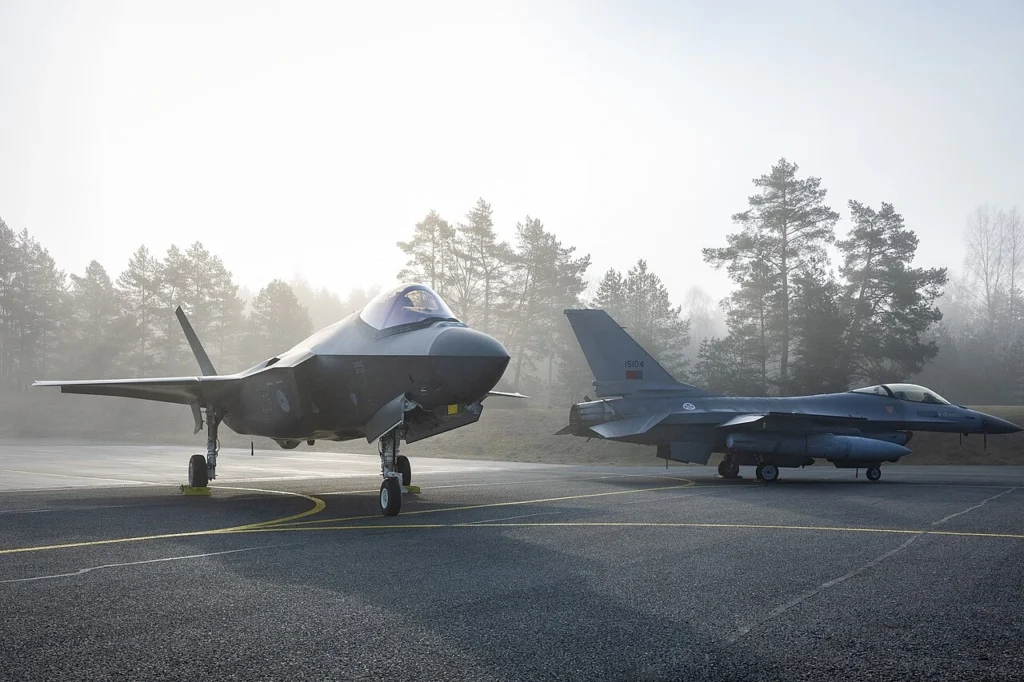
The F-35A is a single-seat multirole fighter produced by Lockheed Martin.
Its main technical characteristics in the supplied material are:
- Power plant: One Pratt & Whitney F135-PW-100 turbofan
- Thrust: 43,000 pounds
- Wingspan: 35 feet, or 10.7 metres
- Length: 51 feet, or 15.7 metres
- Height: 14 feet, or 4.38 metres
- Maximum takeoff weight: 70,000-pound class
- Internal fuel capacity: 18,498 pounds
- Payload: 18,000 pounds, or 8,160 kilograms
- Maximum speed: Mach 1.6, approximately 1,200 mph
- Range: More than 1,350 miles with internal fuel, or more than 1,200 nautical miles
- Ceiling: Above 50,000 feet, or 15 kilometres
- Crew: One
- Armament: Internal and external weapon carriage depending on mission requirements
The engine uses a three-stage fan, a six-stage compressor, an annular combustor, a single-stage high-pressure turbine and a two-stage low-pressure turbine.
The aircraft is designed for conventional takeoff and landing and is described as a 9g-capable multirole fighter.
Swiss F-35A Programme at Glance
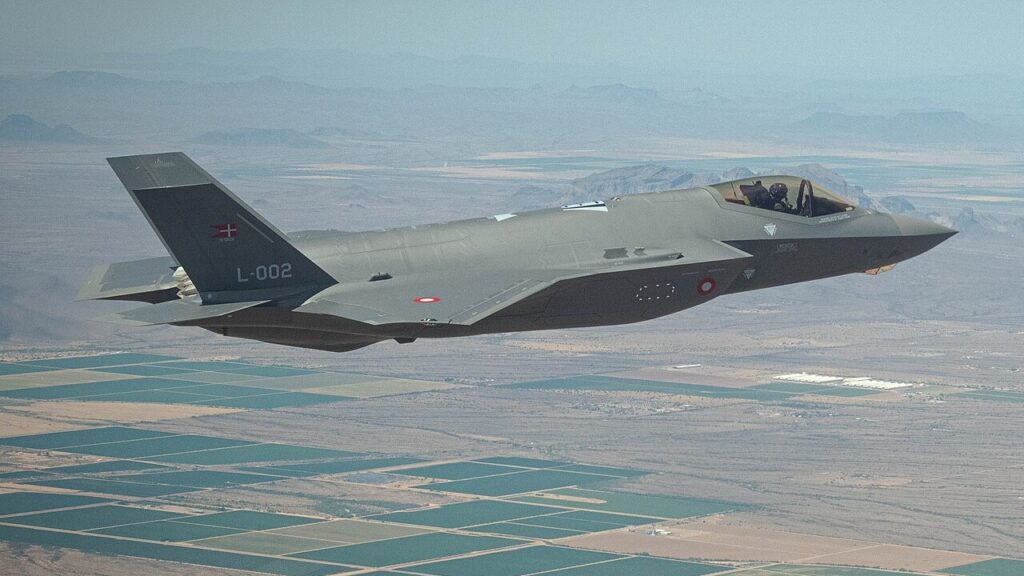
Switzerland’s F-35A programme now combines three distinct stages: production, training and domestic deployment.
The first structural sections are being manufactured at Cameri, then transported to Fort Worth for integration and final assembly.
The first 8 aircraft will support Swiss training in Arkansas from 2027, while the first Cameri-built aircraft is scheduled for direct delivery to Switzerland in 2028.
The longer-term fleet plan includes deliveries through Cameri, phased introduction at Payerne, Meiringen and Emmen, and the eventual replacement of Switzerland’s F/A-18 Hornets.
At the same time, the programme remains subject to the country’s CHF 6 billion procurement cap and the unresolved question of whether Switzerland will operate the originally planned 36 aircraft or reduce the fleet to 30.
The production of the first Swiss-specific components at Cameri therefore represents more than a manufacturing milestone. It marks the beginning of the physical transition toward Switzerland’s next-generation fighter fleet and connects the country directly to the wider F-35 industrial and operational network.
Stay tuned with us. Further, follow us on social media for the latest updates.
Join us on Telegram Group for the Latest Aviation Updates. Subsequently, follow us on Google News