DUBAI— Emirates (EK) has promoted Hanan Mohammed Jawad and Bakhita Al Mheiri to captain, making them the airline’s first Emirati female captains.
Both pilots operate the Boeing 777 fleet from Dubai International Airport (DXB), marking a significant milestone in the careers of two pilots who entered Emirates through its National Cadet Pilot Programme.
The promotion represents the culmination of years of flight training, operational experience and professional development.
Jawad joined Emirates as a cadet in 2008, while Al Mheiri began her career through the same programme in 2011, creating two different paths to the same flight deck milestone.
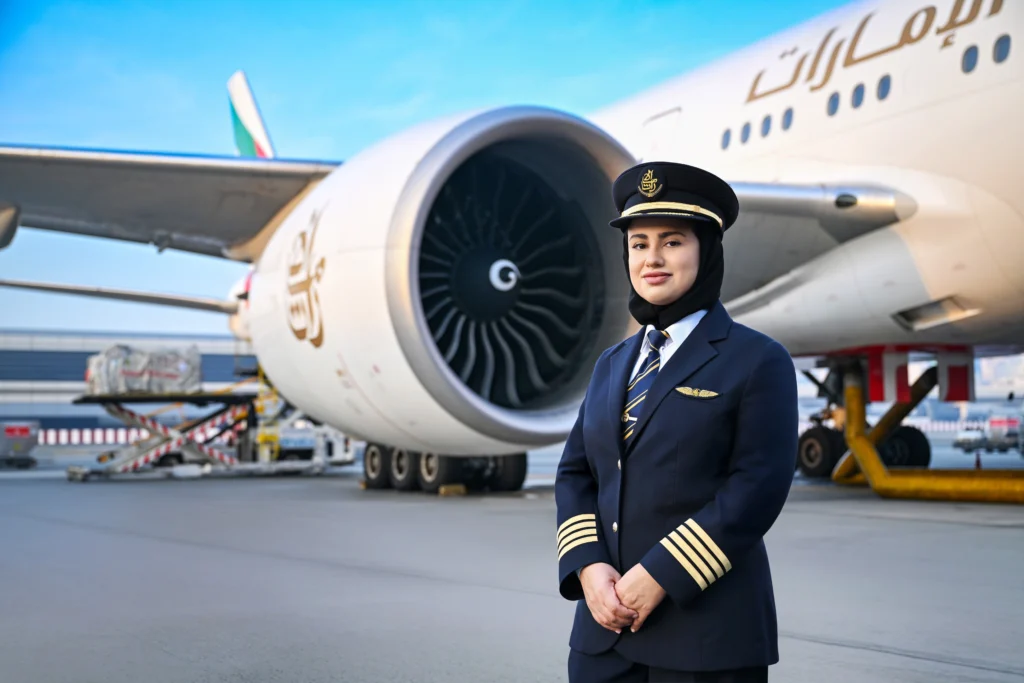
Emirates Captain Promotion for two Females
Receiving the fourth stripe has changed the scope of responsibility for both pilots. As captains, Jawad and Al Mheiri are responsible not only for aircraft operations but also for leading crews, managing decisions and maintaining the highest standards of safety.
For Jawad, command means recognising the trust placed in the flight crew by passengers and colleagues.
Al Mheiri similarly considers safety the central principle behind every operational decision, while stressing that effective command also depends on communication, listening and understanding the people working around the aircraft.
Their careers also demonstrate the importance of mentorship in aviation. Jawad credits instructors, first officers and captains who helped shape her career, while Al Mheiri highlights the guidance she received from experienced training captains and leaders at Emirates.

Boeing 777 Leadership
Both captains fly Emirates’ GE90-powered Boeing 777 aircraft, giving them extensive experience with one of the aviation industry’s most recognised widebody combinations.
GE Aerospace describes the GE90 as the exclusive powerplant for the Boeing 777-300ER, 777-200LR and 777 Freighter, while Emirates remains its largest operator.
The captains’ experience also reflects the demands of long-haul flying, where weather, aircraft performance, crew composition and operating conditions can change from one flight to another.
Al Mheiri noted that even a familiar route can present different circumstances, requiring pilots to reassess their decisions rather than rely solely on previous experience.
Jawad has accumulated 9,253 flying hours during her career. For both pilots, continuous learning remains central to effective command because aviation requires crews to adapt to changing conditions throughout every flight.

Inspiring Future Pilots
Al Mheiri faced an additional challenge during her training after completing much of her primary and secondary education in Arabic.
Aviation training in English required her to develop technical knowledge while simultaneously working in a different language, an experience she described as a major learning curve.
That experience helped shape her approach to leadership, while Jawad emphasises the importance of confidence combined with humility. Both captains also recognise that their achievement can encourage more Emirati women to consider professional aviation.
Emirates’ National Cadet Pilot Programme, launched in 1993, has provided a structured pathway for Emirati pilots and has produced captains, training pilots and senior aviation leaders.
For Jawad and Al Mheiri, becoming the first Emirati female captains is therefore both an achievement and a responsibility.
Their longer-term ambition is to make women on the flight deck increasingly normal, while encouraging future pilots to remain resilient, keep learning, and pursue careers they genuinely value.
Stay tuned with us. Further, follow us on social media for the latest updates.
Join us on Telegram Group for the Latest Aviation Updates. Subsequently, follow us on Google News