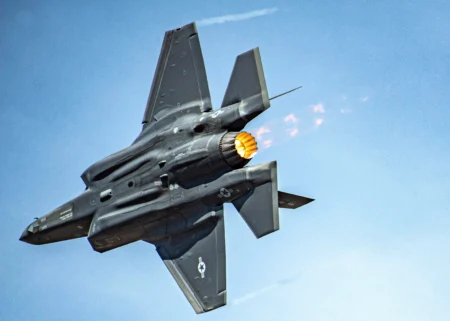
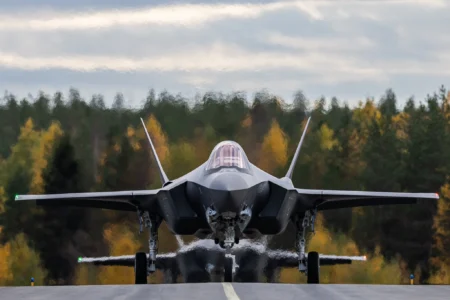
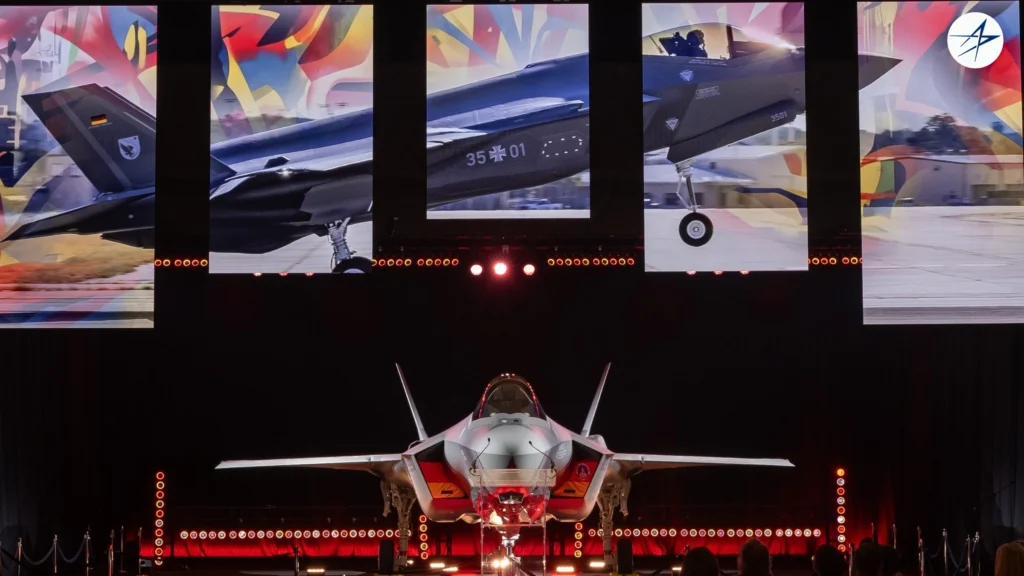
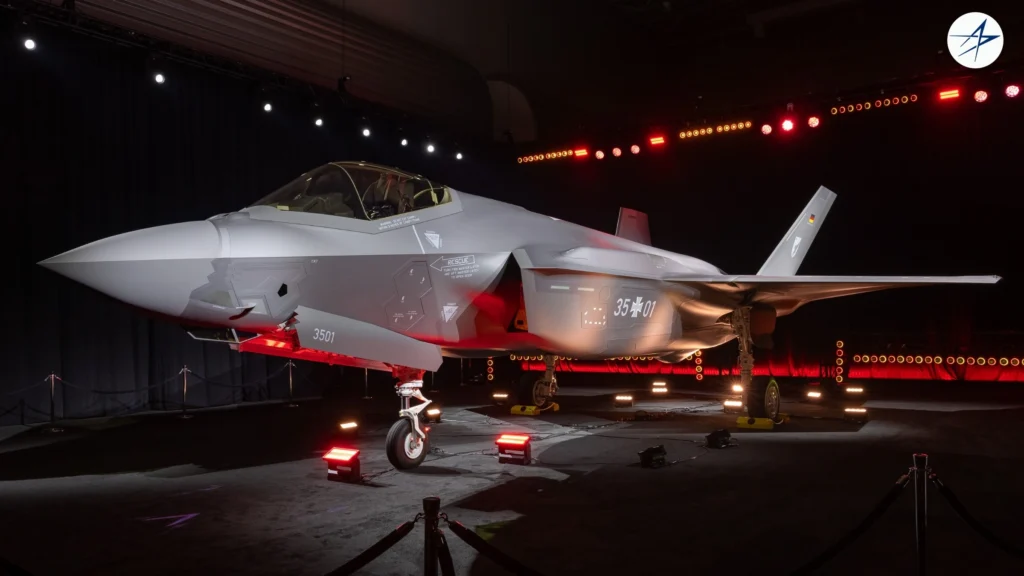
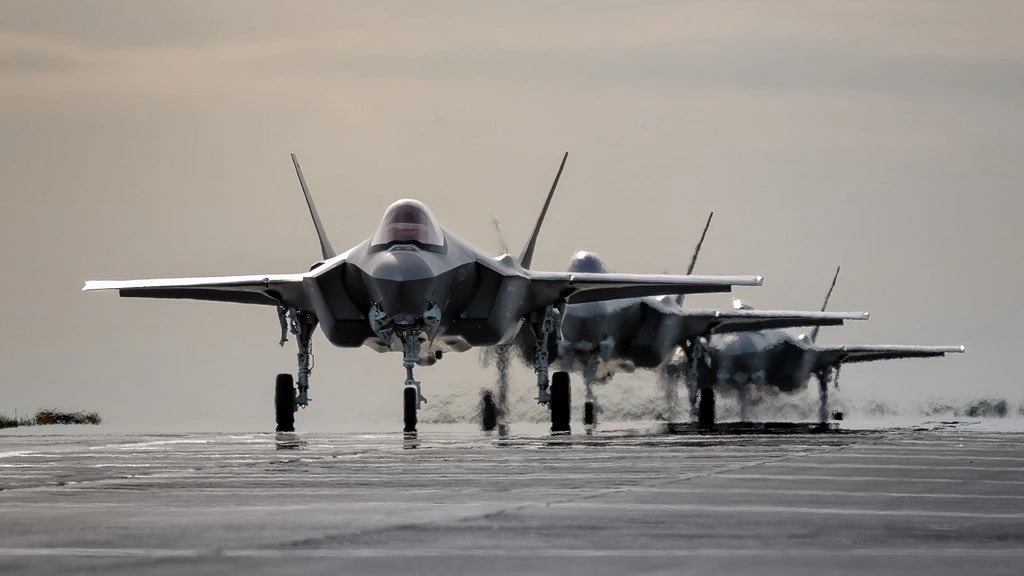
FORT WORTH- Lockheed Martin has presented Germany with its first F-35A Lightning II during a ceremony at the company’s F-35 production facility. German and U.S. government and military officials attended the event, marking a major step in Germany’s F-35 acquisition program.
Germany is preparing to introduce the F-35A into Luftwaffe service, with the first eight aircraft scheduled to go to Ebbing Air National Guard Base in Arkansas for pilot training.
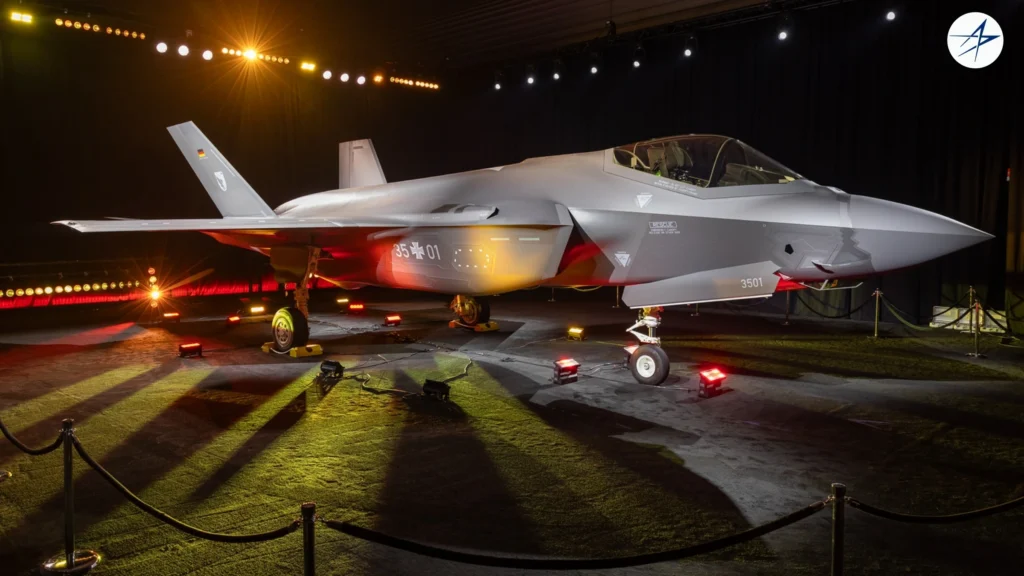
Germany Begins Its F-35A Transition
Germany’s first F-35A represents the start of a new phase in the country’s combat aircraft modernization program. The German program of record calls for 35 F-35A aircraft, with deliveries planned in stages before the type enters operational service in Germany.
German Defense Minister Boris Pistorius said the F-35A will provide new capabilities through its stealth characteristics, sensor technology and integration with other platforms. He also said the first fighter jets will be delivered this year, with full operational capability planned for 2029.
The aircraft will replace some of the capabilities currently provided by Germany’s aging Tornado fleet. The F-35A will also support Germany’s role in NATO through a common fifth-generation fighter platform operated by numerous allied countries.
Lieutenant General Holger Neumann, Chief of the German Air and Space Force, said the F-35A will affect not only the service’s aircraft fleet but also its approach to command, operations and international cooperation.
First Eight Aircraft to Support U.S.-Based Training
Germany’s first eight F-35As will initially be delivered to Ebbing Air National Guard Base in Arkansas for pilot training beginning in fall 2026.
The arrangement allows German pilots and maintenance personnel to establish experience with the aircraft before the first German F-35s arrive in Germany. According to Lockheed Martin, the first German F-35s are scheduled to arrive in-country in late 2027.
The training phase is an important part of introducing a fifth-generation aircraft because operating the F-35 requires specialized pilot instruction, maintenance procedures, mission planning and support infrastructure.
Germany is also developing the infrastructure needed to operate the aircraft domestically. The F-35 fleet will ultimately form part of the Luftwaffe’s wider combat aircraft structure and NATO commitments.
F-35 Designed for Allied Interoperability
The F-35 program is built around a common aircraft architecture that allows participating nations to operate alongside one another using shared systems, logistics concepts, mission planning processes and tactical data.
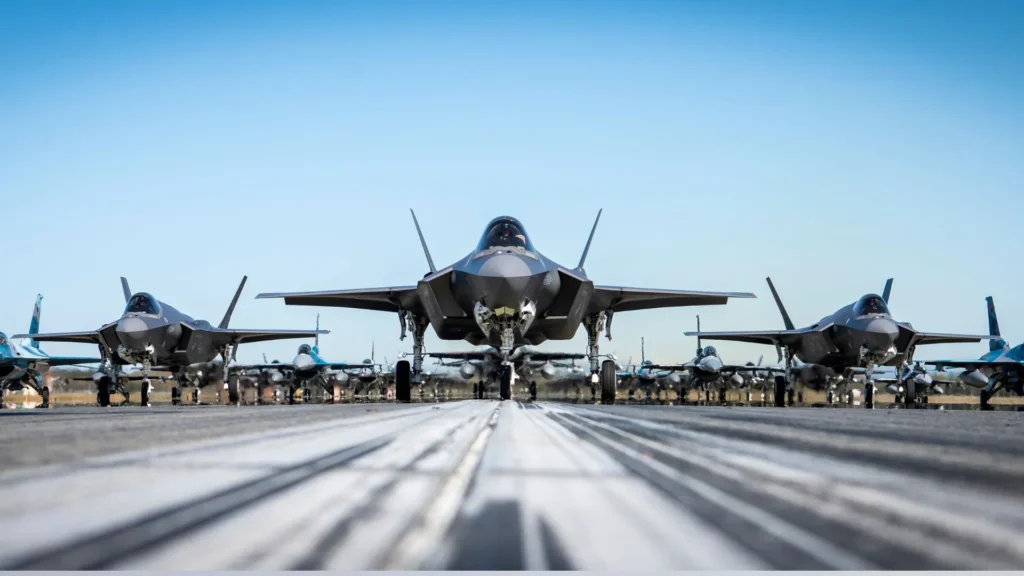
Germany is joining a multinational F-35 community that includes the United States, United Kingdom, Italy, the Netherlands, Canada, Australia, Denmark and Norway, along with several other partner and customer nations.
The aircraft’s networked design allows information collected by its sensors to be combined with data from other aircraft, ground systems and allied platforms. This gives operators a broader operational picture and supports coordinated missions.
For Germany, participation in the F-35 program also provides access to a large international user community. This can support common training, exercises, maintenance practices and operational procedures among participating air forces.
F-35A Combines Stealth and Sensor Fusion
The F-35A is the conventional takeoff and landing version of the Lightning II family. It is designed for missions including air superiority, strike operations, intelligence gathering, surveillance and reconnaissance.
Its low-observable design reduces its radar signature through several features, including airframe geometry, radar-absorbent materials and internal weapons carriage. The aircraft also incorporates integrated sensors and electronic warfare systems.
The F-35 does not become invisible to radar. Instead, its design aims to reduce the range and conditions under which it can be detected and tracked.
A major feature of the aircraft is sensor fusion. The F-35 combines information from its onboard sensors and other sources to provide pilots with an integrated view of the battlespace.
The aircraft can also exchange information with other platforms through secure communications and data links. This networked approach is a central part of its role within multinational air operations.
F-35A Performance and Technical Specifications
The F-35A has a length of approximately 51.4 feet, a height of 14.4 feet and a wingspan of 35 feet. Its maximum speed is approximately Mach 1.6.
The aircraft has an internal fuel capacity of about 18,250 pounds and a maximum weapons payload of approximately 18,000 pounds. Its combat radius exceeds 590 nautical miles, while its internal range exceeds 1,200 nautical miles under the specifications provided by Lockheed Martin.
| Specification | F-35A |
|---|---|
| Length | 51.4 ft (15.7 m) |
| Height | 14.4 ft (4.38 m) |
| Wingspan | 35 ft (10.7 m) |
| Empty Weight | 29,300 lb |
| Internal Fuel | 18,250 lb (8,278 kg) |
| Maximum Weapons Payload | 18,000 lb (8,160 kg) |
| Maximum Weight | 70,000 lb class |
| Maximum Speed | Mach 1.6 |
| Combat Radius | More than 590 nautical miles |
| Internal Range | More than 1,200 nautical miles |
| Maximum G Limit | 9.0 G |
The F-35A is powered by a Pratt & Whitney F135-PW-100 turbofan engine. The engine can generate up to approximately 40,000 pounds of maximum thrust.
The aircraft can carry weapons internally to preserve its low-observable configuration. Its weapons integration includes air-to-air missiles, precision-guided bombs and other systems approved for the aircraft.
Block 4 Upgrade Program
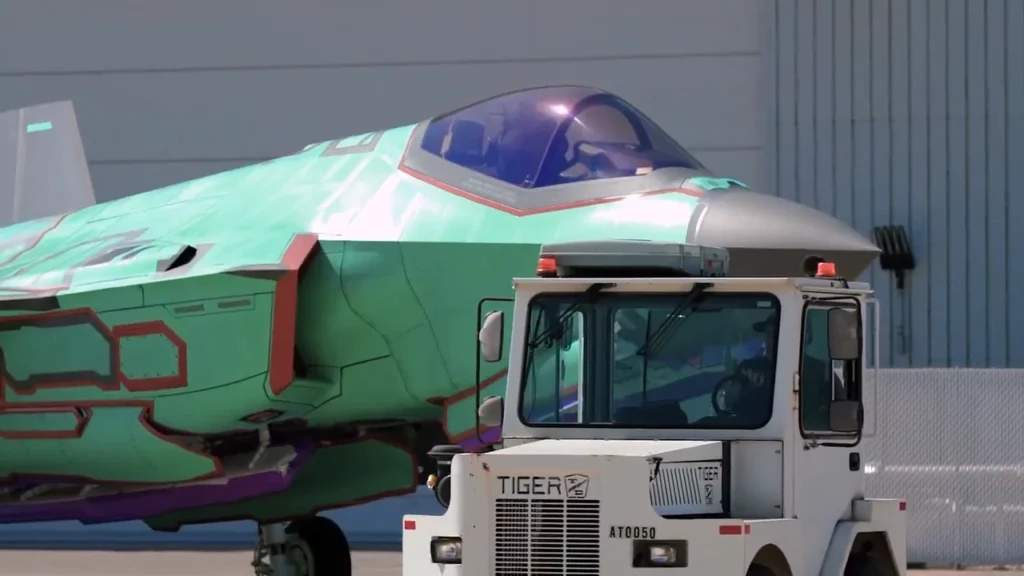
The F-35 program continues to evolve through hardware and software upgrades. Lockheed Martin is developing the Block 4 modernization program, which is designed to expand weapons integration, improve sensors and enhance electronic warfare capabilities.
The modernization effort is intended to keep the aircraft relevant as threat environments and mission requirements change.
The F-35 architecture also allows future capabilities to be introduced through software and hardware updates. This approach is intended to extend the aircraft’s operational usefulness over its service life.
German Industry Joins the F-35 Supply Chain
German industry has participated in the F-35 program since its beginning in 2001 and is expected to maintain a role in the aircraft’s global industrial network.
Lockheed Martin said it continues to explore additional industrial participation opportunities in Germany. These activities can involve manufacturing, sustainment, training, research and development.
The international supply chain is an important part of the F-35 program because aircraft components are manufactured across multiple participating countries.
Germany’s involvement therefore extends beyond purchasing and operating the aircraft. German companies can also contribute to the wider F-35 industrial ecosystem as the global fleet expands.
Global F-35 Fleet Continues to Grow
The F-35 has become a major multinational fighter program, with 20 partner and customer nations involved in the program according to Lockheed Martin.
The supplied material states that more than 1,355 F-35s are operational worldwide, with the fleet having accumulated more than one million flight hours. The aircraft operates from dozens of bases across multiple countries.
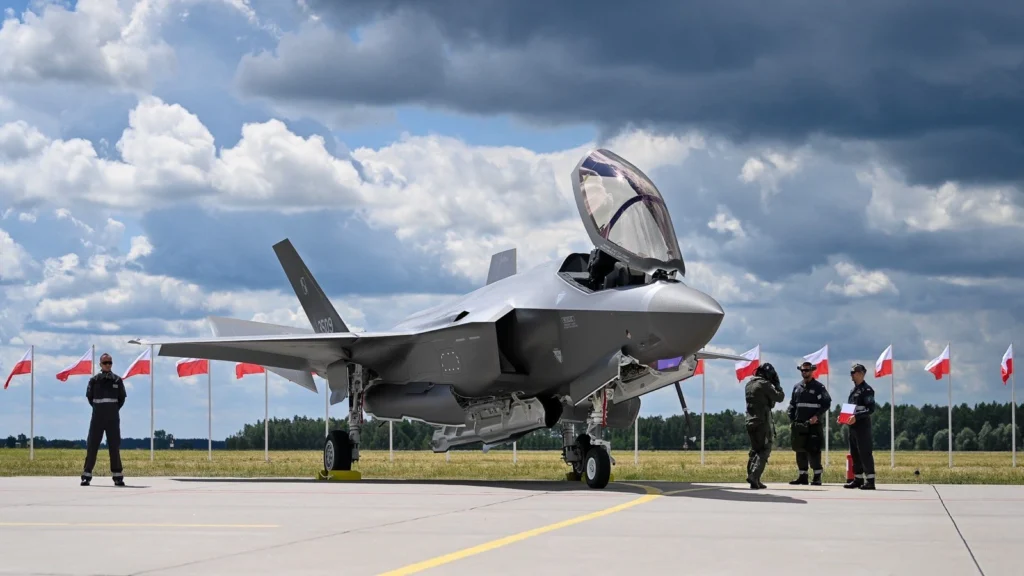
The F-35 program includes partner nations such as the United States, United Kingdom, Italy, the Netherlands, Canada, Australia, Denmark and Norway. Foreign Military Sales customers include Israel, Japan, South Korea, Belgium, Poland, Singapore, Finland, Switzerland, Germany, the Czech Republic, Greece and Romania.
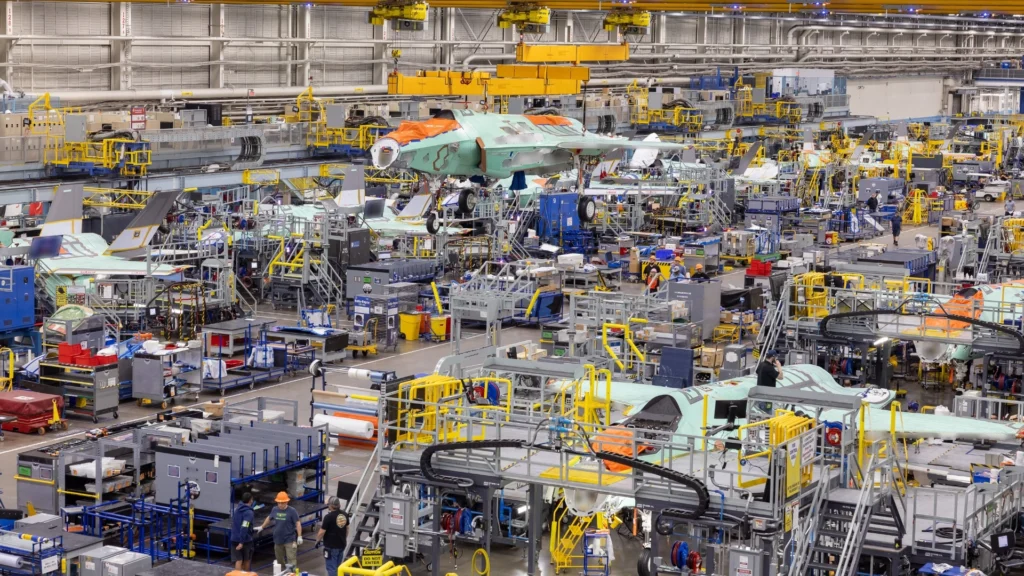
Production has been maintained at a rate of approximately 156 aircraft annually, according to Lockheed Martin.
This expanding fleet gives Germany access to a large international operator network as it begins introducing its own F-35A aircraft.
Long-Term Sustainment and Operating Support
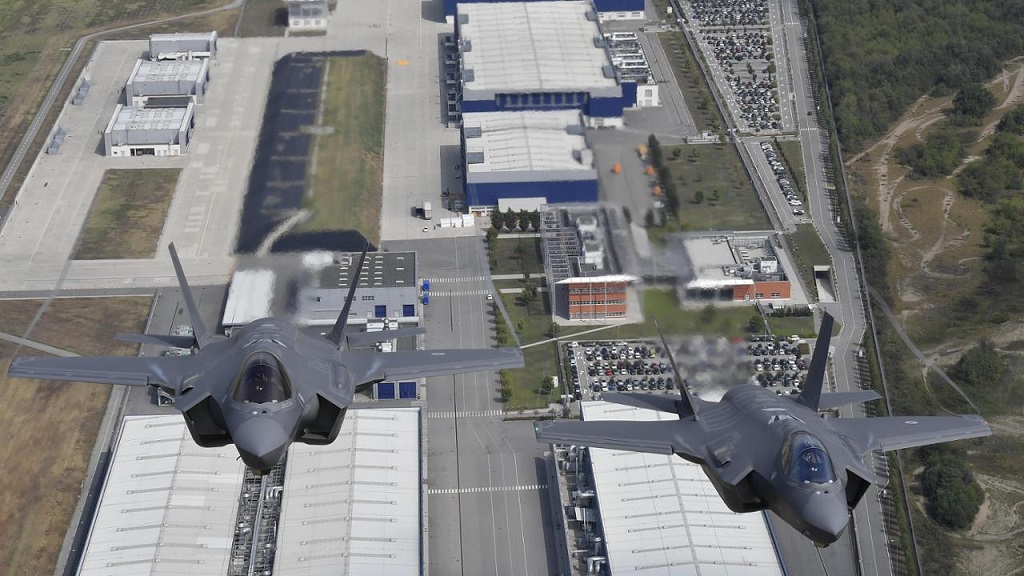
The F-35 program also depends on a global sustainment structure covering maintenance, logistics, engineering and training.
Lockheed Martin said it has reduced its share of the F-35’s cost per flight hour by approximately 50 percent since 2015. The company also operates sustainment centers that provide continuous support to F-35 users.
The aircraft’s stealth coating and surface materials require specialized maintenance. Lockheed Martin has introduced updated coating technology intended to improve durability and reduce cosmetic wear in demanding operating environments.
For Germany, establishing domestic maintenance and support capabilities will be an important part of bringing the F-35 into long-term service.
Germany’s F-35 Program Timeline
Germany’s F-35 acquisition will progress through training, aircraft delivery, infrastructure preparation and operational integration.
The first eight aircraft are scheduled to go to Ebbing Air National Guard Base in Arkansas for German pilot training beginning in fall 2026. The first German F-35s are expected to arrive in Germany in late 2027.
Germany plans to operate 35 F-35As, with full operational capability targeted for 2029.
The program will therefore develop over several years rather than becoming an immediate replacement for Germany’s existing combat aircraft fleet. Training, infrastructure, maintenance and operational integration will all be required before the complete capability is established.
Germany’s entry into the F-35 program also expands the aircraft’s presence within Europe and adds another NATO member to the multinational fifth-generation fighter community.
Stay tuned with us. Further, follow us on social media for the latest updates.
Join us on Telegram Group for the Latest Aviation Updates. Subsequently, follow us on Google News