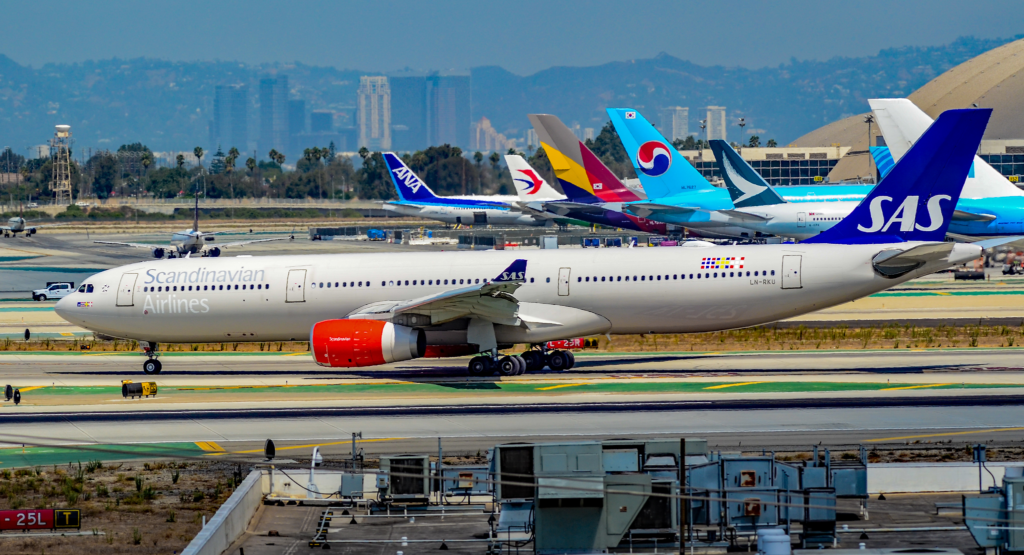
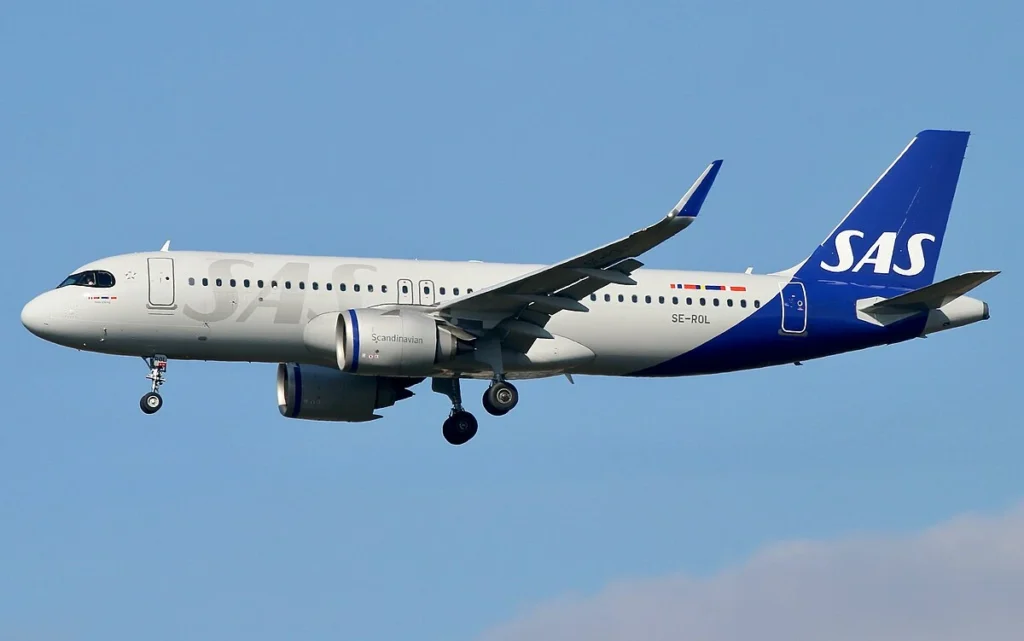
SAS, officially known as Scandinavian Airlines (SK), is the flag carrier of Denmark, Norway, and Sweden and one of the best-known airlines in the Nordic region. Headquartered in Stockholm and with major hubs at Copenhagen, Oslo and Stockholm, the airline connects Scandinavia with destinations across Europe, North America and Asia.
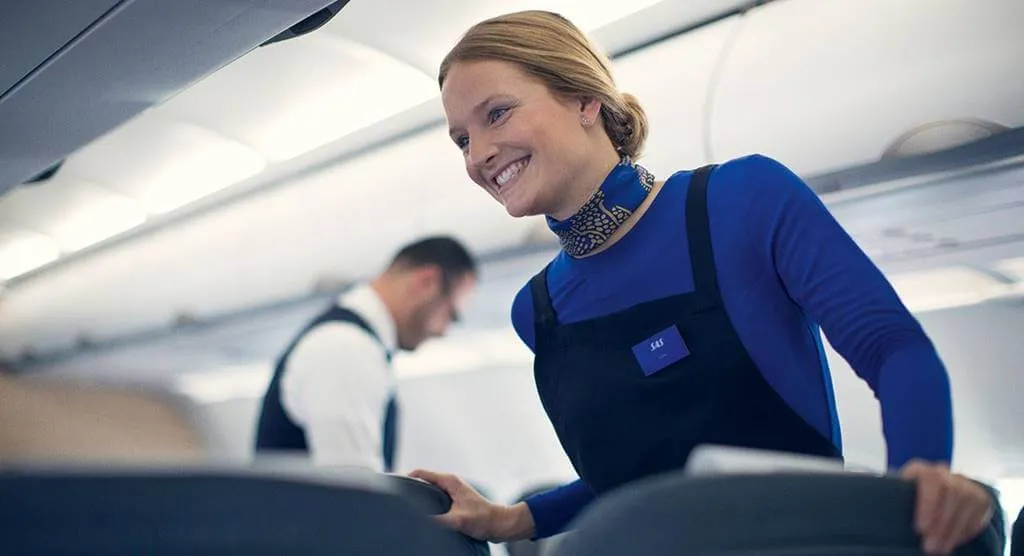
SAS has a long history in Scandinavian aviation and is known for combining a strong international network with the service standards associated with the Nordic market. Cabin crew plays an important role in the airline’s operations, looking after passenger safety, delivering onboard service and ensuring that flights operate smoothly.
In 2026, SAS cabin crew compensation is determined by the applicable employment agreement and base location, meaning salaries can differ between Denmark, Norway and Sweden. The package generally consists of basic salary together with flying pay and additional allowances. A new 2026 agreement for SAS cabin crew also introduced a general monthly increase and a 10 per cent flying supplement from April 2026, alongside changes to seniority progression and other allowances.
SAS Cabin Crew Salary in 2026
SAS cabin crew salaries in 2026 are estimated at around SEK 27,000 to SEK 40,000 per month (USD 2,900 to USD 4,300 per month), depending on seniority, base, flying activity and additional payments. The figures can vary because SAS employs cabin crew across Scandinavia under different local arrangements.
Newly hired cabin crew generally earn around SEK 27,000 to SEK 32,000 per month (USD 2,900 to USD 3,400), including applicable flying pay. In Norway, for example, the pre-2026 starting monthly salary with flying allowance was reported at NOK 32,493, before the latest agreement added further increases and a 10 per cent flying supplement.
As cabin crew accumulates seniority, their earnings increase through the applicable salary scale. Experienced SAS cabin crew can earn around SEK 32,000 to SEK 37,000 per month (USD 3,400 to USD 4,000), with actual income depending on the employee’s base, roster and flying duties.
Senior cabin crew and pursers can earn around SEK 37,000 to SEK 40,000 or more per month (USD 4,000 to USD 4,300+). Employees taking on supervisory responsibilities receive additional payments, while instructor duties and weekend assignments can also provide extra compensation.
The latest 2026 agreement also provides a 10 per cent flying supplement from April 2026. In Norway, the agreement includes a general increase of NOK 1,494 per month, a 10 per cent flying supplement and additional increases to certain salary steps. The purser allowance was also increased to NOK 5,445 per month.
ALSO READ: Jet2 Cabin Crew Salary in 2026
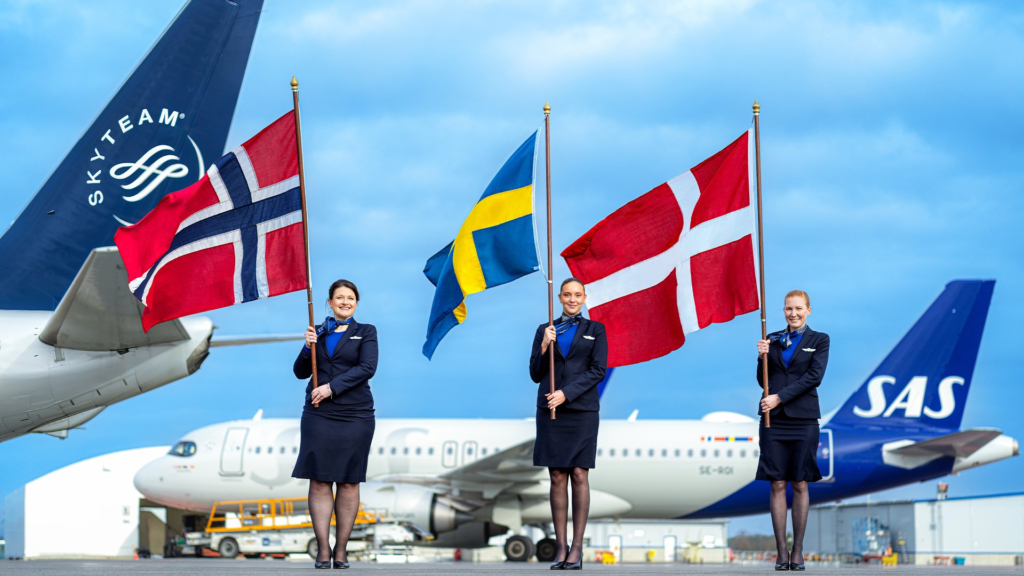
Benefits of Working as SAS Cabin Crew
SAS cabin crew receive the following range of benefits,
- Competitive salary progression – Cabin crew salaries increase with seniority, while the 2026 agreement provides additional improvements to the salary structure and flying pay.
- Flying allowances – Crew receive additional compensation connected with flying duties, with a 10 per cent flying supplement introduced under the 2026 agreement.
- Staff travel benefits – Employees can access airline travel privileges, making personal travel more affordable across the SAS network and beyond.
- International route exposure – SAS operates throughout Scandinavia, Europe, North America and Asia, giving cabin crew the opportunity to work on both short-haul and long-haul routes.
- Senior crew allowances – Employees promoted to senior cabin crew and purser positions can receive additional payments for taking responsibility for the cabin operation.
- Instructor opportunities – Experienced crew members can take on training and instructor responsibilities and receive additional compensation for these duties.
- Medical and employee benefits – Cabin crew receive employment-related healthcare, insurance and welfare benefits according to their local SAS employment arrangements.
- Career progression – Crew can progress from regular cabin crew positions into senior cabin crew, purser and training-related roles.
- Professional training – New employees undergo structured training covering aviation safety, emergency procedures, first aid, security and passenger service before operating independently.
ALSO READ: easyJet Cabin Crew Salary in 2026
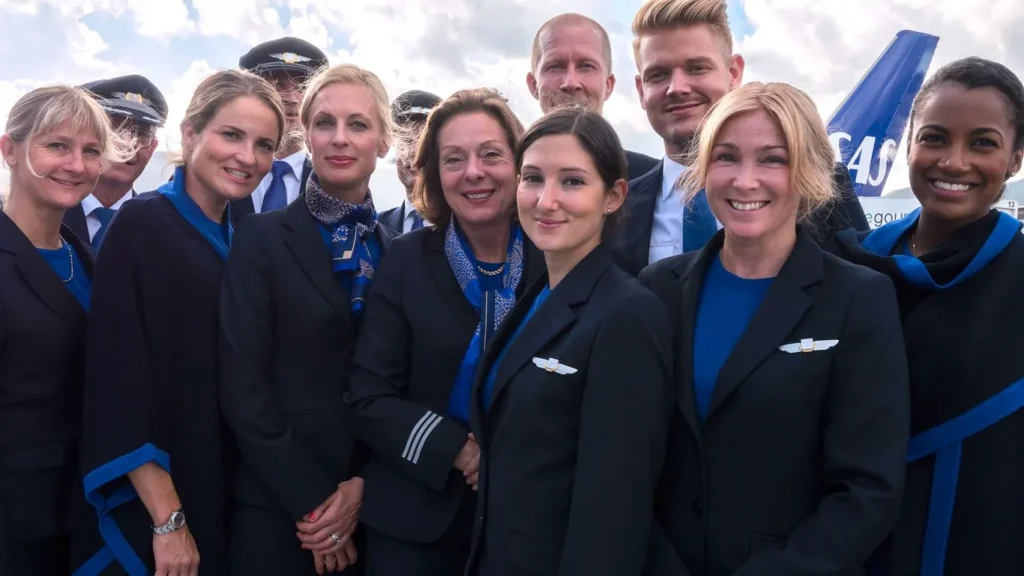
Requirements to Become a Cabin Crew at SAS
SAS cabin crew have to fulfil the following requirements.
- Candidates must be at least 18 years old. Applicants for Norway-based positions must be at least 20.
- Applicants must have completed high school education or an equivalent qualification.
- Candidates should generally be between 160 cm and 190 cm tall without shoes.
- Applicants should have at least two years of experience in a customer-facing role.
- Candidates must be fluent in spoken and written English.
- Applicants must have strong swimming skills because water-survival training is an essential part of cabin crew preparation.
- Candidates must hold a valid EU passport that allows unrestricted international travel.
- Applicants must be willing to work irregular hours, including early mornings, nights, weekends and public holidays.
- Candidates must meet the local residency and commuting requirements for the SAS base for which they are applying.
- Applicants must meet the applicable EASA cabin crew medical requirements and be able to obtain the necessary medical approval.
- Candidates must pass the required background and security checks, including employment references and police clearance.
- Applicants must be able to comply with SAS uniform, grooming and appearance standards.
ALSO READ: Finnair Cabin Crew Salary in 2026
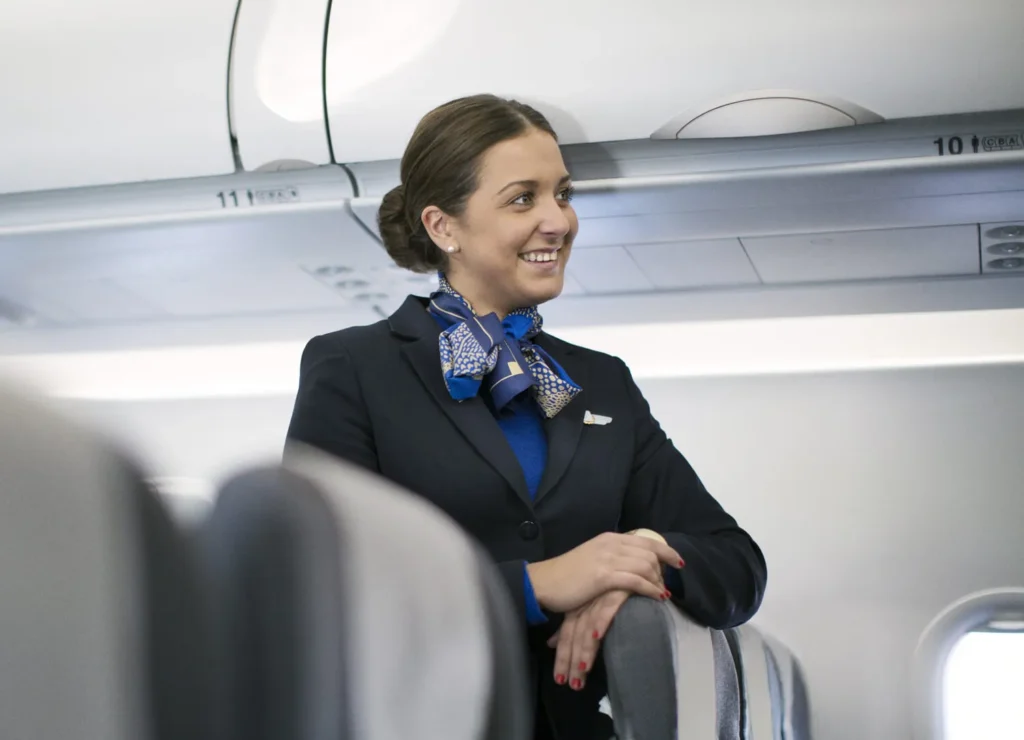
Recruitment Process for Cabin Crew
SAS cabin crew recruitment includes the steps below.
- Application and online assessment – Candidates submit their application and complete the initial online assessment.
- Video introduction – Shortlisted applicants provide a video introduction to demonstrate their communication skills and personality.
- Assessment centre – Candidates participate in exercises designed to assess teamwork, customer service, problem-solving and professional behaviour.
- Background checks – Successful candidates undergo employment verification, references, security interviews and the required background checks.
- Medical examination – Candidates complete the necessary aviation medical assessment, including the applicable fitness and substance-testing requirements.
- Final selection – Applicants who complete all checks receive confirmation before entering the training programme.
- Cabin crew training – New recruits complete SAS training covering safety, emergency procedures, first aid, security, service and aircraft-specific procedures before beginning operational duties.
Bottom Line
A cabin crew career with SAS in 2026 offers competitive Scandinavian pay, structured salary progression, international route exposure and opportunities to progress into senior and training positions. Cabin crew can earn approximately SEK 27,000 to SEK 40,000+ per month (USD 2,900 to USD 4,300+), although the exact figure depends heavily on the employee’s base, seniority and flying activity.
The 2026 agreement also improves flying pay and salary progression, with a 10 per cent flying supplement and additional increases taking effect during the year. For experienced employees, senior cabin crew and purser responsibilities can provide further earning opportunities.
For candidates who meet SAS’s education, experience, language, swimming, passport and medical requirements, the airline offers the chance to build a long-term career while working across one of Europe’s most extensive international networks.
FAQs
SAS cabin crew can earn approximately SEK 27,000 to SEK 40,000 or more per month (USD 2,900 to USD 4,300+), depending on seniority, base, flying duties, and additional allowances.
Yes. SAS’s current cabin crew recruitment requirements call for at least two years of experience in a customer-facing role. Previous cabin crew experience is considered an advantage but is not required for all positions.
SAS cabin crew are currently recruited for bases including Copenhagen, Stockholm, Oslo and Bergen, with the available bases depending on operational requirements and the specific vacancy.
Stay tuned with us. Further, follow us on social media for the latest updates.
Join us on Telegram Group for the Latest Aviation Updates. Subsequently, follow us on Google News