airBaltic (BT) is the national airline of Latvia and one of the leading carriers in the Baltic region. Headquartered in Riga, the airline operates an extensive network connecting Latvia, Estonia and Lithuania with destinations across Europe, the Middle East, North Africa and the Caucasus.
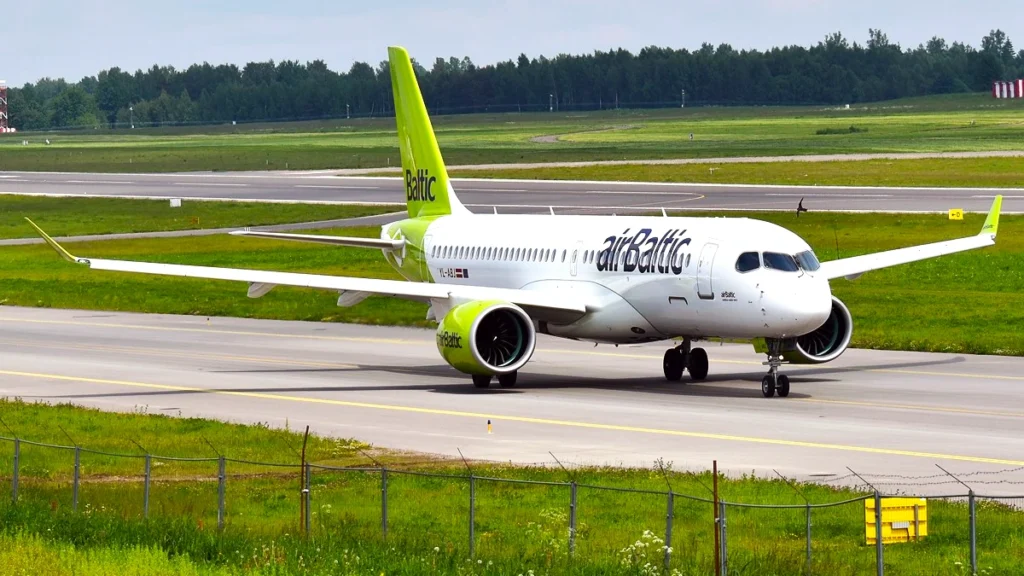
The airline operates an all-Airbus A220-300 fleet, giving its cabin crew the opportunity to work on one of Europe’s youngest and most modern narrow-body aircraft fleets. airBaltic has also established crew bases in Tallinn and Vilnius alongside its main Riga base, creating opportunities for cabin crew across the Baltic States.
Cabin crew at airBaltic are responsible for passenger safety and security while also delivering the airline’s onboard service. The role offers an international working environment, structured training and opportunities to progress into senior cabin crew and training positions.
In 2026, airBaltic cabin crew compensation consists of a basic salary together with additional work-related pay, travel compensation, accumulated bonuses and onboard sales commissions. The airline has also continued recruiting cabin crew as it expands its operations across the region.
airBaltic Cabin Crew Salary in 2026
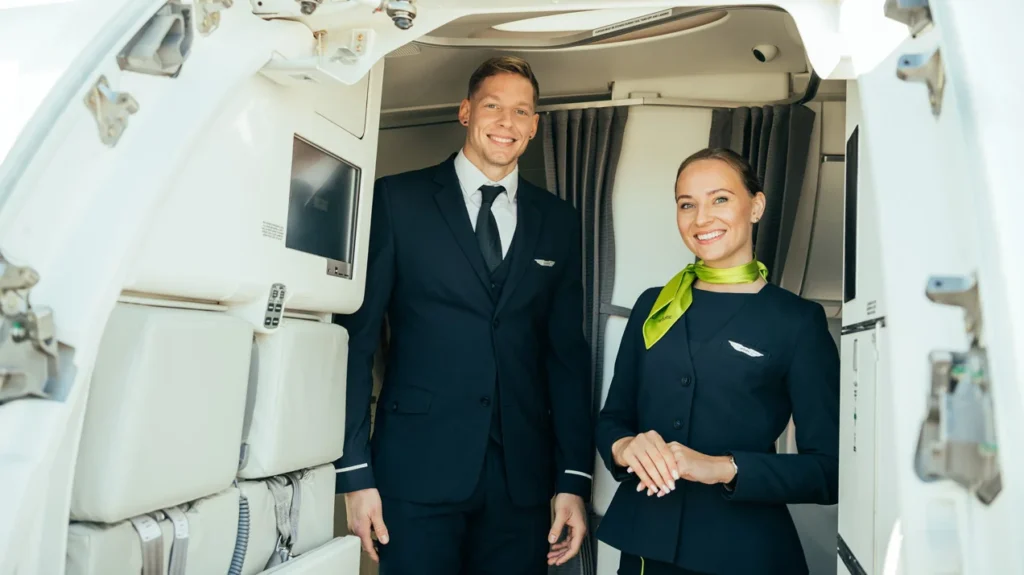
airBaltic cabin crew salaries in 2026 start at around €1,050 per month gross during the training period, equivalent to approximately USD 1,230 per month. Once training is completed, junior cabin crew can earn around €1,700 to €1,800 per month gross, or approximately USD 2,000 to USD 2,100, when the different components of the remuneration package are included.
The salary is not based simply on a fixed monthly wage. airBaltic combines the basic salary with additional work-related payments, travel compensation, accumulated bonuses and onboard sales bonuses. This means that actual monthly earnings can change depending on flying activity and other operational factors.
A newly qualified junior cabin crew member can earn approximately €1,720 per month gross (USD 2,000), based on a package that includes around €1,250 in basic salary, additional work-related pay, travel compensation, an accumulated bonus and onboard sales commission. More experienced crew members can move higher through the airline’s remuneration structure as they build seniority and take on additional responsibilities.
Senior cabin crew members can earn more than junior crew, particularly when they move into roles involving additional operational or training responsibilities. airBaltic also provides opportunities for experienced crew to progress into positions such as line trainers and ground instructor managers.
On an annual basis, a junior cabin crew member earning around €1,720 per month could receive approximately €20,600 per year (USD 24,000), while more experienced crew can potentially earn more depending on their role, bonuses, sales commissions and monthly flying activity.
ALSO READ: easyJet Cabin Crew Salary in 2026
Benefits of Working as airBaltic Cabin Crew
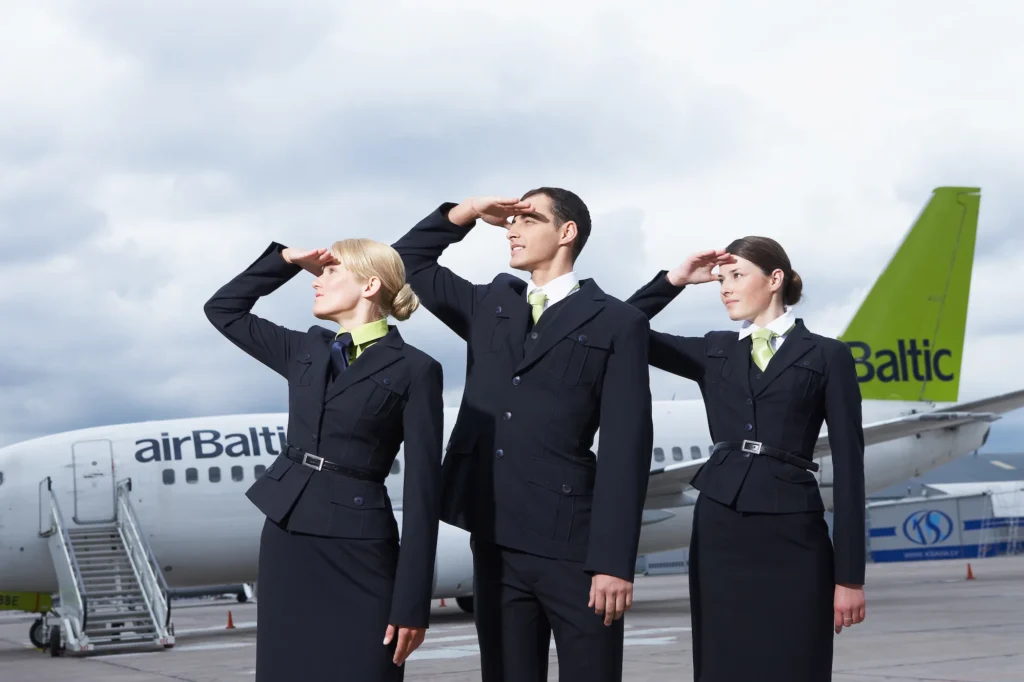
airBaltic cabin crew receive a range of benefits as part of the overall package, which include the following.
- Competitive salary package – Cabin crew receive a combination of basic salary and additional payments rather than relying on a single fixed wage, allowing earnings to increase through operational and performance-related components.
- Onboard sales bonuses – Crew can receive additional income linked to onboard sales, giving employees an opportunity to increase their earnings beyond their basic pay.
- Travel benefits – Employees receive staff travel advantages and access to discounted travel opportunities, which can be particularly valuable for crew working for an airline with an extensive European network.
- Flexible rosters – airBaltic has introduced roster improvements designed to provide cabin crew with more days off and a better balance between work and personal time.
- International working environment – Cabin crew work with colleagues and passengers from different countries while operating throughout Europe and beyond.
- Professional training – New cabin crew complete an intensive training programme covering aviation safety, emergency procedures, aircraft knowledge and onboard service. airBaltic states that the programme lasts around two months and leads to an internationally recognised certificate.
- Career progression – Experienced cabin crew can move into senior operational and training roles, with existing crew members progressing into positions such as line trainer and ground instructor manager.
- Health and employee support – airBaltic’s wider employee package includes a secure and flexible working environment together with professional and personal development opportunities.
- Multiple crew bases – Cabin crew opportunities are available in Riga, Tallinn and Vilnius, giving employees greater choice over where they are based.
ALSO READ: Ryanair Cabin Crew Salary in 2026
Requirements to Become a Cabin Crew at airBaltic
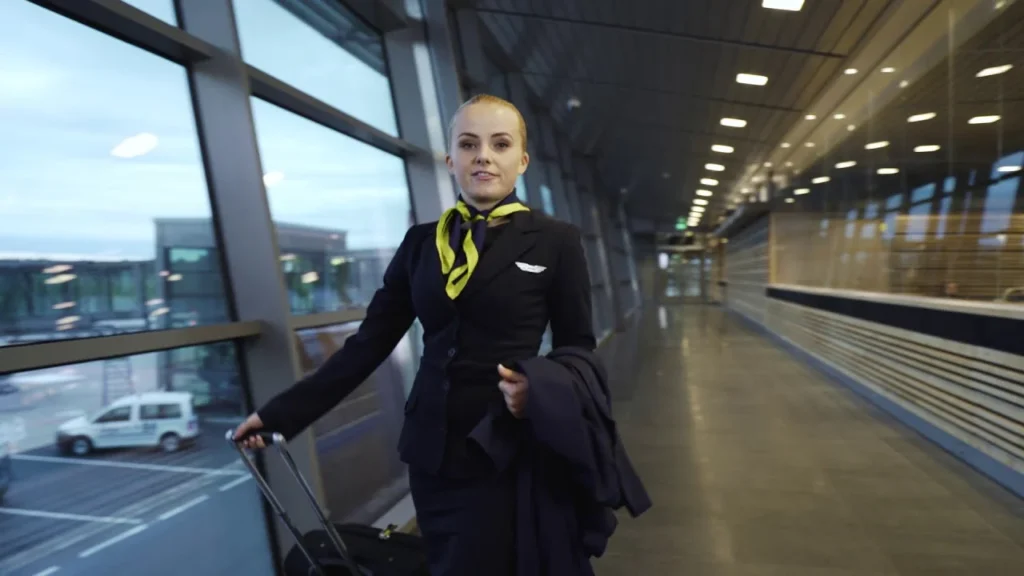
airBaltic cabin crew applicants must meet the airline’s basic education, language, physical and professional requirements before they can begin training.
- Candidates must be at least 18 years old.
- Applicants must have completed high school or hold an equivalent secondary education qualification.
- Candidates must be fluent in English and able to communicate effectively with passengers and other crew members.
- Applicants must be able to swim because water-survival skills form an important part of cabin crew safety training.
- Candidates must be physically capable of retrieving safety and emergency equipment and opening and closing aircraft overhead compartments from a standing position.
- Applicants are expected to maintain a professional appearance appropriate for an international airline and customer-facing role.
- Strong communication, interpersonal and service skills are important because cabin crew deal directly with passengers throughout each flight.
- Candidates must be comfortable working closely with other crew members and following established safety and operational procedures.
- Applicants must be prepared to complete the required aviation safety, emergency, first aid and security training.
- Successful candidates must be able to complete the airline’s intensive cabin crew training programme before beginning operational duties.
Recruitment Process for Cabin Crew
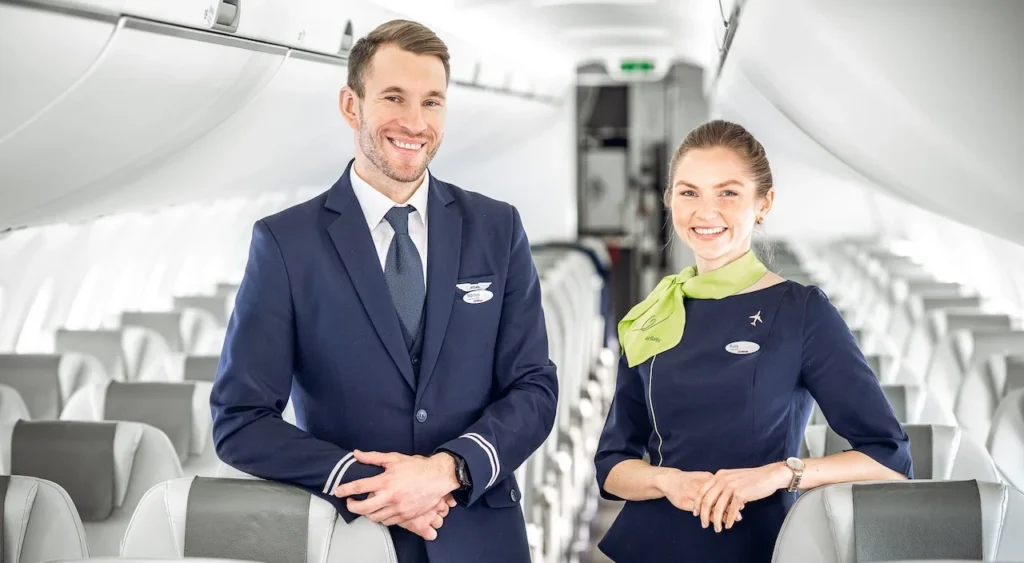
airBaltic’s cabin crew recruitment process includes the steps below.
- Online application – Candidates submit their personal information, education details and relevant employment history through the airBaltic careers system.
- Application screening – Recruiters review applications to confirm that candidates meet the basic age, education and language requirements.
- English assessment – Shortlisted candidates may complete an English assessment to demonstrate their ability to communicate effectively in an aviation environment.
- Interview – Candidates attend an individual interview where their personality, motivation, communication skills and customer-service approach are assessed.
- Selection – Applicants who successfully complete the assessment stages are selected for cabin crew training.
- Training – New recruits complete an intensive training programme covering safety, emergency procedures, first aid, security, aircraft knowledge and service.
- Qualification – Candidates who successfully complete the training receive the required cabin crew certification and can begin operational duties with airBaltic.
Bottom Line
A cabin crew career with airBaltic in 2026 offers a competitive European salary package, travel benefits, structured training and opportunities for professional development. Cabin crew trainees can expect around €1,050 per month (USD 1,230) during training, while junior crew can earn around €1,700 to €1,800 per month (USD 2,000 to USD 2,100) once qualified, with experienced and senior employees able to earn more.
The airline’s expanding presence across the Baltic States also gives cabin crew more flexibility over their base, with opportunities in Riga, Tallinn and Vilnius. The combination of an all-A220 fleet, international operations, improved rosters and career development makes airBaltic an attractive option for candidates looking to enter European aviation.
For applicants who meet the basic education and language requirements, can swim and are comfortable with safety-focused training and an unpredictable flying schedule, airBaltic provides a solid route into a professional cabin crew career.
FAQs
airBaltic cabin crew trainees earn around €1,050 per month (USD 1,230), while qualified junior cabin crew can earn approximately €1,700 to €1,800 per month (USD 2,000 to USD 2,100), with experienced and senior crew potentially earning more.
Yes. New cabin crew complete an intensive training programme covering safety, emergency procedures, aircraft knowledge, first aid, security and service. The programme takes around two months and leads to an internationally recognised certificate.
airBaltic has cabin crew bases in Riga, Tallinn and Vilnius, allowing crew members to operate from Latvia, Estonia or Lithuania depending on the available position and employment arrangement.
Stay tuned with us. Further, follow us on social media for the latest updates.
Join us on Telegram Group for the Latest Aviation Updates. Subsequently, follow us on Google News