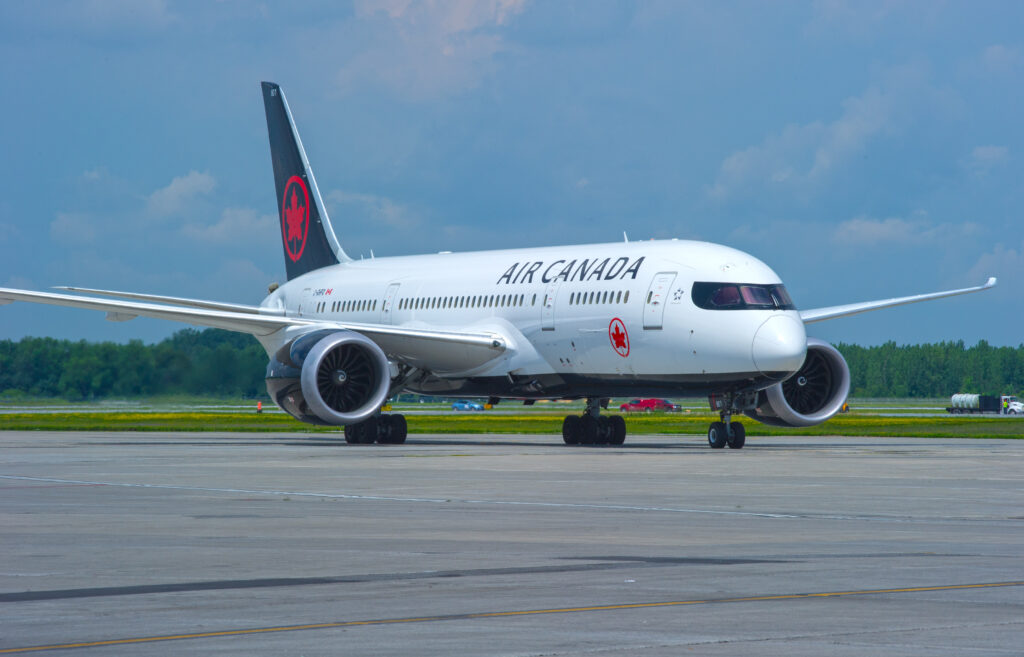
As Canada’s flag carrier and largest airline, Air Canada operates one of North America’s most extensive domestic and international networks.
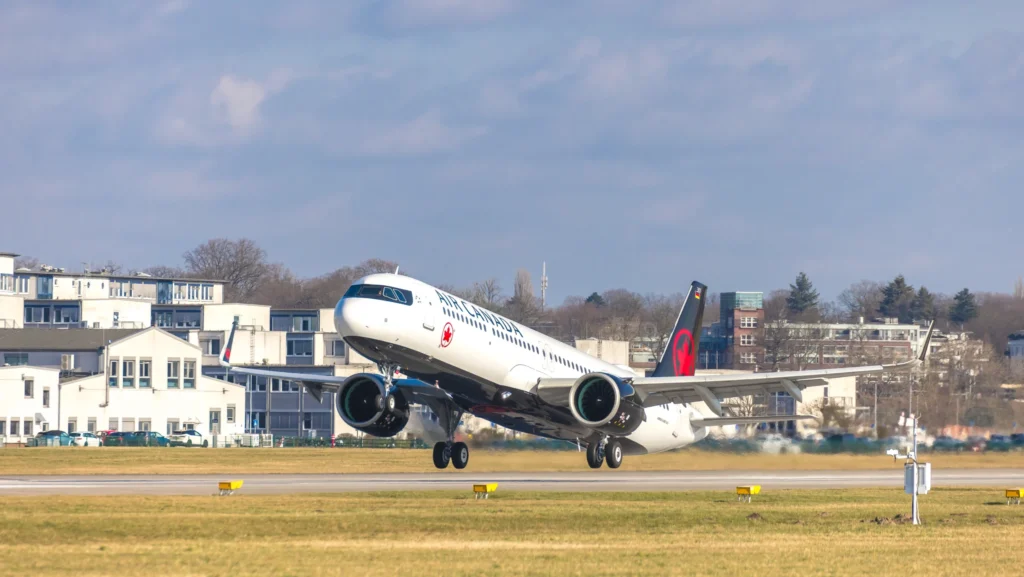
From its major hubs in Toronto, Montreal, Vancouver, and Calgary, the airline flies a diverse fleet that includes the Airbus A220, A320 family, A330, A350, Boeing 737 MAX 8, Boeing 777, Boeing 787 Dreamliner, and De Havilland Dash 8 aircraft.
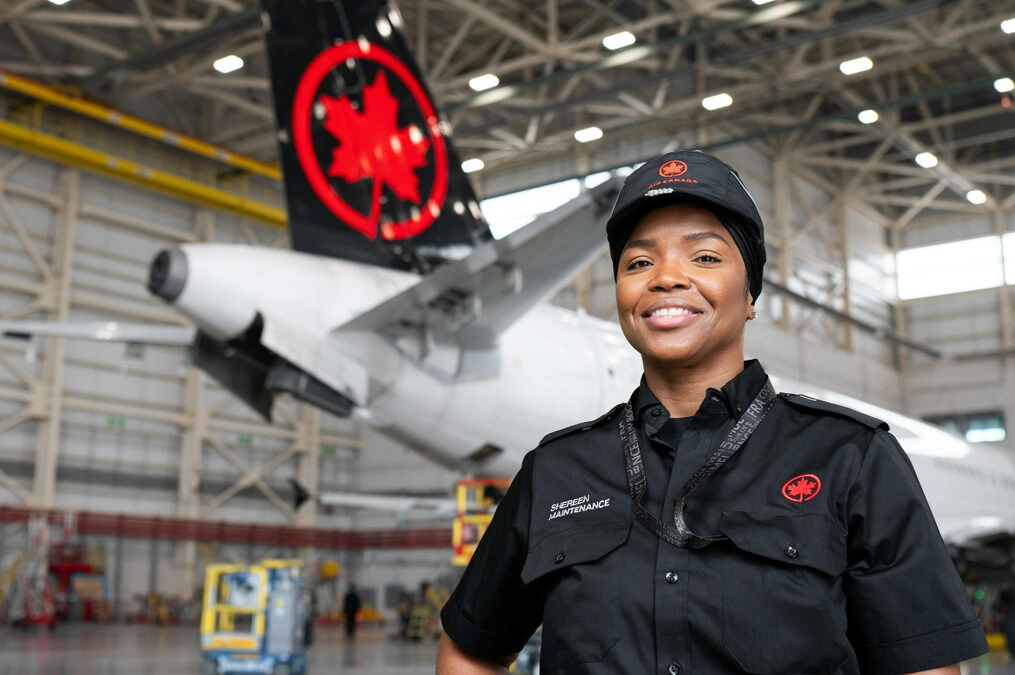
Maintaining such a varied fleet requires thousands of skilled engineering professionals working around the clock. Whether an aircraft is preparing for a transatlantic flight or a short domestic hop, Aircraft Maintenance Engineers (AMEs) and Technicians are responsible for ensuring it meets the highest safety and regulatory standards before departure.
For aviation maintenance professionals, Air Canada remains one of the country’s most desirable employers, offering the opportunity to work on modern aircraft, gain experience across multiple fleet types, and develop a long-term career within Canada’s largest airline.

What Do Aircraft Engineers and Technicians Do?
Although both roles are essential to aircraft maintenance, their responsibilities are quite different.
Aircraft Maintenance Engineer (AME)
An Aircraft Maintenance Engineer is a licensed professional authorised to inspect, certify, and release aircraft back into service after maintenance has been completed.
Typical responsibilities include:
- Inspecting aircraft during scheduled and unscheduled maintenance
- Troubleshooting mechanical, electrical, and avionics defects
- Supervising technicians carrying out repairs
- Reviewing maintenance records and regulatory documentation
- Certifying aircraft as airworthy before departure
The role carries significant responsibility, as every certification directly impacts flight safety.
Aircraft Maintenance Technician
Aircraft Maintenance Technicians focus on the practical side of aircraft maintenance and support engineers during daily operations.
Their duties generally include:
- Removing and installing aircraft components
- Performing routine servicing and inspections
- Repairing mechanical and electrical systems
- Assisting with fault diagnosis
- Maintaining maintenance equipment and technical documentation
Technicians play a vital role in keeping aircraft available for service while meeting demanding operational schedules.
ALSO READ: American Airlines Aircraft Technician and Engineer Salary in 2026
Requirements to Join Air Canada as an AME or Technician
Air Canada looks for applicants with strong technical skills, practical experience, and a commitment to safety.
Basic Requirements
- A diploma or degree in aircraft maintenance or aerospace engineering
- Strong understanding of aircraft systems
- Good communication and teamwork skills
- Ability to work rotating shifts, weekends, and holidays
- Commitment to Transport Canada safety regulations
For Aircraft Maintenance Engineers
Applicants generally require:
- A valid Transport Canada Aircraft Maintenance Engineer (AME) Licence
- Experience working on commercial aircraft
- Type training on Airbus or Boeing aircraft is an advantage
- Strong troubleshooting and certification experience
For Aircraft Maintenance Technicians
Candidates are usually expected to have:
- Aircraft maintenance diploma or technical qualification
- Practical maintenance experience
- Strong mechanical aptitude
- Willingness to undertake additional company training
Many technicians later obtain a Transport Canada AME licence and progress into certifying engineer positions.
Air Canada AME and Technician Salary in 2026
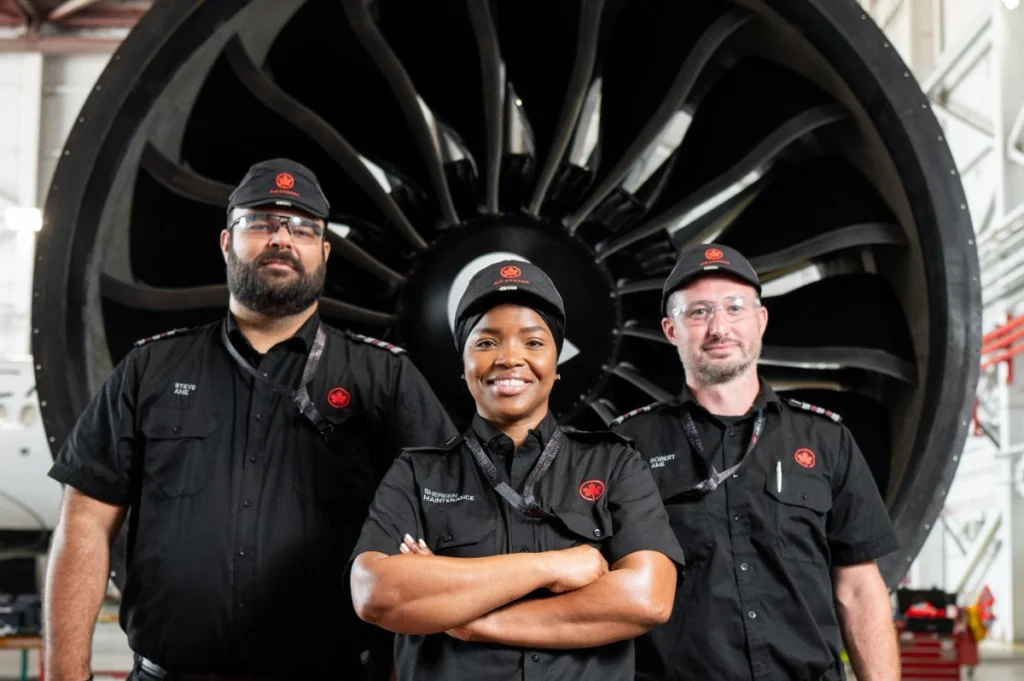
Air Canada is widely regarded as one of the better-paying airline employers for maintenance professionals in Canada. Salaries are influenced by licensing, collective agreements, aircraft qualifications, overtime opportunities, and years of service. While new employees begin on structured pay scales, experienced engineers can see substantial increases as they gain seniority and additional approvals.
For licensed Aircraft Maintenance Engineers, newly qualified or recently hired engineers generally earn between CAD 75,000 and CAD 95,000 per year (approximately US$55,000 to US$69,500). At this stage, engineers are usually developing experience on Air Canada’s fleet while building additional aircraft qualifications.
As engineers gain certifying authority on multiple aircraft types and take on more complex maintenance responsibilities, annual earnings commonly rise to around CAD 100,000 to CAD 125,000 (approximately US$73,000 to US$91,000). This is where many experienced line and base maintenance engineers fall after several years with the airline.
Senior AMEs, lead engineers, and technical specialists frequently earn between CAD 130,000 and CAD 155,000 per year (approximately US$95,000 to US$113,000). Those regularly working overtime, night shifts, or heavy maintenance programmes may see their total annual compensation exceed this range.
In monthly terms, Air Canada AMEs typically earn between CAD 6,250 and CAD 12,900 per month (approximately US$4,560 to US$9,420) depending on experience, position, and operational requirements.
Aircraft Maintenance Technicians follow a separate pay structure but still enjoy competitive salaries within Canada’s aviation industry.
Newly hired technicians generally begin on salaries of around CAD 50,000 to CAD 65,000 per year (approximately US$36,500 to US$47,500) while gaining experience within airline maintenance operations.
With several years of service and broader technical expertise, technicians often progress into the CAD 68,000 to CAD 85,000 annual range (approximately US$49,500 to US$62,000).
Experienced technicians working in specialised maintenance areas or supporting major maintenance programmes can earn between CAD 90,000 and CAD 110,000 per year (approximately US$65,500 to US$80,000), particularly when overtime and shift premiums are factored in.
Overall, Air Canada’s maintenance salary structure can broadly be summarised as:
- Aircraft Maintenance Engineers: CAD 75,000 to CAD 155,000 per year (approximately US$55,000 to US$113,000)
- Aircraft Maintenance Technicians: CAD 50,000 to CAD 110,000 per year (approximately US$36,500 to US$80,000)
For technicians, earning a Transport Canada AME licence remains the most effective way to increase both responsibility and earning potential significantly.
ALSO READ: British Airways Aircraft Engineer and Technician Salary in 2026
Benefits and Perks at Air Canada Engineering
Working for Air Canada offers more than just a competitive salary. Engineering employees may also receive a range of additional benefits, including:
- Staff travel privileges across the Air Canada network
- Comprehensive medical, dental, and vision coverage
- Pension and retirement savings programmes
- Paid annual leave and public holidays
- Shift differentials and overtime opportunities
- Training and aircraft type qualification programmes
- Career progression across maintenance bases and specialised engineering departments
Bottom Line
Working as an Aircraft Maintenance Engineer or Technician at Air Canada in 2026 offers the opportunity to build a rewarding career with one of North America’s leading airlines. The airline’s large and diverse fleet provides valuable experience across both Airbus and Boeing aircraft, while structured career progression allows maintenance professionals to steadily develop their skills.
Licensed AMEs understandably command the highest salaries because they are responsible for certifying aircraft and ensuring compliance with Transport Canada regulations. Technicians, meanwhile, gain hands-on experience and have a well-defined pathway towards becoming licensed engineers.
For those looking to establish themselves in Canada’s aviation maintenance industry, Air Canada continues to rank among the country’s strongest employers in terms of career prospects, fleet exposure, and long-term earning potential.
FAQs
Yes. Engineers responsible for certifying aircraft must hold a valid Transport Canada AME licence along with the appropriate aircraft qualifications and company approvals.
Yes. Depending on the maintenance base and operational requirements, engineers and technicians may work on a wide range of Airbus, Boeing, and regional aircraft across the airline’s fleet.
The biggest influences include licence category, aircraft type endorsements, years of experience, overtime, shift premiums, leadership responsibilities, and the maintenance programme or fleet assigned.
Stay tuned with us. Further, follow us on social media for the latest updates.
Join us on Telegram Group for the Latest Aviation Updates. Subsequently, follow us on Google News