DUBAI- Emirates Airline (EK) is reducing flights operated by its 615-seat Airbus A380 aircraft, cutting overall deployment by about 20 percent as network demand and fleet planning evolve in 2026.
Several destinations will lose this high-density configuration entirely, while others will see replacements using smaller A380 layouts or different aircraft types.
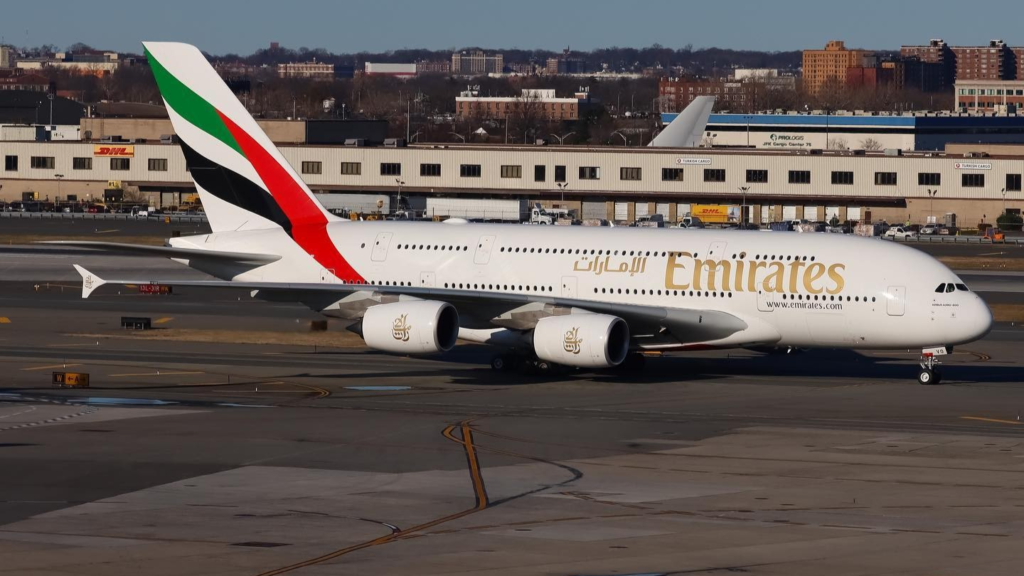
Emirates Cuts 615-Seater A380 Flights
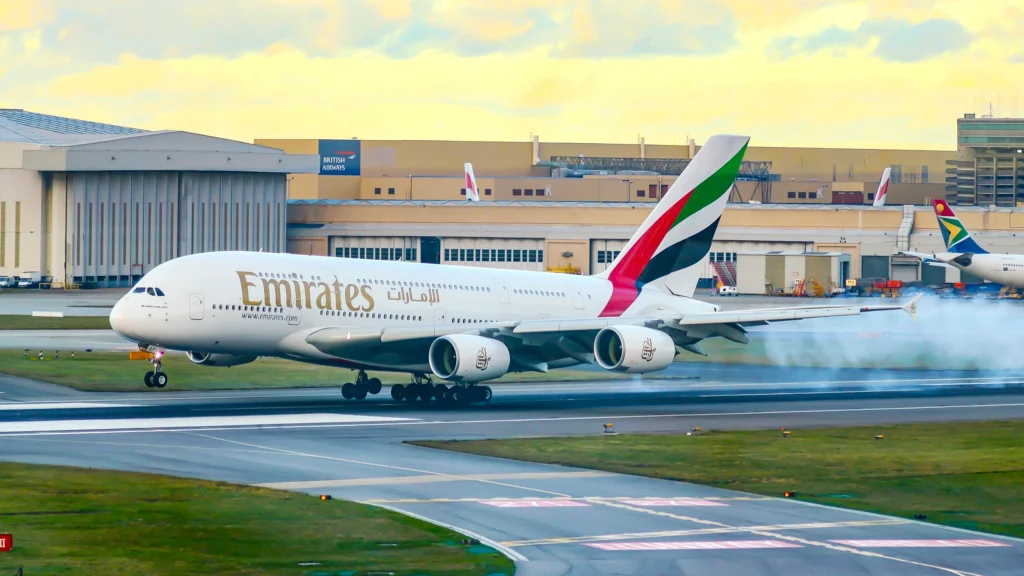
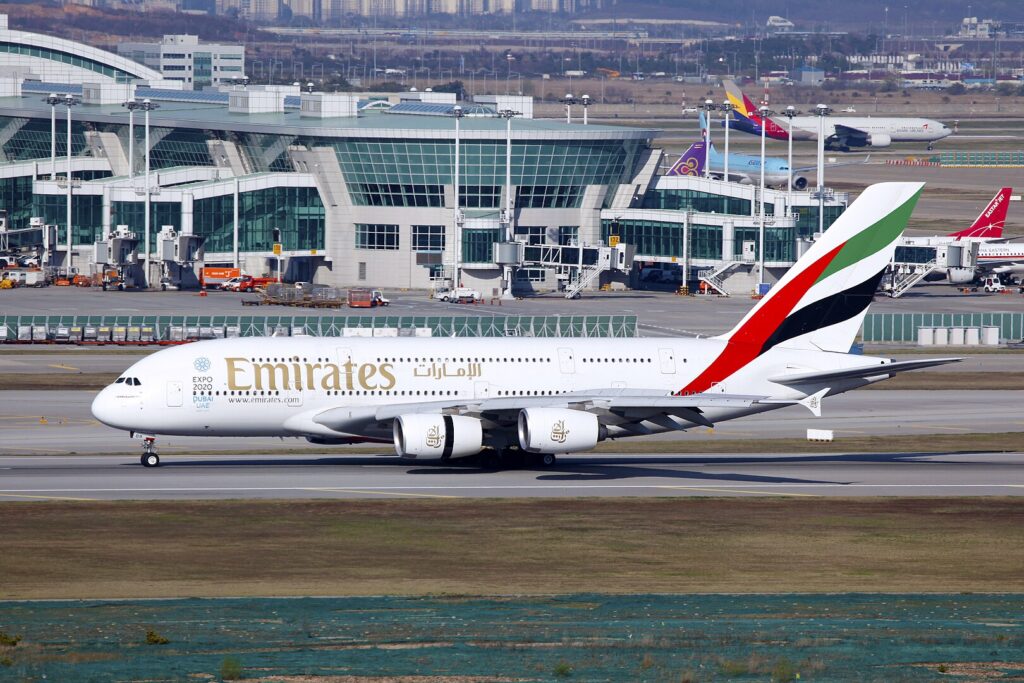
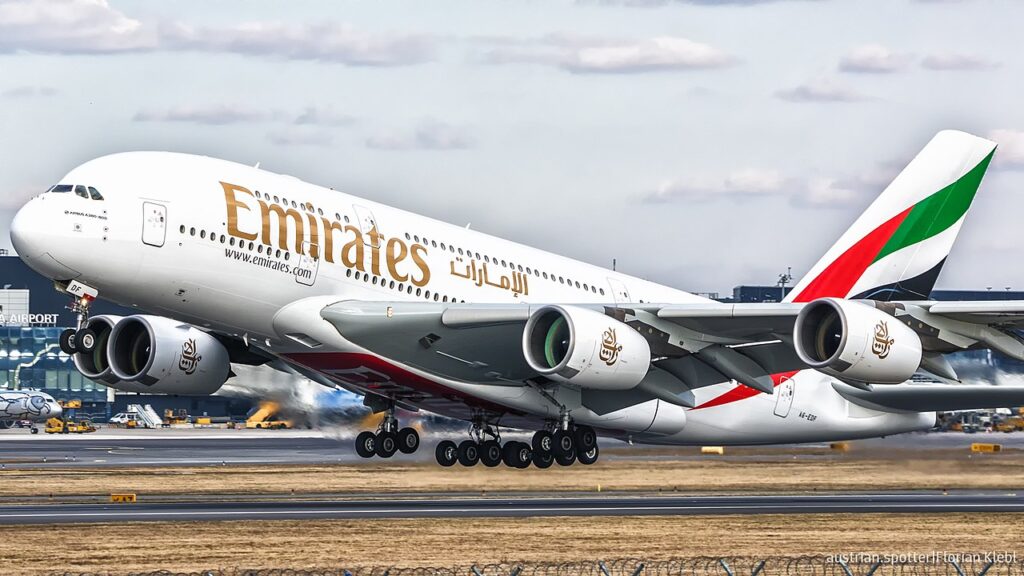
Emirates operates 116 Airbus A380 aircraft, although not all are active at the same time. Among them, 15 aircraft carry a unique high-density configuration with 615 seats, making them the highest-capacity commercial aircraft in regular service, Simple Flying reported.
Unlike other Emirates A380 layouts, this version removes first class and premium economy cabins. It includes:
- 58 business class seats
- 557 economy class seats
Standard Emirates A380 aircraft normally carry 76 business class seats and between 322 and 429 economy seats, depending on layout.
This configuration mainly serves leisure-heavy and price-sensitive markets where demand volume is strong but premium demand is lower. The airline offsets lower yields by transporting more passengers per flight.
Filling 615 seats consistently remains operationally challenging, so deployment is carefully matched to markets with strong passenger demand.
Six Routes Losing Service
Data comparing schedules between 2025 and 2026 shows that several destinations will no longer receive this high-capacity aircraft. These include:
- Bahrain
- Casablanca
- Hong Kong
- Milan Malpensa
- Singapore
- Vienna
However, many of these routes saw limited use of the configuration, often only a few flights per year.
More significant network changes are happening during 2026 itself.
Markets Losing Service During 2026
Several cities will see the last scheduled flights of the 615-seat A380 during 2026.
Service changes include:
- Bali (DPS): A380 service paused, with uncertain return timing
- Copenhagen (CPH): Last flight May 31, no A380 replacement planned
- Jeddah (JED): Last flight February 6, expected to return October 25
- Kuala Lumpur (KUL): Ends February 28, replaced by 489-seat A380
- Munich (MUC): Ends March 28, replaced by 517-seat A380
- Taipei (TPE): Ends June 21, replaced by 489-seat A380
Schedules remain subject to change as airlines continuously adjust capacity.
Overall A380 Capacity Reduction in 2026
Current schedule data by Cirium shows Emirates plans 3,828 outbound flights using the 615-seat A380 in 2026, compared with 4,774 flights in 2025.
This represents a year-over-year reduction of roughly 20 percent.
Some destinations only see limited one-off flights on the aircraft, including:
- Barcelona
- Glasgow
- Istanbul
- Medinah
- Paris Charles de Gaulle
- Vienna
Additional deployments may still appear later in the year, depending on seasonal demand.
UK Network Adjustments Also Visible
London Gatwick will see a 45 percent reduction in flights operated by the 615-seat configuration. However, overall Emirates capacity remains strong because flight frequency increases and the Airbus A350 joins the route.
Manchester shows a different trend. While the 615-seat aircraft appears less often, premium A380 configurations with first class are increasing, raising premium capacity compared with previous years.
These changes show Emirates is shifting aircraft types rather than reducing overall network importance.
Strategic Meaning Behind the Changes
The move reflects Emirates’ strategy to better match aircraft capacity with route demand while improving profitability.
High-density aircraft work best in leisure-driven markets, but premium-heavy routes benefit more from configurations offering first and premium economy cabins.
Fleet flexibility allows Emirates to adjust aircraft types while maintaining network strength across major destinations.
Stay tuned with us. Further, follow us on social media for the latest updates.
Join us on Telegram Group for the Latest Aviation Updates. Subsequently, follow us on Google News