Ryanair (FR) has become Europe’s largest airline by passenger numbers, operating thousands of daily flights across more than 35 countries. Unlike traditional full-service carriers, Ryanair’s business model revolves around efficiency, fast aircraft turnarounds, and keeping costs under control. Behind that operation is a massive engineering network responsible for maintaining one of the world’s largest Boeing 737 fleets.
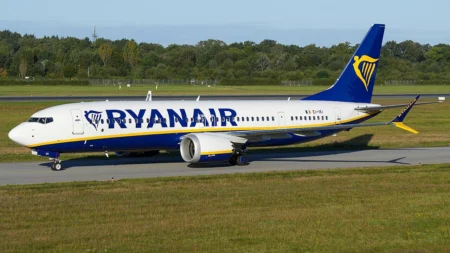
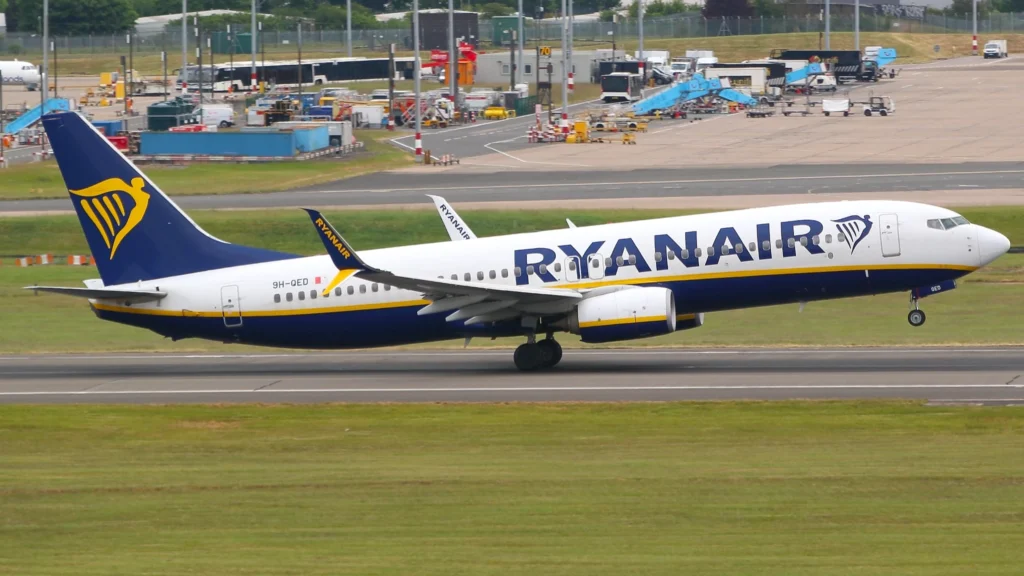
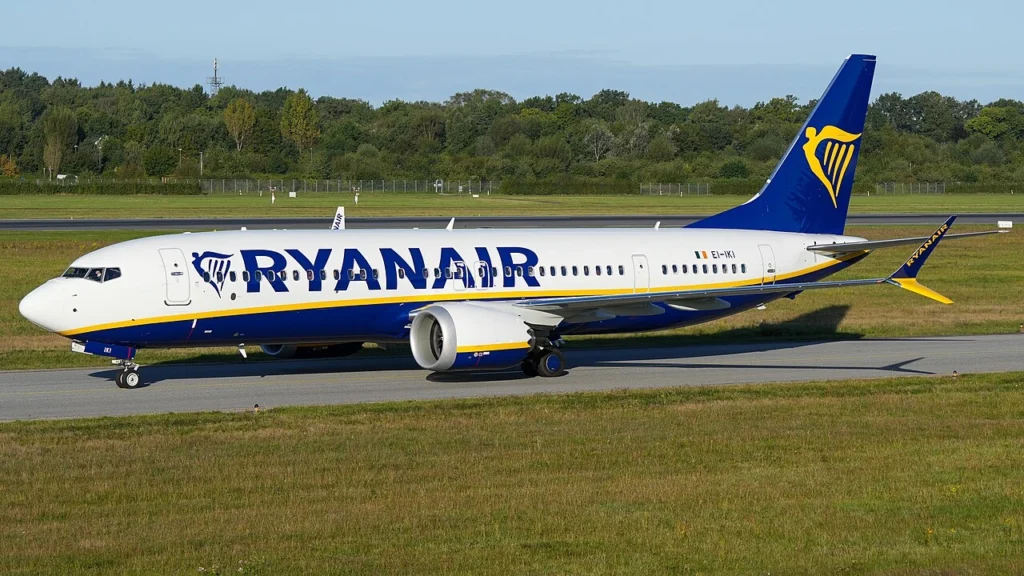
The airline currently operates hundreds of Boeing 737-800 and Boeing 737 MAX 8-200 aircraft and continues to expand its maintenance footprint across Europe. Recent investments in maintenance facilities and engineering academies in Ireland and Scotland show just how important engineering has become to the airline’s long-term growth plans.
For Aircraft Maintenance Engineers (AMEs) and Technicians, Ryanair offers something slightly different from many legacy airlines. The environment is fast-paced, heavily operational, and often focused on productivity, but it also provides extensive exposure to modern Boeing aircraft and clear progression routes through its engineering training programmes.
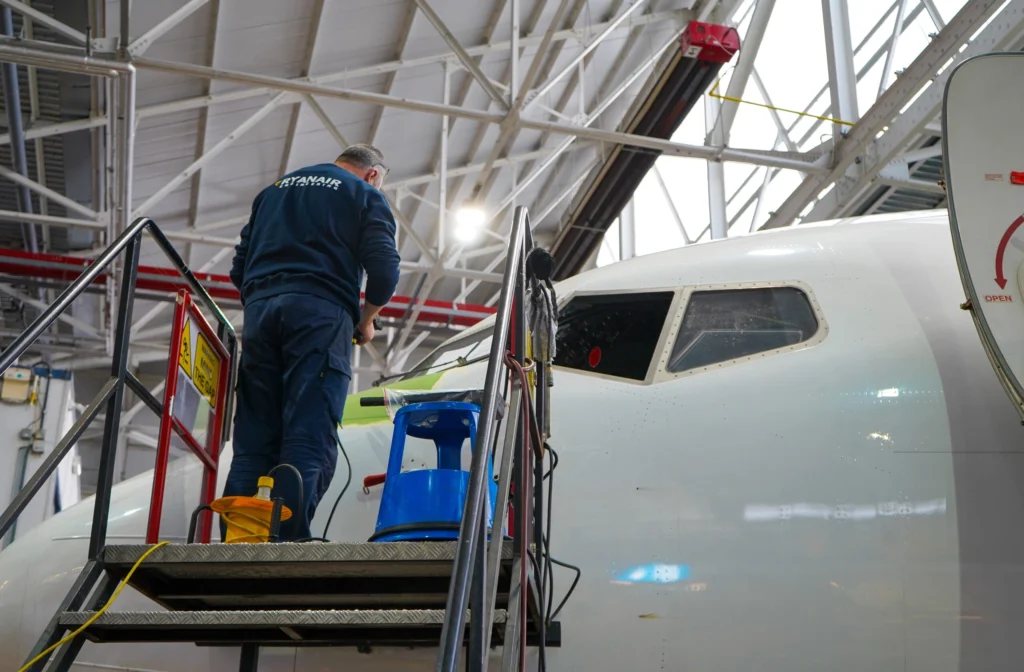
What Do Aircraft Engineers and Technicians Do?
Although both positions work within aircraft maintenance, their responsibilities differ significantly.
Aircraft Maintenance Engineer (AME)
An AME is a licensed engineer authorised to certify that maintenance work has been completed correctly and that the aircraft is fit to return to service.
Typical responsibilities include:
- Diagnosing aircraft defects
- Supervising maintenance tasks
- Conducting inspections and system checks
- Reviewing technical documentation
- Certifying aircraft after maintenance
At Ryanair, engineers are expected to maintain high standards while working within an airline environment where aircraft utilisation is extremely high.
Aircraft Maintenance Technician
Technicians perform much of the practical maintenance work required to keep aircraft available for service.
Their duties commonly include:
- Carrying out routine inspections
- Replacing aircraft components
- Performing repairs and servicing
- Assisting engineers with troubleshooting
- Maintaining maintenance records and tooling
Many technicians use the role as a stepping stone towards obtaining EASA licences and progressing into engineer positions.
ALSO READ: Lufthansa AME and Technician Salary in 2026
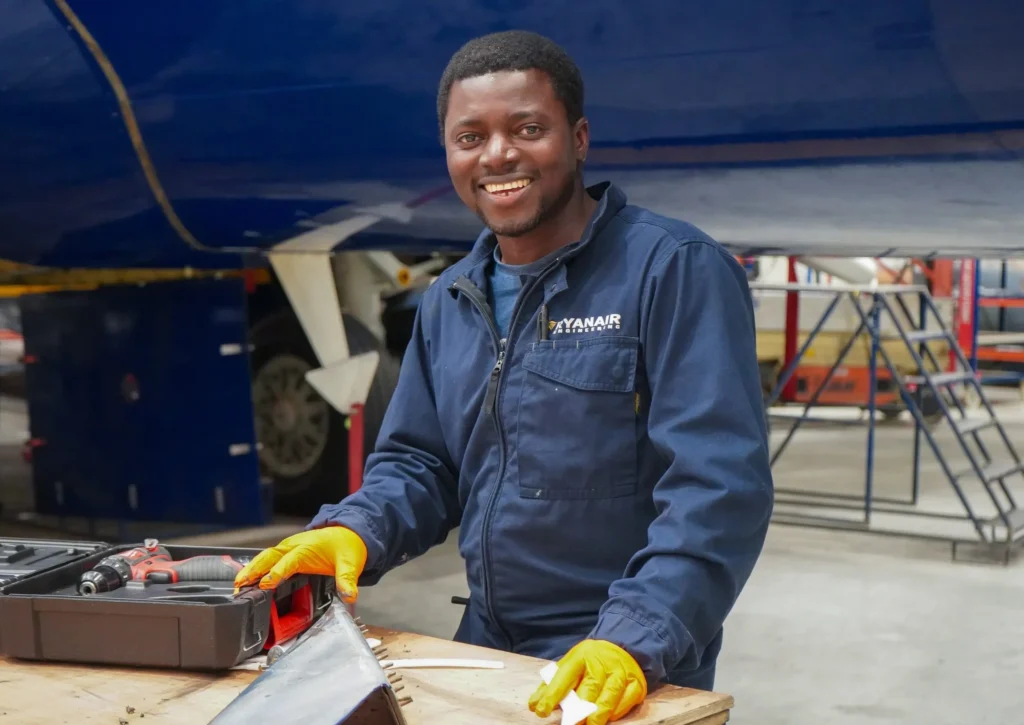
Requirements to Join Ryanair as an Engineer or Technician
Ryanair recruits maintenance personnel across Europe through its own engineering division and partner maintenance organisations.
Basic Requirements
- Aircraft maintenance qualification or technical diploma
- Good understanding of aircraft systems
- Ability to work shifts and weekends
- Strong attention to safety and compliance
- Good English communication skills
For Aircraft Maintenance Engineers
Applicants generally require:
- EASA Part-66 B1 or B2 licence
- Boeing 737NG or 737 MAX type rating preferred
- Previous certifying experience
- Strong troubleshooting skills
Recent Ryanair engineering vacancies have specifically sought engineers holding unrestricted EASA licences with Boeing 737 experience.
For Aircraft Maintenance Technicians
Candidates are typically expected to have:
- Aircraft maintenance training or apprenticeship
- Practical maintenance experience
- Strong mechanical aptitude
- Willingness to work in line or base maintenance
Ryanair also operates apprenticeship and trainee programmes designed to develop future mechanics and engineers.
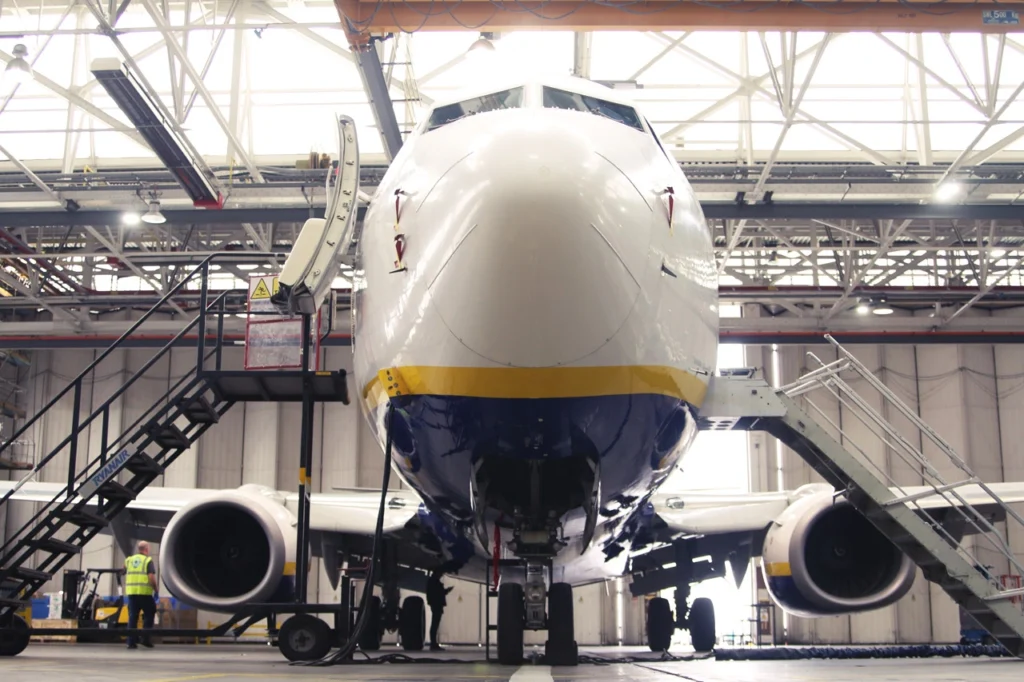
Ryanair AME and Technician Salary in 2026
When discussing engineering pay at Ryanair, one important point stands out: salaries can vary considerably depending on the country, licence category, approvals held, and whether the role is line maintenance or base maintenance.
For Aircraft Maintenance Engineers, newly licensed engineers typically earn between €55,000 and €75,000 per year (approximately US$63,000 to US$86,000). At this stage, engineers are usually building their certifying experience while working under established maintenance programmes.
Once engineers gain Boeing 737 approvals and additional certification privileges, earnings rise substantially. Many experienced B1 and B2 engineers earn around €80,000 to €100,000 annually (approximately US$92,000 to US$115,000).
Senior certifying engineers, lead engineers, and highly experienced B1/B2 licence holders can earn between €105,000 and €120,000 per year (approximately US$121,000 to US$138,000). Recent Ryanair recruitment campaigns in Dublin advertised compensation packages reaching €119,000 annually, including shift allowances and pension contributions.
Similarly, Ryanair engineering vacancies in Lithuania have advertised annual salaries of approximately €86,000 to €92,000 (approximately US$99,000 to US$106,000) for licensed engineers.
In monthly terms, many Ryanair AMEs earn roughly €4,600 to €10,000 per month (approximately US$5,300 to US$11,500) depending on location, approvals, and seniority.
Aircraft Maintenance Technicians operate on a lower salary scale but can still earn attractive incomes, particularly as they gain experience.
Entry-level technicians and mechanics generally earn around €30,000 to €40,000 per year (approximately US$34,000 to US$46,000).
With several years of experience and additional approvals, technicians commonly progress into the €42,000 to €55,000 annual range (approximately US$48,000 to US$63,000).
Senior technicians, Cat A mechanics, and experienced maintenance personnel can earn approximately €60,000 to €75,000 per year (approximately US$69,000 to US$86,000). Industry discussions in Ireland suggest many Ryanair Cat A mechanics now earn around €70,000 annually after qualification.
Overall, the salary structure can broadly be summarised as:
- Aircraft Maintenance Engineers: €55,000 to €120,000 per year (approximately US$63,000 to US$138,000)
- Aircraft Maintenance Technicians: €30,000 to €75,000 per year (approximately US$34,000 to US$86,000)
The biggest increase in earnings usually comes after obtaining a B1 or B2 licence and acquiring Boeing 737 certification privileges.
ALSO READ: British Airways Aircraft Engineer and Technician Salary in 2026
Benefits and Perks at Ryanair Engineering
Beyond salary, Ryanair offers a number of benefits that appeal to maintenance professionals.
Typical benefits include:
- Type training opportunities
- Engineering apprenticeship programmes
- Career progression into B1 and B2 engineering roles
- Pension contributions in certain locations
- Shift allowances
- International transfer opportunities across Europe
- Experience working on one of the world’s largest Boeing 737 fleets
For many engineers, the ability to rapidly build Boeing experience is one of the airline’s biggest attractions.
Bottom Line
Working as an AME or Technician at Ryanair in 2026 can be a rewarding career choice for those who thrive in a fast-moving operational environment. The airline’s continued expansion, investment in maintenance facilities, and growing engineering academies indicate strong long-term demand for maintenance professionals.
Licensed engineers enjoy particularly strong earning potential, especially those holding B1 or B2 licences with Boeing 737 type ratings. Technicians start on lower salaries but have a clearly defined pathway towards licensing and significantly higher earnings.
For aviation professionals seeking extensive Boeing fleet exposure and opportunities to advance through Europe’s largest airline, Ryanair remains one of the most attractive engineering employers in the low-cost sector.
Ryanair AME and Technician Salary FAQs
Yes. Since the Boeing 737NG and 737 MAX form the backbone of the airline’s fleet, engineers with Boeing 737 type ratings are highly sought after.
Yes. Ryanair actively supports progression through apprenticeship, trainee mechanic, Cat A, and B1/B2 licensing pathways.
Senior B1 and B2 Licensed Aircraft Engineers with multiple approvals, extensive Boeing 737 experience, and leadership responsibilities generally earn the highest salaries within the engineering division.
Stay tuned with us. Further, follow us on social media for the latest updates.
Join us on Telegram Group for the Latest Aviation Updates. Subsequently, follow us on Google News